Safety first: Yes—you can roast coffee beans at home, but home roasting makes smoke, throws off chaff (papery skins), and can trigger alarms fast. Roast outside or under a strong vent hood, keep a lid nearby to smother flare-ups, and don’t leave the heat source unattended. If you’re roasting on a stovetop or grill, keep kids/pets away and treat it like you’re cooking with hot oil.
- Ventilation: window + fan, range hood, or outdoors.
- Fire plan: lid + heatproof gloves; don’t “panic splash.”
- Alarm check: know where it is (and how sensitive).
The first time you roast at home, it feels like a tiny science experiment: pale beans turning honey-gold, a toasty bread smell filling the room, and then—suddenly—those sharp pops that sound like popcorn. It’s messy, a little smoky, and wildly satisfying. Once you taste a cup made from beans you roasted yourself, the goal stops being “perfect roast” and becomes “repeatable roast I actually love.”
TL;DR: Start small, keep beans moving, stop around first crack, cool fast, then rest 12–24 hours.
Your “first good batch” target
- Batch size: 4–8 oz green beans.
- Roast time: ~8–15 minutes (method-dependent).
- Stop point: around the end of first crack.
- Next step: cool fast, then rest 12–24 hours.
Flavor knobs you can control
- Heat + airflow: roast speed and clarity.
- Agitation: even color, fewer scorched spots.
- Development: sweetness/body after first crack.
- Cooling: locks in your stop point.
Set up safely and set expectations
Home roasting is a short, hands-on cook: heat, movement, and quick decisions. The biggest win for beginners is choosing a setup you can watch and control—not chasing fancy numbers. Get those basics right and everything else becomes easier to repeat.
Must-haves (any method)
- Heatproof gloves: dumping and handling hot metal.
- Metal colander/strainer: fast cooling + chaff shakeout.
- Timer: the start of repeatability.
- Good lighting: color changes are your compass.
Helpful upgrades
- Kitchen scale: repeatable batch sizes.
- Small fan: faster cooling, less smoky carryover.
- Sheet pan + parchment: staging and cleanup.
- Instant-read thermometer: useful for pans/ovens.
If you’re new, plan for your first batch to be “drinkable but not magical.” That’s normal. Your early wins are: reaching first crack consistently, getting even color, and cooling fast enough that the cup tastes like the roast you intended.
Choose beginner-friendly green beans
Green coffee is simply coffee beans before roasting. When people ask how to roast green coffee beans, they’re asking how to turn that raw, grassy-smelling seed into a sweet, aromatic bean—by applying steady heat and constant movement until first crack, then cooling quickly. A simple rule: medium-density beans are easier than ultra-dense microlots when you’re learning.
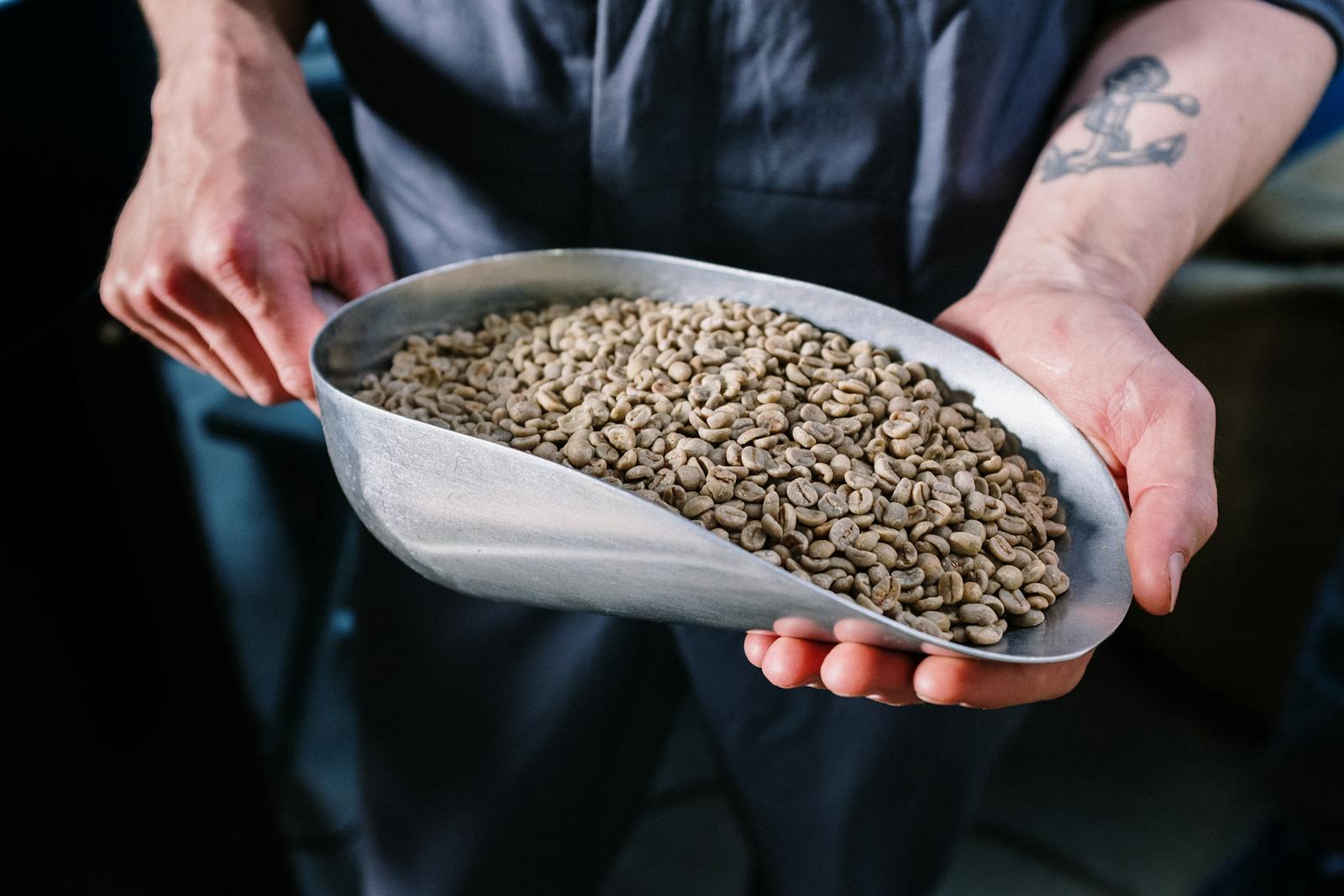
Beginner-friendly picks
- Washed Central America: clean and forgiving.
- Natural Brazil: sweet; hides minor unevenness.
- Colombia blends: balanced and easy to dial.
- Decaf: possible, but save for later practice.
Want a broader overview of what to expect from different at-home methods (and why basics beat perfection early on)? See: beginner roasting overview.
Buy smaller quantities at first. It’s more useful (and more fun) to learn with two or three different greens than to be locked into one coffee while your preferences are changing.
Pick the best home-roasting method
Most home setups are effectively a DIY coffee roaster: you’re creating heat, airflow, and movement with common tools. A countertop small batch coffee roaster simply packages those controls into a more consistent (and usually less smoky) experience. The key decision is how much control you want versus how much mess you’ll tolerate.
| Method | Pros | Watch-outs | Best for |
|---|---|---|---|
| Air (popcorn popper) | Fast, even heat, easy first crack | Small batches; can scorch if overloaded | Learning quickly |
| Stovetop (skillet/Whirley Pop) | Cheap, hands-on control | Stirring effort; smoke/chaff | Tactile cooks |
| Oven (sheet pan) | Bigger batches, minimal gear | Often uneven; cracks are harder to hear | “Roast in bulk” |
| Dedicated home roaster | Most consistent; better smoke control | Cost; cleanup; learning curve | Repeatability |
Oven quick-start: how to roast coffee beans in the oven
1) Preheat to 450°F with a heavy sheet pan inside. 2) Pour 4–8 oz green beans onto the hot pan in a single layer. 3) Roast 10–16 minutes, stirring and re-leveling beans every 2–3 minutes. 4) Watch color and aroma closely (hay → toast → caramel). 5) First crack may be quieter in an oven—use color cues more than sound. 6) Pull the pan around the end of first crack for a beginner-friendly medium. 7) Immediately dump into a metal colander and cool fast with a fan or bowl-tossing. 8) Rest 12–24 hours before brewing.
Roast beans step by step
This is the core coffee roasting process: preheat, roast with constant movement, listen for cracks, then cool fast. The most important moment is your stop decision right after first crack—that’s where flavor swings from bright to sweet to roasty.
Don’t chase a clock—chase even color, steady aroma changes, and the sound of first crack. Your timer is there to help you repeat what worked.
A practical home-roasting rule of thumb
- Preheat: Warm the vessel so beans don’t “bake” at the start.
- Load + start timer: Add beans in a layer that can move.
- Keep beans moving: Stir constantly (pan) or keep airflow clear (popper).
- Track sensory shifts: green → yellow (hay) → tan (toast) → light brown (caramel).
- Listen for first crack: a clear popping sequence; decide your stop point.
- Dump and cool fast: colander shakeout or bowl-toss in front of a fan.
If you’ve ever wondered how to roast coffee beans professionally, the big difference is control and logging: pros track temperatures and airflow minute-by-minute, then repeat profiles. At home, copy the part that matters most—repeatable inputs: same batch weight, note when first crack starts, and record your drop time and color. Those basics build real consistency fast.

Advanced notes (optional): avoid scorching and “baked” roasts
Scorching usually means the pan is too hot or beans paused too long without movement. Lower heat slightly and stir more vigorously. “Baked” flavors show up when the roast is too slow (dull, papery, flat). Increase heat or reduce batch size so you reach first crack with momentum.
Mid-roast sanity check: If the beans are uneven (some pale, some dark), reduce batch size before you change anything else. Smaller batches move better, heat more evenly, and cool faster.
Small batch + steady motion beats “more heat” most of the time.
Cool, rest, and store your coffee
Cooling is the unsung hero of home roasting. Beans keep cooking from their own heat for a bit, so the faster you cool, the more accurately you “hit” your stop point. After that, let the coffee breathe: freshly roasted beans off-gas CO₂, and flavor often improves after a short rest.
A simple baseline: cool immediately, then rest 12–24 hours before brewing. You’ll often find peak flavor somewhere in the next few days, depending on roast level and brew method.
For storage, think “clean, dry, odor-free.” Basic storage guidance also emphasizes keeping coffee away from contaminants and strong smells—principles that apply in a home pantry: warehouse storage principles.
And when you’re ready to make coffee from beans, keep it simple: grind right before brewing, start with a 1:16 ratio (example: 20 g coffee to 320 g water), and use water around 195–205°F. Then adjust grind size—finer if it tastes sour/thin, coarser if it tastes bitter/harsh.
Storage do’s
- Canister: airtight, minimal headspace.
- Cabinet: cool and dark (not above the stove).
- Labels: date + stop point (example: “end 1C”).
- Split batches: smaller jars for big roasts.
Storage don’ts
- Fridge/freezer: condensation risk when reopened.
- Clear counter jar: light + heat speed staling.
- Odor zones: spices, detergents, trash area.
- Open bowl: fast flavor loss, smell absorption.
Dial in roast level with sensory cues
This is where coffee roasting basics become repeatable technique: you’re using sight, sound, and smell to choose a stop point on purpose. If you want one beginner-friendly rule, aim for the end of first crack before you experiment darker.
Numbers vary by setup, but a sensory-first guide (with common ranges) can help you connect what you hear to what you brew: Sweet Maria’s roast cues.
| Milestone | What you notice | Typical range (approx.) |
|---|---|---|
| Yellowing | Hay/grass → warm grain | ~300–330°F |
| Browning | Toast → caramel; tan to light brown | ~330–385°F |
| First crack | Distinct pops (like popcorn) | ~385–405°F |
| Second crack | Finer, snappier crackling | ~430–450°F |
| Roast | Drop point | Development “recipe” | Rest before brew |
|---|---|---|---|
| Light | During 1C | coffee roast recipe: stop 15–45s into first crack for bright, lively cups | 12–48 hours |
| Medium | End of 1C | how to make medium roast coffee: let 1C finish, then stop within 0–30s | 24–72 hours |
| Medium-dark | After 1C | +60–120s after 1C for more body and chocolate notes | 2–5 days |
| Dark | Into 2C | Enter second crack briefly, then stop quickly to avoid ashiness | 3–7 days |
If you’re roasting espresso beans, start in the medium to medium-dark range (end of first crack to about +60–120 seconds) and rest longer—often 2–5 days—so the shots taste less “gassy” and more balanced. Then adjust by taste: sweeter and heavier? Push a little longer after first crack. Brighter and snappier? Drop closer to the end of first crack.
Use this printable roast log and checklist
Roasting improves fastest when you treat it like practice: one variable at a time, one note that matters. This is how home roasters build real coffee roasting techniques—consistent batch size, consistent agitation, and consistent stop points. The payoff is consistent coffee that tastes like your favorite version of you.
Pre-roast checklist
- Ventilation: hood/fan on, windows open (or outside).
- Cooling station: colander + bowl(s) ready first.
- Batch weight: measured and noted.
- Stop plan: “end 1C” or “+60 seconds.”
Post-roast checklist
- Fast cool: down to “warm” within ~2 minutes.
- Chaff cleanup: shake outside or over trash.
- Rest note: brew after 12–24 hours.
- Label jar: date + stop point + method.
| Roast log (edit/print) | Your notes |
|---|---|
| Date / method | |
| Green weight (oz) | |
| First crack start (min:sec) | |
| Drop time (min:sec) | |
| Drop color (light/med/dark) | |
| Rest time before brew | |
| Taste notes (sweetness/body/bitterness) | |
| Next change (one thing only) |
Troubleshoot common roast problems
Most home-roasting problems come from two root causes: uneven heat exposure and slow cooling. Fix those first, then tweak roast level. Use this section as your quick “diagnose and adjust” guide—the goal is one change per batch, not ten changes at once.
Problem → likely cause
- Patchy color: agitation too low or batch too large.
- Burnt tips: too hot early; beans stuck on hot metal.
- Flat/bready cup: roast too slow (baked).
- Harsh bitterness: scorched or pushed too dark.
- Smoky aftertaste: smoke/chaff trapped during cooling.
Fix → next batch
- Smaller batch: easiest lever for evenness.
- More motion: stir faster; keep beans tumbling.
- Better preheat: avoid a slow warm-up phase.
- Stop earlier: end of 1C or +30–60 seconds.
- Cool harder: fan + tossing; don’t cool in the pan.
Can you re-roast coffee beans? You can, but it usually tastes flat or “baked” because the bean has already gone through key chemical changes once. If a batch is too light, it’s often better to use it for cold brew, blend it with a darker batch, or brew it as a lighter, tea-like cup and take notes for your next roast.
If you’re not sure what you’re hearing, record a 10-second audio clip around the “pops” and note the timestamp in your roast log. You’ll be surprised how quickly your ear learns the difference once you connect it to the taste in your cup.