Safety first: Roasting green coffee beans in an air fryer can create smoke and shed chaff (the papery husk). Roast only with strong ventilation, keep the basket clean, and do not walk away once beans start browning—chaff can be a fire hazard at high heat. chaff fire-risk tips
Quick “should I do this?” test: If your air fryer gets smoky with frozen foods, roast outdoors (or skip this method).
Most air-fryer guides land in the same zone: high heat (roughly the upper end of typical air-fryer temps), small batches, and constant attention—because roast changes accelerate fast once cracking starts. Expect light roasts in the single-digit minutes and darker territory closer to the low teens depending on your machine, airflow, and how often you agitate.
TL;DR: Use 1/2–3/4 cup green beans, start around 400°F, shake every 30–45 seconds early, stop based on sound + color, then cool fast and rest beans overnight.
Air fryers can “roast” a lot of things, so searches get messy. This guide is for people who want to roast coffee beans in air fryer. If you actually meant how to heat coffee in air fryer (reheating a drink) or dinner recipes like roast beef in air fryer, the cues and workflow below won’t translate 1:1.
For meat timing searches—roast beef air fryer cooking time, chuck roast in air fryer, or how long to cook a 2 lb roast in air fryer—use a thermometer-first recipe because cut shape, starting temperature, and doneness targets change everything. Likewise, snack/veg recipes like roast pecans in air fryer, roast peppers in air fryer, or roast beets in air fryer use different doneness cues (texture and moisture), even if the “hot air + movement” idea rhymes.
- Batch: Thin layer
- Heat: 390–425°F start
- Shake: Frequent early
- Listen: Crackling milestone
- Stop: Earlier than you think
- Cool: 60–90 sec toss
What to know before you roast
Can you roast in an air fryer? Yes—especially small, dry items. Coffee is just pickier than most foods about airflow and movement, so your process matters more than your exact timer setting.
Air fryers move hot air fast, which is helpful—but they’re not built to roast coffee evenly without help. Your job is to keep beans moving, keep the layer shallow for airflow, and stop the roast on purpose (not “whenever the timer beeps”).
Prep checklist
- Ventilation: Open windows + run a hood fan, or roast outside/garage.
- Smell control: Air fryers can hold odors—plan a deep clean after.
- Cooling setup: Two metal colanders or a sheet pan ready to go.
- Timing: Set frequent check-ins (not one long timer).
Setup checklist
- Basket: Clean, dry, grease-free (grease = smoke + off-flavor).
- Batch: Start small—single layer or “barely piled.”
- Agitation: Plan to shake often; uneven movement = uneven roast.
- Stop plan: Pick your target roast level first.
Roast by checkpoints: color + smell + sound + time.
Your first batch is a calibration roast—expect to learn, then improve.
Gear, beans, and batch size that actually works
You don’t need fancy tools, but you do need the right constraints. Think of your basket-style unit as a simple air fryer roaster: hot air does the work, and your job is to keep the bean layer shallow enough that every bean gets its turn.

Best starting batch size: about 1/2 cup to 3/4 cup of green beans (roughly 3–5 ounces by weight, depending on bean size). This usually keeps the basket shallow enough that shaking actually moves beans around.
If you’re tempted to double it, don’t—bigger batches roast unevenly. Keep batch size constant and adjust temperature or time instead.
- Green beans: Fresh, dry, no oil.
- Timer: Phone timer with repeats.
- Metal colander: For fast cooling.
- Heat gloves: Basket gets hot fast.
Skip oil entirely—coffee roasts in its own chemistry, and oil just adds smoke.
Temperature and timing baseline (your “calibration roast”)
Air fryer models vary a lot, so the goal here isn’t a “perfect” recipe—it’s a baseline you can tune. Most air-fryer roast guidance clusters near the high end of common air-fryer temperatures. high-heat roasting range
Pick a baseline setting
Start at 400°F. If your fryer runs “hot,” start at 390°F. If it runs “cool,” start at 425°F. Keep everything else the same so you can tell what changed.
Run a calibration roast
Shake frequently and check often. You’re watching for three milestones: (1) green → yellow, (2) yellow → brown, and (3) a steady crackling that signals the roast is moving quickly now.
| Target in the cup | Stop cue (what you’ll notice) | Rough time window (first tries) |
|---|---|---|
| Light | Just after the first steady crackle begins; surface still matte | ~7–10 min |
| Medium | Crackle tapers; color is chestnut; aroma turns sweet/toasty | ~9–12 min |
| Dark | More intense cracking returns; surface starts to look slightly shiny | ~11–14+ min |
If you can’t reach a steady crackle in ~15 minutes, raise heat or reduce batch size.
Advanced note: why your times may be “off”
Air fryers differ in airflow and basket geometry, so treat the table as a starting map. If your roast races, lower temperature or shake more; if it crawls (flat “baked” flavor), increase heat or reduce the layer. MTPak Coffee also notes lingering odors can happen, so plan on a thorough wash and a short empty run afterward. limits of air-fryer roasting
Step-by-step: roast in the air fryer (with checkpoints)
This is the “do it exactly like this” version—then you can tweak. Change one lever at a time, and log it so you can repeat your good batches.
Printable roast log (edit as you go) — overwrite the sample rows with your numbers, then print or save as PDF.
| Batch | Temp | Shake cadence | Yellow @ | First crack @ | Stop @ | Notes (smell/color) |
|---|---|---|---|---|---|---|
| Batch 1 — ½ cup | 400°F | Every 30–45 sec (0–6 min) | 5:30 | 8:45 | 10:05 | Grassy → bready → caramel; even chestnut |
| Batch 2 — ¾ cup | 390°F | Every 30 sec (0–7 min) | 6:10 | 9:40 | 11:30 | Slightly uneven; reduce batch next time |
Don’t chase “dark” on batch one—chase an even roast you can repeat.
Roast workflow
- Preheat: Heat to your target temp for 3–5 minutes.
- Load: Add beans in a thin layer; start the timer.
- Shake: Every 30–45 seconds for the first 6 minutes.
- Check: At 5–6 minutes, look for yellowing + “toasty grain” smell.
- Listen: From minute 7 on, crackling can start suddenly.
- Stop: Hit your cue, then dump into a metal colander immediately.
Reality check: If beans aren’t clearly changing by minute 7, raise heat slightly or reduce the batch before you change anything else.
Agitation cadence (how to get a more even roast)
Early phase (green → yellow)
Shake often. You’re trying to prevent “hot spot” beans from getting a head start.
Middle phase (yellow → brown)
Keep a steady rhythm. If beans aren’t moving when you shake, the batch is too large.
After each shake, tap the basket lightly on a heat-safe surface so the layer re-levels—this helps prevent a top/bottom roast split.
How to “read” the roast (color, smell, cracks)
Times matter, but sound and smell tell you when the chemistry is actually happening. Most batches shift from grassy to bready to caramel/nutty as sugars develop. Done well, this style of air roasted coffee can taste especially bright and clean—provided you stop on time and cool fast.
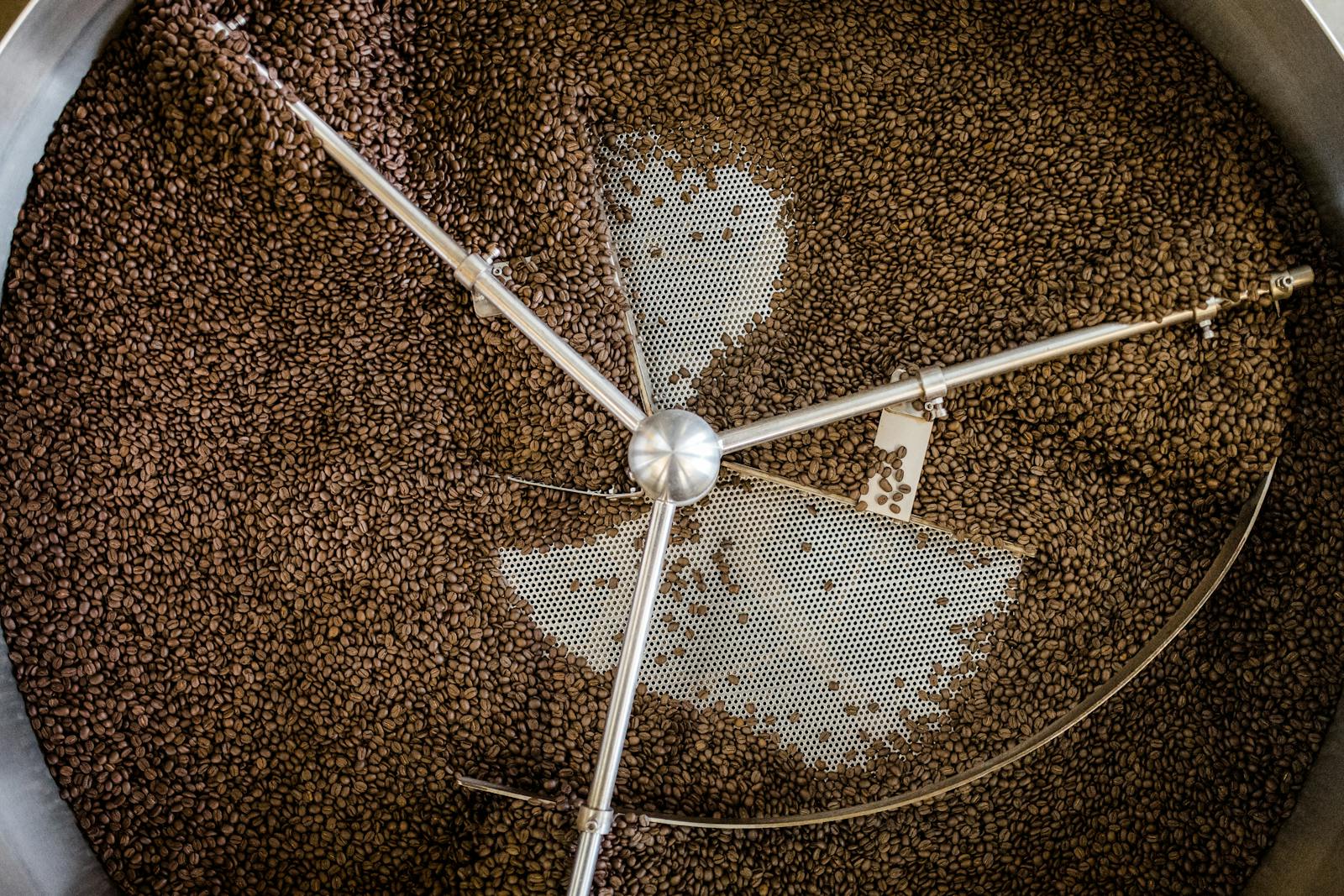
First crack is your big landmark: a distinct, popcorn-like crackling that signals the beans have reached a key roasting phase. Stop too early and coffee can taste thin; push far past and you’ll trade brightness for heavier roast flavors. how first crack works
If the smell jumps from “toast” to “smoke,” you’re past your comfort zone—stop and cool.
Your best “medium” is often 60–120 seconds after crackling slows—not when it fully stops.
Cool fast, clean thoroughly, and control chaff
The moment you dump the beans out, the roast keeps going from residual heat. Fast cooling helps lock in your chosen roast level.
Fast-cooling options
- Colander toss: Pour beans between two metal colanders for 60–90 seconds.
- Sheet-pan spread: Spread beans in a single layer; stir every 15 seconds.
- Fan assist: Place beans near a fan (contain chaff).
Cleanup sequence
- Chaff dump: Let the basket cool, then empty chaff into a trash bag outside.
- Wipe down: Warm, damp cloth first—don’t blast chaff into vents.
- Degrease: Mild dish soap for basket/crisper plate; dry fully.
- Odor reset: Run empty at 350°F for 5 minutes after cleaning.
Chaff management is both flavor and safety—clean it like you mean it.
| Problem | Likely cause | Fix for next batch |
|---|---|---|
| Uneven beans (pale + scorched) | Batch too deep; not enough shaking | Reduce batch size; shake every 30–45 sec early |
| Flat “baked” flavor | Roast stalled (too cool or too slow) | Increase temperature slightly or reduce load; aim for steadier progress |
| Smoky taste | Too dark; chaff/grease burning | Stop earlier; deep clean basket and interior surfaces |
| Roast raced (burnt outside) | Too hot; hot spots in basket | Lower temp 10–20°F; shake more often; keep a thin layer |
That “baked” note is common when a roast doesn’t have enough heat momentum to move through key phases—roaster-focused guides often describe it as a stall that mutes sweetness and clarity. what causes roast stalls
FAQ
If you want the cleanest flavor, aim for light-to-medium for your first few batches.
Can I roast dark in an air fryer?
You can, but it’s the hardest target to hit cleanly. Darker roasts create more smoke and can tip from “dark” to “ashy” fast. If you’re chasing dark, keep the batch very small, shake more often, and stop the moment you see surface sheen beginning—then cool immediately.
Why are my beans uneven (some scorched, some pale)?
Nearly always: too many beans for your basket, not enough movement, or both. Cut the batch size first. If the beans still don’t move when you shake, you’re overloading. Once the batch can tumble, color consistency improves fast.
How long should I rest beans before brewing?
For most home roasts, let beans rest at least 12–24 hours before brewing. Espresso often improves with a longer rest (think a few days). If you have it, a vented coffee canister helps for day one—then seal for freshness.
Why does my coffee taste smoky or like last night’s fries?
Two usual suspects: the roast went too far into smoky territory, or your air fryer carried over old cooking oils/aromas. Deep-clean removable parts, then run the fryer empty briefly to burn off lingering odors. Next roast, stop earlier and cool faster.
Is it okay to roast indoors?
If you have strong ventilation and you’re roasting small batches, it can be fine—but be honest about your space. Apartments with weak hoods can trap smoke and smell for hours. When in doubt, roast outside or in a garage with the door open and a fan pulling air out.