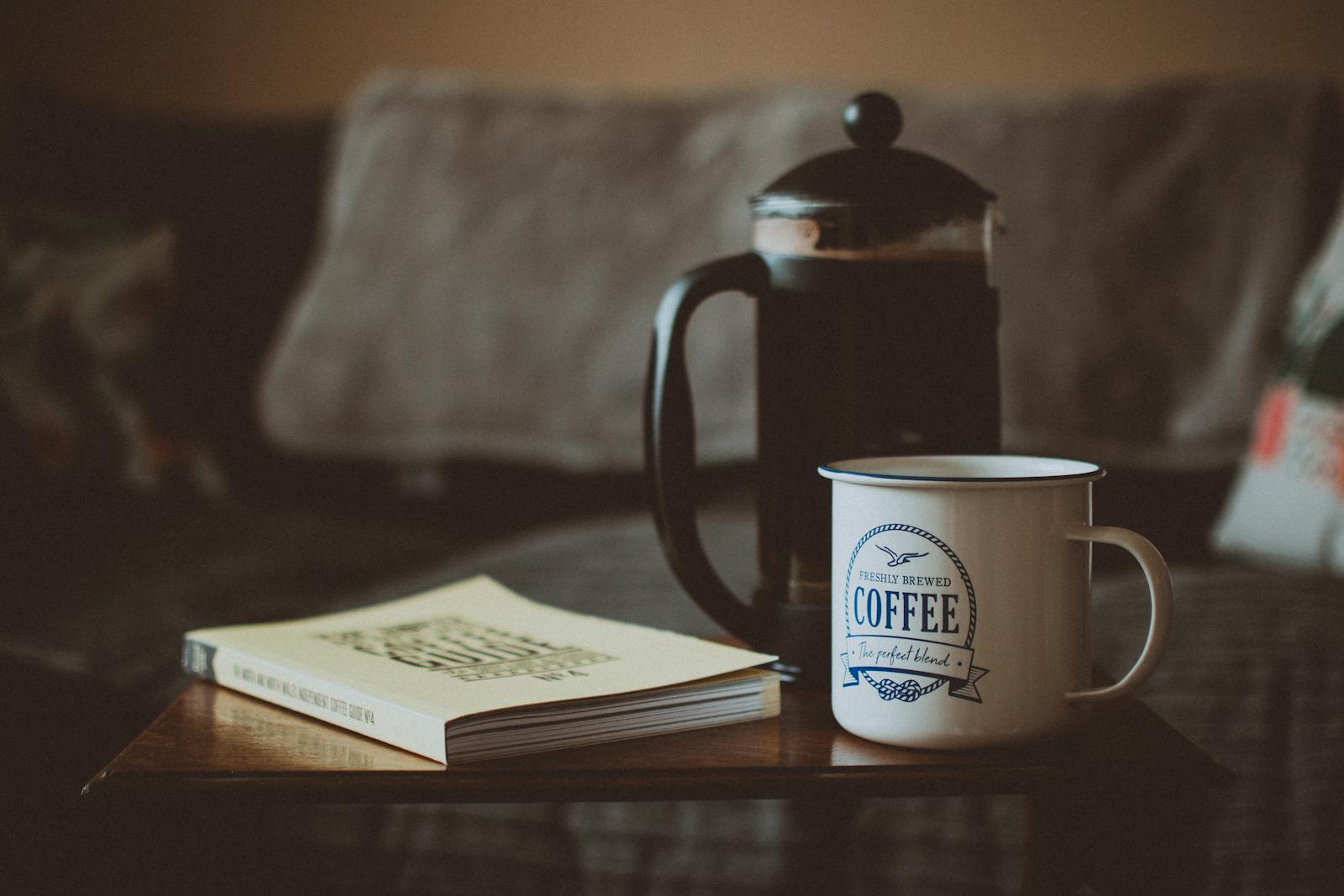
If you already own a French press, you can make cold brew in a French press with almost no extra gear. This is an overnight cold brew French press recipe (coffee steeped in cool water for hours, then strained) with simple ratios, clean decanting, and an easy batch-size calculator.
Cold brew is simple: coarse coffee + cold water + time. Most French-press guides converge on a 12–24 hour steep and a cold brew concentrate recipe approach that you dilute before drinking. The trick is choosing a ratio that fits your press size, then decanting cleanly so the brew stays smooth instead of silty. This guide covers both “ready-to-drink” and “concentrate” styles—plus a scaling tool for grams.
Cold brew in a French press: the quick overview
Think of cold brew as a “set it and forget it” soak. Combine coffee and cool water, wait, then separate the grounds. The French press helps you filter—just not perfectly—so your real goal is clean separation and a quick transfer into storage.
Do this every time: plunge slowly, then decant immediately into a separate jar. Keeping coffee on the grounds keeps extraction going and can push the last cup toward muddy or bitter.
Concentrate (strong)
- Use when: you want strength that stands up to ice or milk.
- Cold brew French press ratio: usually 1:4 to 1:6 coffee-to-water.
- Serve: dilute (often 1:1), then taste-adjust.
Ready-to-drink (lighter)
- Use when: you drink it black over ice.
- Ratio: usually 1:8 to 1:10 coffee-to-water.
- Serve: pour over ice; tweak with a splash if needed.
If you’re after “best cold brew recipe” vibes without overthinking it, start with concentrate at 1:5 and steep 14–16 hours. That baseline is an easy way to make strong cold brew—then you dial it in by taste.
Quick clarity note: people sometimes say “cold press coffee” when they mean cold brew (or a “cold brew press”). At home, this French press method is cold brew. Cold drip coffee at home is different (it uses a drip tower), so don’t worry if you see “cold drip” recipes—they’re a separate workflow.
What you need (and what actually matters)
You can make excellent cold brew with minimal gear, but two variables dominate the result: grind size and ratio. Everything else is about consistency and cleanup.
If you upgrade one thing, prioritize a burr grinder (or buy “French press” grind). It’s the easiest way to avoid dusty fines that turn cold brew gritty.
- French press: any size; clean and odor-free.
- Coffee: medium or dark roasts are forgiving.
- Water: cold, filtered if you have it.
- Timer: phone timer works fine.
- Kitchen scale: best for repeatable strength.
- Fine-mesh strainer: catches floaties fast.
- Paper filter: optional for a cleaner cup.
- Storage jar: lidded glass is ideal.
When people search “best French press for cold brew,” they’re usually trying to reduce sediment and make fridge storage easier. Look for: a snug-fitting plunger, a sturdy mesh screen (some presses use a double filter), a size that matches your batching habits (small batch vs large batch), and an easy-to-clean design. In practice, your French press becomes a simple cold brew steeper—a “cold brew press” without buying a single-purpose gadget.
For a straightforward baseline, Simply Recipes’ updated cold brew method reinforces the core pattern: coarse grind, long steep, then strain and chill.
Choose your ratio (and convert it to cups or grams)
Ratios are just a shortcut to “how strong is my base?” Cold brew is usually described as a cold brew coffee ratio by weight. If you have a scale, use grams. If you don’t, approximate with volume—then keep notes so you can repeat what you like.
Make the same recipe twice before you change it. That’s how you learn what “stronger” or “cleaner” actually means in your kitchen.
| Style | Coffee : Water (by weight) | What it tastes like (best for) | Typical serving move |
|---|---|---|---|
| Concentrate | 1 : 4 to 1 : 6 | Bold, syrupy (milk, ice, batching) | Dilute 1:1, then adjust |
| Ready-to-drink | 1 : 8 to 1 : 10 | Light-to-medium (black iced) | Pour over ice; small tweaks |
Want a dependable starting point for concentrate? Kaldi’s Coffee outlines a clear French press concentrate ratio and dilution mindset—perfect if you’re aiming for “strong base, customize later.”
Quick conversions (when you’re not using a scale)
If you’re searching “how many grams of coffee for cold brew,” a scale is the clean answer—but you can still work in ounces. Remember: 1 cup is about 8 fl oz, and 34 fl oz is a common press size. Concentrate will taste intense by design; that’s what makes it flexible for ice and milk.
Dial it to taste (a fast rule)
Too weak? Strengthen the ratio (more coffee) before you steep longer. Too bitter or “dry”? Go coarser or shorten the steep before you reduce coffee. Ratio and grind usually fix the problem with fewer weird side effects than “just wait longer.”
Grind size for cold brew (French press-specific)
The French press filter isn’t designed to stop ultra-fine particles. If your grind is too fine, plunging can push sediment through the mesh and cloud the brew. If it’s too coarse, extraction can feel thin unless your ratio is strong enough.

Aim for “kosher salt” coarse, not “sand” fine. If you’re using pre-ground coffee for cold brew, choose a French press grind. Yes, you can use fine ground coffee in a French press, but expect more grit (and plan to strain).
One practical cue: after you decant, the coffee should look smooth in the glass. If it looks cloudy with visible specks, you’re too fine, you plunged too aggressively, or both.
Fixes for muddy cold brew
- Grind: go coarser before you change anything else.
- Plunge: press slowly and stop when you feel resistance.
- Rest: let the press sit 5 minutes after plunging, then decant.
Step-by-step: brew, plunge, and decant cleanly
This is the classic cold brew French press recipe workflow: mix, steep, plunge, decant. If you want an easy routine, start it at night and finish it in the morning—true overnight cold brew, with minimal effort.
Treat the French press as your brewer, not your storage container. Brew in it, then move the coffee off the grounds.
Brew setup
- Add grounds: start with your chosen ratio (see table above).
- Wet evenly: pour a small amount of water first, stir gently to saturate.
- Fill: add the remaining water, stir once, then place the plunger on top (don’t press yet).
Steep & plunge
How long to steep cold brew? Start in the 12–24 hour steeping range, then lock in a time that matches your taste. When you’re ready, plunge slowly. If you slam the plunger, you’ll force fines through the filter and cloud the brew.
Decant & chill
- Decant: pour into a clean jar or pitcher right away.
- Optional strain: pass through a fine-mesh strainer to catch floaties.
- Chill: refrigerate before serving if you steeped at room temp.
Slow plunge, fast decant. That combo does more for smooth cold brew than buying new gear.
French press cold brew mantra
Filter for clarity (optional) and keep the flavor
If you’re specifically searching “how to strain cold brew coffee,” here’s the simple answer: plunge, decant, then strain the decanted coffee (not the sloshy press). French press cold brew can be delicious with a little body—some people prefer it that way—but a secondary filter is worth it if texture bugs you.
Filter only when the texture bothers you—don’t “fix” what you already like. A heavier body can taste great in milk-based drinks.
Advanced: crystal-clear cold brew
Line a fine-mesh strainer with a paper filter (or a clean paper towel in a pinch), then pour the decanted coffee through slowly. Don’t stir while it drains—agitation pushes fines through. If it clogs, swap the filter and continue rather than forcing it.
Paper filtering can slightly soften the “chocolatey” body. If you miss that richness, serve the filtered brew with a splash of half-and-half or a pinch of salt to round the edges.
Dilute, serve, and make it taste like a coffee shop
Serving is where cold brew becomes “your drink.” Concentrate is a base: dilute for a bright black iced coffee—or keep it punchy for milk. Ready-to-drink is simpler: pour, taste, and adjust with a splash of water if it’s overpowering over ice.
For concentrate, begin at 1:1 dilution, then tweak by tablespoons. It’s easier to make it stronger than to rescue an over-diluted cup.
Ice strategy (so it doesn’t go watery)
If you’re using concentrate, dilute slightly under “perfect” in the measuring cup—ice will finish the job. If you’re using ready-to-drink, bigger cubes melt slower, and thoroughly chilled coffee needs less ice to cool.
Classic café-style
- Black iced: concentrate + water + ice.
- Cold brew with milk: concentrate + milk + ice.
- Sweetener: simple syrup dissolves best cold.
Flavor variations
- French vanilla: vanilla syrup + splash of half-and-half.
- Cinnamon: pinch on top (don’t steep it with grounds).
- Citrus: tiny strip of orange peel (remove after 2 minutes).
For “coffee to go,” concentrate is your friend: pour a serving into a small bottle, add water or milk at your destination, and toss in ice. A lidded jar or leakproof travel tumbler keeps the flavor from picking up fridge smells.
Storage and safety: how long it lasts (and where)
Cold brew keeps well, but only if you treat it like a refrigerated beverage. Once you decant, store it in a sealed container (glass is great because it won’t hold odors). If you made concentrate, store it as-is and dilute per cup—your last serving tastes closer to your first.
Refrigerate the finished coffee in a sealed jar and leave headspace to a minimum. Less air means less “stale by day five” flavor.
Fridge basics (quick and practical)
Keep your refrigerator at or below the standard safe threshold—FDA’s 40°F fridge guidance is a good reference point. Cold brew is low-acid compared to hot coffee, so refrigeration and clean containers matter.
Warning: If it smells “off,” grows fizz, or tastes sour in a way it didn’t on day one, toss it. Don’t try to “sweeten it away.”
How long does cold brew last?
For best flavor, finish most batches within a week. Concentrate often holds up better than ready-to-drink because you dilute per cup. If you notice a harsh, stale finish by day 5–7, it’s usually oxidation—use a smaller jar (less air space) next time.
If you’re wondering how long can you keep iced coffee in the refrigerator, note this difference: hot-brewed iced coffee usually tastes best the same day and goes stale faster than cold brew. Cold brew is built for multi-day storage; hot-brew iced coffee is more of a “drink it soon” situation.
Batch-size calculator (French press volume → coffee + water + dilution)
If your French press is “17 oz,” “34 oz,” or “8 cups,” scaling can feel annoyingly imprecise. This calculator turns your press size into a repeatable recipe, whether you’re making concentrate or ready-to-drink. Results update automatically as you type.
Use it once, then write your numbers down and repeat the same batch. Consistency is the real “secret ingredient.”
Common sizes (fast answers)
| Batch size | Concentrate (1:5) | Ready-to-drink (1:9) |
|---|---|---|
| 12 oz (small batch) | ~71g coffee + ~355g water | ~39g coffee + ~355g water |
| 16 oz (4-cup press, approx.) | ~95g coffee + ~473g water | ~53g coffee + ~473g water |
| 24 oz | ~142g coffee + ~710g water | ~79g coffee + ~710g water |
| 32 oz (8-cup press, approx.) | ~189g coffee + ~946g water | ~105g coffee + ~946g water |
| 34 oz (common press size) | ~201g coffee + ~1,005g water | ~112g coffee + ~1,005g water |
| 64 oz (large batch) | ~378g coffee + ~1,892g water | ~210g coffee + ~1,892g water |
| 1 liter (≈33.8 oz) | ~200g coffee + ~1,000g water | ~111g coffee + ~1,000g water |
If you searched “how much coffee grounds for 64 oz cold brew” or “cold brew ratio 1 liter,” use the row that matches your target and fine-tune from there.
FAQ
When in doubt, change grind first. Most French press cold brew issues trace back to fines and decanting, not “bad beans.”
Should I steep on the counter or in the fridge?
Both work. Counter-steeping tends to extract a little faster and can taste slightly rounder; fridge-steeping is slower and often cleaner. Pick one method and repeat it so your tweaks (ratio, grind, time) actually mean something.
How long should I steep it?
Start in the 12–24 hour range, then adjust based on taste. If it’s weak, strengthen the ratio before you push the steep much longer. If it’s harsh, go coarser or shorten time first. For quick Q&A-style troubleshooting patterns, Driftaway’s French press cold brew FAQs are a useful reference point.
Can I use pre-ground coffee or instant coffee?
Yes to pre-ground—choose a French press grind and plan to strain for clarity. “Overnight cold brew with instant coffee” is really a different drink: you can dissolve instant coffee in cold water and chill it overnight, but it won’t taste like true cold brew because there’s no slow extraction from grounds. If you need the quickest cold coffee, instant is the shortcut; if you want classic cold brew flavor, stick with coarse grounds.
How do I make decaf or “espresso-style” cold brew?
Decaf cold brew recipe: use decaf beans exactly the same way; decaf is great for evening batches. Espresso cold brew recipe: you can’t make true espresso in a French press (espresso needs pressure), but you can make an espresso-style drink by brewing concentrate (1:4–1:5), then diluting less and serving over ice with a splash of milk.
What’s the best French press for cold brew?
Pick a press that matches your batch size (small batch vs large batch), has a snug plunger, and uses a sturdy mesh screen (double-filter designs can reduce fines). Stainless options are durable; glass looks great but needs gentler handling. If your press has extra screens, keep them clean—fines trapped in the mesh make future batches taste muddier.
How do I make hot French press coffee (and a French press iced coffee)?
What is French press coffee? It’s immersion brewing: grounds steep in hot water, then you press a mesh plunger to separate them. For a simple hot method (similar to common Starbucks French press coffee instructions), use coarse grounds, hot water just off a boil, steep about 4 minutes, then plunge slowly. A baseline French press coffee ratio is around 1:15 by weight; to make strong French press coffee, move closer to 1:12. If you’re measuring with tablespoons or scoops, treat it as a starting estimate—scoop sizes vary—then adjust by taste.
For a French press iced coffee recipe, brew hot coffee a bit stronger than usual, then pour it over a full glass of ice (or chill it first so it doesn’t melt the ice instantly). Store hot-brew iced coffee sealed in the fridge if needed, but it generally tastes best quickly; caffeine can vary widely by bean, dose, and serving size, so treat any number you see online as a rough estimate.
If you’ve landed here from a “cold brew recipe reddit” thread—or you searched “cold brew kaffee” / “cold brew rezept”—you’re in the right place. The method is the same: coarse grounds, long steep, then strain and chill.
And if you’re aiming for store-bought style (brands like La Colombe or Stōk, or a Fellow-style setup), focus on the basics: a clean cold brew concentrate, consistent dilution, and cold storage. For any packaged cold brew, follow the label for refrigeration—many are shelf-stable sealed, but need refrigeration after opening.