Do you actually want two coffee makers bolted together? FlexBrew can be the perfect “household compromise”—but it’s also the kind of product where a single wrong assumption (like “it takes K-cups”) turns into instant buyer’s remorse. This review treats FlexBrew as a family of machines, not a single model, so you can match the right version to your routine—and avoid the common gotchas around counter space, brew speed, and cleaning.
If you’re considering the Hamilton Beach FlexBrew, you’re probably trying to solve one specific problem: some mornings you want one mug, other mornings you want a full pot—without owning two separate machines.
In plain terms, a Hamilton Beach FlexBrew 2-way coffee maker is a Hamilton Beach coffee maker that behaves like a Hamilton Beach single serve coffee maker on one side and a Hamilton Beach coffee maker 12 cup Hamilton Beach drip coffee maker on the other. Many versions also act like a Hamilton Beach programmable coffee maker (at least on the carafe side), which is why people describe it as a “duo” setup.
TL;DR
- Best fit — you genuinely switch between “one mug” and “a pot,” and can spare the counter space.
- Biggest risk — model confusion (some versions handle K-Cups; others don’t), plus slower single-cup brewing than a dedicated pod machine.
- Best habit — a simple monthly descale keeps flavor clean and drip flow steady (per the Hamilton Beach care guide).
Pros
- Flexibility — single-serve or carafe without swapping machines.
- Value — often cheaper than buying a separate pod brewer + drip machine.
- Routine-friendly — programming (on many models) helps weekday mornings.
Cons
- Counter space — “two-in-one” usually means a wider footprint than you expect.
- Single-cup pace — typically slower than a dedicated pod machine.
- Model variation — compatibility and features can change by version.
Identify your FlexBrew in 60 seconds
The easiest way to enjoy a FlexBrew is to start with one boring step: find your exact model number (often on the bottom/back label). The FlexBrew name covers multiple “2-way” layouts, plus versions that change the single-serve workflow. Confirm the model first, and everything else—pods, filters, brew sizes, and expectations—gets simpler.
Retail reality check: If you’re browsing a Hamilton Beach FlexBrew Walmart listing, treat the headline as marketing—use the photos, the box, and the model number to confirm pod compatibility. Retail feeds also sometimes show odd strings like “prog advanced” or “hot 12”; don’t treat those as official specs—use the manual label instead.
Quick conversions (so listings make sense): many “12-cup” coffee makers use 5-oz ‘coffee cups’, so 60 oz ≈ 12 coffee-maker cups. If you mean US measuring cups, 12 cups = 96 fl oz, and 60 oz = 7.5 cups.
Common FlexBrew model numbers shoppers search include 49976, 49979, 49902 (often associated with the FlexBrew Trio line), and 49922. This doesn’t mean they all work the same—just that you’ll see these numbers in listings and manuals, so it helps to recognize them quickly.
Quick rule of thumb: “FlexBrew 2-Way” usually means a single-serve side + a carafe side in one footprint. “Trio” variants often emphasize pods more explicitly, which can change what “single serve” looks like day to day—something you’ll see repeated across Hamilton Beach FlexBrew trio reviews.
Tip: If a listing headline says “FlexBrew” but the photos show only one brew head, treat it as a different product line. For this review, we’re talking about the dual-brew family.
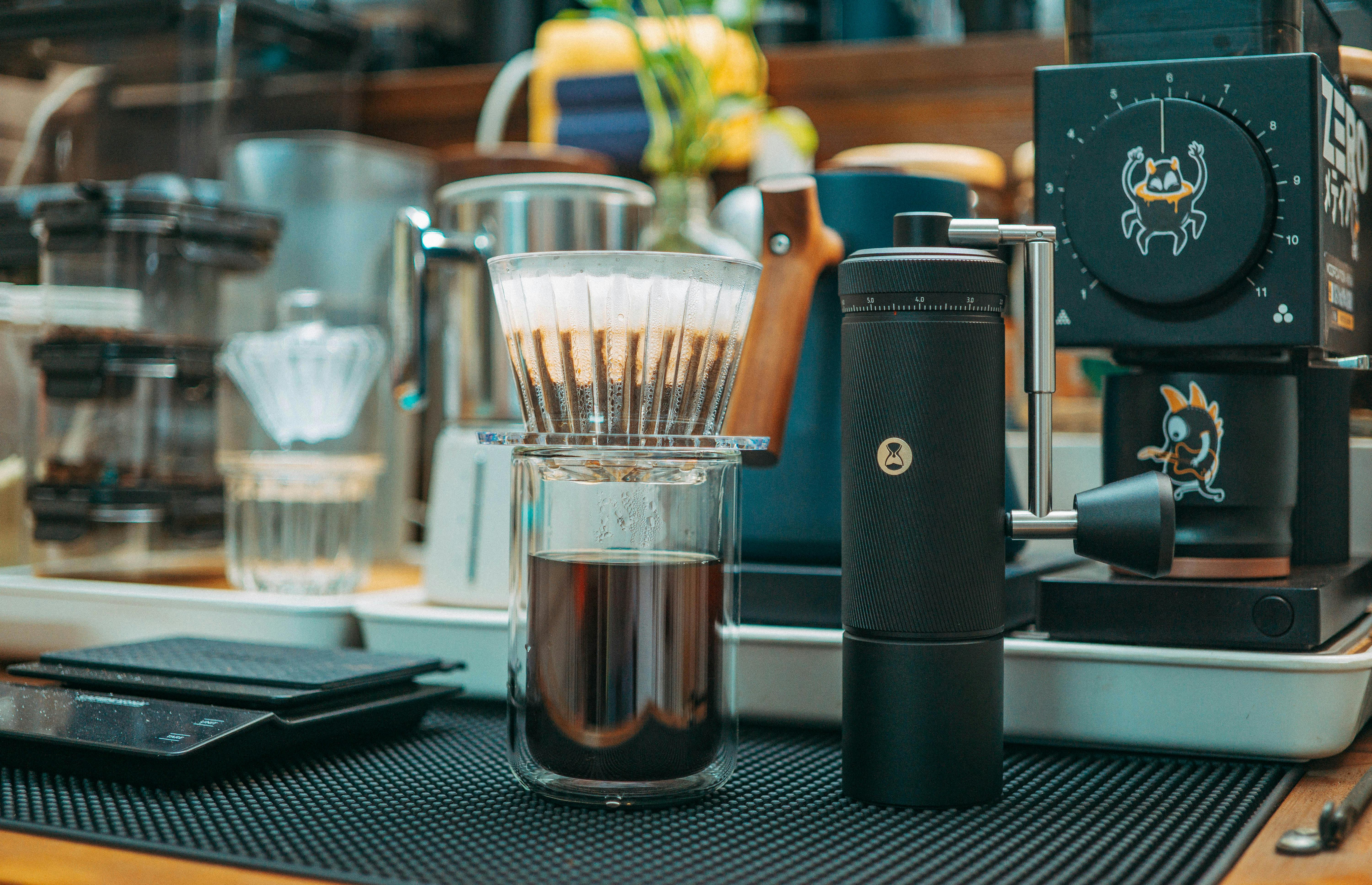
FlexBrew-style machines trade counter space for flexibility.
| What you’re shopping for | What it usually means | Fast compatibility check | Best for |
|---|---|---|---|
| “FlexBrew 2-Way” | Single cup + carafe in one chassis | Look for “K-Cup” wording (or “grounds only” wording) on the box/manual | Homes that alternate between one mug and a pot |
| “FlexBrew Trio” | Often emphasizes pod workflow alongside grounds | Confirm the single-serve basket type and brew-size options in the manual | Mixed households: pods for speed, grounds for cost/taste |
| “Model number match” | Same product name, different internals | Search the manual by model number before buying pods/filters | Anyone trying to avoid return hassle |
One common real-world example: some FlexBrew-branded 2-way models are built around grounds (and sometimes soft pods) rather than K-Cups, which is why you’ll see reviewers explicitly warn to verify compatibility before you stock up. See the 49980A hands-on review for a clear model-specific compatibility callout.
Pod compatibility: K-cups vs soft pods vs grounds
Don’t let “pods” become a blanket word. In shopping listings, it can mean three different things:
- K-Cups — hard plastic pods with a sealed lid; compatibility depends on the exact single-serve basket design.
- Soft pods — paper “pillow” pods; some baskets accept them, others don’t (and results vary).
- Ground coffee — most consistent option; cheaper per cup; also the most “mess-prone” if you rush cleanup.
- Reusable pod — convenient, but can taste weak if you under-dose or grind too coarse.
People sometimes search “Hamilton Beach Keurig” when they really mean “a Hamilton Beach brewer that can use K-Cups.” FlexBrew can fill that role on some models, but it’s not universal—so treat it like a Hamilton Beach pod coffee maker only after you confirm your exact version’s pod basket.
Footprint and cabinet clearance reality check
FlexBrew’s biggest hidden cost isn’t money—it’s space. Two brew areas plus a carafe zone usually means a wider base, and some versions are tall enough that you’ll notice it under upper cabinets when you refill water. If you’re tight on vertical clearance, pay attention to “lid open” height, not just the listed height. The kitchen-fit notes in FlexBrew Trio testing capture this frustration well.
Coffee quality and speed: what to expect in a normal week
FlexBrew’s vibe is “pretty good coffee with fewer steps,” not “coffee nerd perfection.” That’s not a diss—if your goal is a reliable morning cup, you want consistency more than artistry. The best FlexBrew experience comes from treating each side like its own brewer with its own sweet spot.
If you’re new to how to use a coffee pot, FlexBrew is beginner-friendly: fill the reservoir, load grounds/pod in the right basket, place your mug or the coffee pot/carafe, then hit brew. That simple “fill → load → brew” loop is basically the whole Hamilton Beach FlexBrew how to use story—everything else is preference and maintenance.
Buy it for flexibility, not for speed. A dedicated pod machine will usually beat it on “out-the-door” time.
Single cup vs carafe: which side tastes better
Here’s the pattern most people notice: the carafe side tends to be more forgiving because you’re brewing a larger batch and extraction evens out. The single-serve side can swing from “surprisingly solid” to “a little thin” depending on grind size, how full you pack the basket, and whether you choose a bold setting.
Quick performance checks: medium grind usually beats extra-fine (less bitterness, fewer clogs); if a single cup tastes weak, add a bit more coffee before blaming the machine; and if you hate a lukewarm first sip, pre-warm your mug with hot tap water.
Speed expectations
What “fast enough” looks like
- Single cup — plan for “a few minutes,” not instant coffee-shop speed.
- Carafe — drip timing is usually normal for a basic 12-cup brewer.
- Bold mode — can trade time for a slightly stronger cup.
Mobile note: if the card layout feels tight, swipe/scroll—nothing critical is hidden.
One small habit that helps
Use the single-serve side for true “I’m rushing” mornings, and reserve the carafe side for when multiple cups will actually get consumed. That keeps the machine’s flexibility working for you instead of turning into extra steps.
The “one side at a time” trade-off
FlexBrew is great at being two things—but it’s still one appliance. In practice, you’re usually brewing either the mug or the carafe at a time. That’s fine for most homes, but if you routinely want “a pot for the table” and “a to-go mug” simultaneously, you’ll feel that bottleneck.
Across Hamilton Beach FlexBrew reviews—especially Hamilton Beach FlexBrew 2-way coffee maker reviews—and broader dual brew coffee maker reviews, the trade-offs cluster in the same place: flexibility and value on the plus side, space and single-cup speed on the minus side.
Features that matter more than the spec sheet
Specs are easy to compare. The real question is whether the features match your mornings. If a feature doesn’t save time or reduce mess, it’s basically decorative.
Programming and auto-shutoff expectations
If you want a true Hamilton Beach 2-way programmable coffee maker experience, confirm your model supports scheduling on the carafe side. On some control panels you’ll see labels like “PROG” (program) and sometimes “ADV/advanced” for extra options—handy, but only if you’ll actually use them. Auto-shutoff is non-negotiable if you’re forgetful—especially on models with a warming plate.
Filters, baskets, and ongoing costs
Long-term value depends on what you feed the machine. Grounds are cheapest per cup; pods are the most convenient; reusable filters and baskets sit in the middle. If you’re budget-sensitive, FlexBrew shines when you use grounds for the carafe and reserve pods/single-serve for true rush moments.
Nice to have
- Pause & pour — helps if someone grabs a “mid-brew” cup.
- Reusable basket — reduces paper filter runs (and late-night store trips).
- Clear reservoirs — easier “did I fill it?” glance.
Dealbreakers
- K-Cup must-have — confirm compatibility before purchase (model matters).
- Low clearance — if cabinet space is tight, refilling gets annoying fast.
- Ultra-fast mornings — if you need “60 seconds and done,” this may frustrate you.
Cleaning, descaling, and durability watch-outs
FlexBrew doesn’t ask for much—just consistency. If you neglect cleaning, flavors get dull, drips get weird, and “my coffee tastes off” becomes a regular thought. A simple monthly routine is the difference between “reliable” and “why is it doing that?”
Safety note: Let hot parts cool before wiping, and never move a full, hot carafe in a hurry. If your model uses a warming plate, treat it like a stovetop burner—hands off unless you’re paying attention.
Vinegar descaling routine (both reservoirs)
Hamilton Beach’s own use-and-care instructions spell out the basic approach: run a vinegar-and-water cycle, then follow with fresh-water rinses until the smell is gone. It also calls out a practical warning about dishwasher “SANI” cycles (heat can be too aggressive for certain parts). Use the FlexBrew care guide to match the exact steps to your model.
Mobile note: if the table looks cramped, scroll horizontally—no need to zoom.
| When | Do this | Why it helps |
|---|---|---|
| Daily | Rinse the single-serve basket; wipe the drip area/drip chamber | Prevents stale oils and “mystery drips” |
| Weekly | Wash carafe + brew basket; check for grounds buildup | Keeps flavor cleaner and brew flow steadier |
| Monthly | Run a descale cycle; rinse until odor-free | Reduces mineral scale that can cool water and slow brewing |
Advanced notes: if your coffee tastes “off”
Try these in order before you assume the machine is “dying”:
- Rinse — run one plain-water cycle to flush old coffee oils.
- Descale — mineral scale can make coffee taste flat (and slow the drip).
- Refresh — swap to fresh beans/grounds; stale coffee can mimic “machine problems.”
- Re-dose — bump the single-serve dose slightly and avoid extra-fine grind.
- Needle clog (often searched as “Hamilton Beach FlexBrew needle error”) — if your model uses pods, check the puncture needle area for buildup, then run a rinse cycle.
- Reservoir seating (often searched as “Hamilton Beach FlexBrew water sensor”) — empty/rinse the tank, reseat it firmly, and check for debris where it meets the base.
Durability: heat, hinges, and what owners complain about
Because FlexBrew combines multiple systems, small wear issues can feel bigger: a lid that doesn’t seal quite right, a basket that doesn’t seat cleanly, or a “why is it dripping?” moment that turns into a weekly annoyance. Scanning patterns in Best Buy owner feedback, the repeat themes tend to be consistency and durability—especially if cleaning slips.
Verdict: who should buy it (and who should skip it)
FlexBrew is a good buy when you want one appliance to satisfy two different coffee habits—and you accept that it won’t beat dedicated machines at their specialty. If you value “one mug sometimes, a pot other times” more than “fastest possible brew,” it’s a strong fit.
So, is Hamilton Beach a good coffee maker brand? In general, it’s value-first: lots of convenience for the price, with durability that varies by model and maintenance. In broad Hamilton Beach coffee maker reviews, FlexBrew tends to land as a smart pick when you truly need both formats—making it a contender for the best FlexBrew coffee maker for your routine, not a universal “best for everyone.”
If you’re shopping across Hamilton Beach options, this is the “combo lane”: a Hamilton Beach duo coffee maker vibe rather than a specialized machine. If you specifically want a Hamilton Beach iced coffee maker, a Hamilton Beach coffee maker with grinder, or a compact Hamilton Beach 4 cup coffee maker, a FlexBrew 2-way setup likely won’t be the best Hamilton Beach coffee maker for you—even if you love the brand’s everyday practicality.

One last practical buyer check: if you’re hard on glassware, confirm the availability and price of a replacement Hamilton Beach FlexBrew carafe (and lid) before you buy. It’s a small detail, but it matters if this machine is going to be your daily coffee pot.
Best-for scenarios
- Split households — one person drinks a travel mug, another wants a pot on weekends.
- Budget-aware routines — grounds most days, pods only when you’re truly rushing.
- Small gatherings — carafe for brunch, single cups for afternoon “one more.”
Skip-if scenarios
- Cabinet squeeze — you hate awkward refills and cramped lid clearance.
- Speed-only mornings — you want pod-machine speed above everything else.
- Pod certainty — you require one specific pod type and don’t want model research.
Printable fit scorecard (edit in place)
Give each row a quick score from 0 (nope) to 2 (yes). 8–10 usually means “good fit,” while 0–5 means you’ll probably be happier with a dedicated machine.
| Fit factor | What “2” looks like | Your score (0–2) |
|---|---|---|
| Space | You have room and easy reservoir access | |
| Speed tolerance | You’re okay waiting a few minutes for single-serve | |
| Pod certainty | You’ve verified your model’s pod/grounds compatibility | |
| Mess tolerance | You’ll rinse baskets and wipe drips regularly | |
| Household pattern | You truly need both “mug” and “carafe” in one machine | |
| Total | Sum your scores here |