Cold brew vs hot brew isn’t a right-or-wrong question—it’s a “what do you want this coffee to do for you?” question. Use the quick compare and the 60-second picker below to land on a method you’ll actually repeat.
Cold brew is usually steeped for hours—often in the 12–18+ hour range—while hot coffee is brewed in minutes. That single change (time + temperature) shifts what gets extracted: research has found hot brews can show higher titratable acidity and higher antioxidant activity than cold brews from the same beans. Meanwhile, a typical 16-ounce cold brew lands around the ~200 mg caffeine range, but serving strength varies wildly with dilution. Let’s make the choice simple.
TL;DR: Choose cold brew for make-ahead convenience and a smoother, rounder sip. Choose hot brew for aroma, brightness, and a cup right now. If you’re caffeine-sensitive, treat concentrate like espresso: measure and dilute.
Quick glossary: In coffee, “brew” simply means extracting flavor from grounds with water. Brewed coffee is any coffee made by steeping or dripping water through coffee—hot or cold.
| Factor | Cold brew | Hot brew (regular/drip) |
|---|---|---|
| Time to drink | Slow steep (hours), then ready on-demand | Fast (minutes), ready immediately |
| Flavor vibe | Round, smooth, chocolatey; lower aroma “pop” | Bright, fragrant, more “sparkle” and nuance |
| Best for | Iced lattes, batching, busy mornings | Cozy cups, light roasts, tasting notes |
| “Strength” control | Often brewed as concentrate; dilution matters | Strength set by dose and extraction time |
| Gear needed | Jar + filter (that’s enough) | Many options (drip, pour-over, French press) |
Pick cold brew if…
- Batching: you want 2–4 days of coffee ready in the fridge.
- Smoothness: you prefer chocolatey, lower-bite cups.
- Convenience: mornings are chaotic and you hate cleanup.
- Ice drinks: you mostly drink coffee cold anyway.
Pick hot brew if…
- Aroma: you want that fresh-brew fragrance and brightness.
- Speed: you need coffee now, not tomorrow.
- Control: you like tinkering with grind, time, and brew style.
- Warmth: a hot cup is part of your daily comfort ritual.
Cold brew vs hot brew: what’s actually different
The simplest difference is temperature and timing: cold brew is a long, cool soak; hot brew is a short, hot extraction. Everything else—flavor, body, and even caffeine—flows from that.
So, what is cold brew coffee? It’s coffee brewed with cool (or room-temperature) water over a long steep, then filtered. If you’re wondering how cold brew coffee is made, the most common setup is “steep, strain, dilute.” The National Coffee Association’s cold brew method basics explain the core idea in plain language.
Types of cold brew coffee are usually simple: ready-to-drink (already diluted) and cold brew concentrate (you dilute it yourself). You can also find nitro cold brew in cafés, but at home, concentrate vs. ready-to-drink is the big decision because it changes how you portion and how you use cold brew coffee day to day.
Can you use regular coffee for cold brew? Yep—any beans can work. The method matters more than “special cold brew beans.” If you want an easy starting point, medium-to-dark roasts often lean into the smooth, chocolatey cold brew flavors people expect.
Room temp vs refrigerator: steeping at room temperature is common and tends to finish sooner; steeping in the refrigerator usually takes longer but can feel a bit cleaner. Either way, you’re still making cold brew—the main difference is pace.
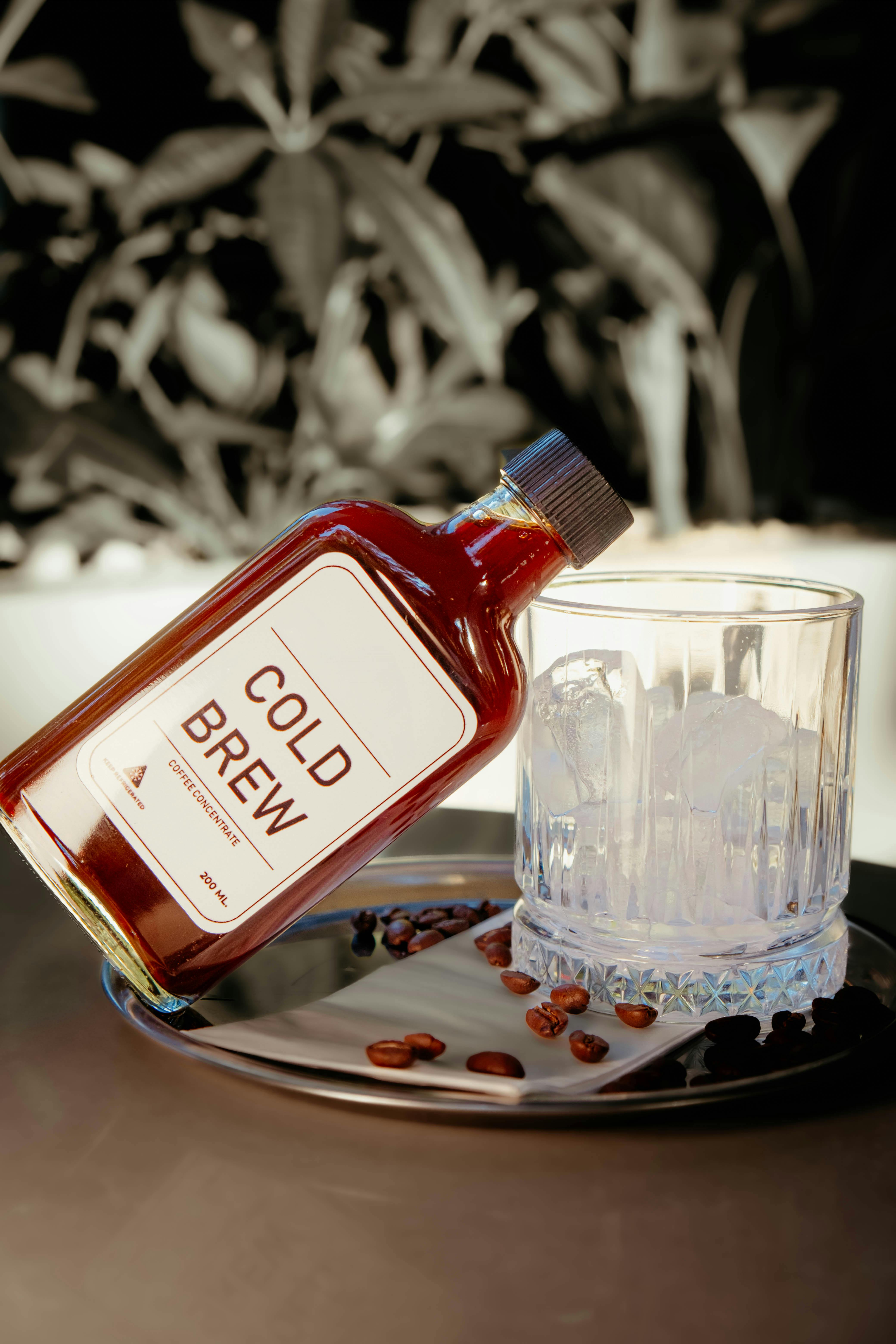
Cold brew coffee methods are usually low-tech: a jar + filter, a pitcher with a built-in mesh, or (less common) a slow-drip tower sometimes called cold drip coffee. The big lever is still the same: coarse grind, enough time, then filter clean.
And if you’re craving a fast cold brew coffee option, the most realistic shortcut is a shorter room-temp steep plus a good paper filter—quick, drinkable, and not trying to be “perfect café cold brew.”
Cold brew in one sentence
Think of cold brew as a smooth, chilled base you can dress up—over ice, with milk, or even gently warmed—because the brew is already “finished” and waiting.
Hot brew in one sentence
Think of hot brew coffee as a fresh, aromatic snapshot of your beans—best right after brewing, when the fragrance and brightness are still loud.
Difference between iced coffee and cold brew
Cold brew vs iced coffee is mostly about when heat is used. Cold brew is brewed cold from the start. Iced coffee is usually hot brewed coffee cooled down—so yes, iced coffee can be “just coffee with ice,” but the best versions are made to avoid tasting watered down.
How to make iced coffee from hot coffee: brew a little stronger than normal, let it cool for a minute, then pour over a full glass of ice. If you’re ordering out and wonder why iced coffee is more expensive, it’s often because cafés use extra coffee or extra prep to keep the flavor strong after chilling.
Flavor and aroma: why the same beans taste different
If hot coffee feels “louder,” it’s often because heat helps carry aroma—your nose is getting more information. Cold brew can taste calmer and more chocolate-leaning, but it may feel less floral or sparkly, especially with lighter roasts.
What does cold brew coffee taste like? Most people describe it as smoother, slightly sweeter, and more “round” than hot coffee—often with cocoa, caramel, or nutty notes. Is cold brew bitter? It can be, but bitterness usually comes from steeping too long, grinding too fine, or skipping dilution.
Aroma versus body
Flavor isn’t just tongue taste; it’s smell + taste working together. Hot brewing tends to deliver more volatile aromatics right away, so you notice citrus, jasmine, berry, and “fresh baked” notes more easily. Cold brew often emphasizes body and sweetness instead—especially when you add milk, which can soften edges and make the cup feel thicker.
Cold brew isn’t “better” coffee. It’s coffee optimized for consistency, batching, and smooth sipping—especially over ice.
Practical takeaway
How to remove bitterness (cold or hot)
Two easy ways to accidentally “ruin” either method: (1) grind too fine for cold brew (you’ll pull more harshness), or (2) under-extract hot brew (it can taste sour and thin). To remove bitterness from coffee, dial back extraction a bit (coarser grind or shorter time) and make sure you’re not drinking concentrate without enough dilution.
Dialing tips (cold)
- Grind: coarse, like chunky sea salt.
- Time: shorten steep before changing beans.
- Dilution: start 1:1 concentrate to water, then adjust.
Dialing tips (hot)
- Grind: match your brewer (medium for drip, coarser for press).
- Water: aim “just off boil,” not raging.
- Ratio: change dose before changing time if it’s weak.
Caffeine, acidity, and “strength”: what really changes
Most “cold brew is stronger” talk is really about concentration and serving size—not magic beans. A small hot coffee can have less caffeine than a big cold brew, or more, depending on how each is made and served.
Here’s the practical way to think about it: “Strong” flavor is about extraction and ratio. “High caffeine” is about how much coffee ends up in the cup and how much you drink. Those two can overlap, but they’re not the same.
Caffeine: cold brew vs regular coffee vs espresso
If you’re asking “does cold brew have more caffeine than regular coffee,” the honest answer is: it depends on the recipe and the pour. Cold brew is often served in larger volumes (and sometimes as concentrate), so the total caffeine can climb fast. Healthline notes that serving-size caffeine varies and that “cold” versus “hot” matters less than the amount you drink.
Which has more caffeine—espresso or cold brew? Espresso is highly concentrated per ounce, but cold brew is often a bigger beverage. That’s why “is cold brew stronger than espresso” can be true for flavor or false for caffeine, depending on portion size.
Does a latte or cold brew have more caffeine? A latte’s caffeine mostly comes from how many espresso shots it has—milk changes taste, not caffeine. Cold brew can beat a latte on caffeine when it’s a large serving or lightly diluted concentrate.
Caffeine guardrail: If you’re sensitive, treat cold brew concentrate like you’d treat espresso—measure, dilute, and don’t “free-pour” it into a giant glass.
Iced coffee caffeine vs hot coffee (and cold brew)
Does iced coffee have as much caffeine as hot coffee? Usually yes—if the serving size and recipe are the same. The main reason caffeine in iced coffee vs cold brew feels different is that cold brew is often concentrated or served in a bigger cup. (Cold drip coffee caffeine content can also vary a lot for the same reason: different ratios and brew times.)
Acidity: pH versus perceived bite
Cold brew is often described as “less acidic,” but acidity can mean pH, titratable acidity, or the sharp “bite” you perceive while sipping. When someone says “pH of cold brew coffee,” they’re talking about one measurement—but how it tastes and how it feels can still vary cup to cup. A Scientific Reports paper compared hot and cold coffee chemistry (Scientific Reports 2018), which is a good reminder that blanket claims don’t always hold.
Is iced coffee less acidic? Not automatically—it’s typically the same coffee, just colder. Chilling can soften the “bite” you notice, but it doesn’t magically change the brew style the way true cold brewing does.
Simple comfort rule: if coffee feels harsh, start by diluting (for cold brew) or shortening extraction (for hot brew), then see if drinking with food makes a difference.
Health and calories (the “is cold brew healthy?” question)
Benefits of cold brew coffee are mostly the same as other brewed coffee—it’s still coffee. Black cold brew is typically very low-calorie; calories in cold brew coffee mainly come from what you add (milk, cream, sugar, syrups). If you’re asking “is cold brew bad for you,” it’s usually more about too much caffeine or a too-strong concentrate than whether it was brewed hot or cold. And if you’re choosing hot or iced coffee “better for you,” pick the version you’ll drink slower and enjoy without overdoing add-ins.
Comfort note: if your throat feels sore, many people prefer warm drinks for comfort. Cold coffee can feel sharper simply because it’s cold and you tend to sip faster.
Choose your method by the job you need done
Instead of asking “Which is better?”, ask “What problem is my coffee solving today?” Here are the most common jobs—plus the method that usually wins.
When cold brew usually wins
- Batching: you want one prep session for several mornings.
- Low friction: you want fewer moving parts and easy cleanup.
- Ice-first drinks: you build lattes, shaken coffee, or “coffee + milk” cups.
- Consistency: you’d rather repeat a “pretty good” cup than chase perfect.
When hot brew usually wins
- Aroma chase: you love smelling the cup before the first sip.
- Light roasts: you want citrus/floral notes to show up clearly.
- One-and-done: you want a cup in 3–6 minutes.
- Experimenting: you enjoy tweaking grind and time like a hobby.
Use the 60-second quick picker
Keyboard tip: tab into the dropdowns, use arrow keys to change, then keep tabbing to Print.
Fast, aromatic, and easy to adjust cup-by-cup.
Brew-at-home playbook: two reliable recipes
The goal isn’t perfection—it’s a repeatable cup you can make half-awake. Use these as “starter rails,” then tweak one variable at a time (ratio, grind, or time).

Cold brew basics (no fancy gear)
- Combine: coarse grounds + cool water in a jar. Start around “strong drip” strength, then adjust.
- Steep: cover and rest 12–18 hours (room temp or fridge). Shorter = brighter; longer = heavier.
- Filter: pour through a fine mesh + paper filter (paper removes extra sediment).
- Dilute: if it tastes intense, add water or milk until it’s comfortable.
- Store: keep refrigerated and aim to use within a few days for best flavor.
Hot brew basics (repeatable cup)
- Measure: pick a consistent scoop or scale routine—consistency beats guessing.
- Heat water: “just off boil” for most methods (hot enough to extract, not scorched).
- Brew: follow your method’s normal time (drip/pour-over minutes; press longer).
- Taste, then adjust: too sour/thin = extract more (finer or longer); too bitter/dry = extract less.
- Serve fresh: hot brew fades as it cools—drink it sooner for the best aromatics.
Can you heat cold brew coffee? Yes—warm it gently until it’s comfortably hot. Avoid boiling; it can flatten flavor fast. If you’re curious how hot coffee is served, it’s usually hot enough to sip slowly (not scalding), and letting it cool a couple minutes often makes it taste sweeter.
Equipment note: If you want one button for both styles, look for a coffee maker that brews hot and cold coffee—ideally one with a normal hot cycle plus an “over ice” or concentrated setting.
Common fixes (before you blame the beans)
- Too weak: increase coffee dose first; then adjust time.
- Too harsh: back off extraction (slightly coarser, slightly shorter), or dilute cold brew more.
- Too muddy: add a paper filter step (especially for cold brew and French press).
- Not flavorful: use fresher beans and grind right before brewing if you can.