“Best espresso maker” isn’t one machine—it’s the machine that fits your mornings. If you want café-style espresso, you’re buying a workflow (grind → dose → tamp → pull). If you want fast consistency, you’re buying automation (and a cleaning routine).
This espresso machine buying guide is written for 2024–2025 shoppers who want the best espresso machine for home—without turning the search into a never-ending rabbit hole of specs and hype.
“What if the ‘best espresso machine’ for you is the one that makes slightly worse espresso—because you’ll actually use it every day? If you won’t weigh doses, purge steam wands, and backflush on schedule, a prosumer machine won’t magically fix that. Let’s pick based on your routine, not your aspiration.”
If you want the best espresso machine for the money: pick the right category first (semi-auto vs super-auto), then spend to reduce friction (warm-up, steam, cleaning access).
If you’re reading espresso machine reviews (2024/2025): compare them using the same checklist every time—don’t let “features” distract you from workflow and upkeep.
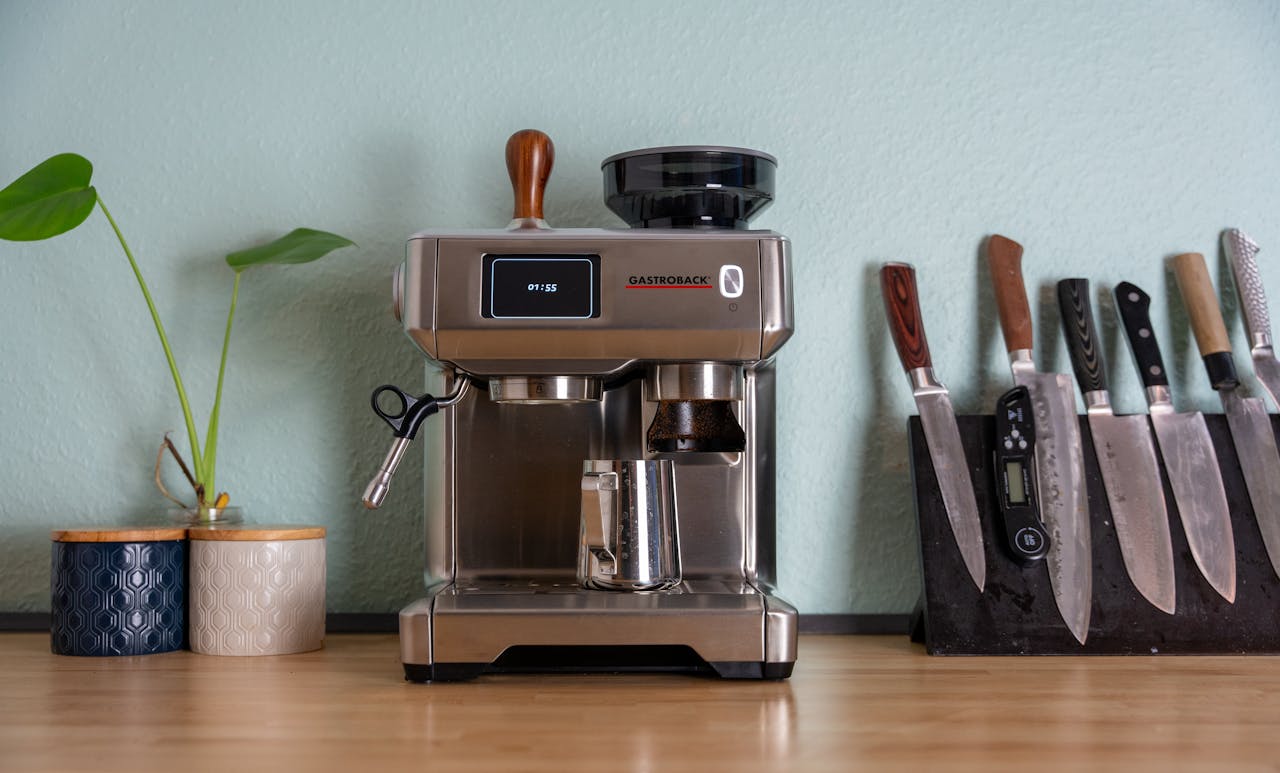
If you can name your “default drink” and your “default morning,” you can pick the right espresso machine category in 2 minutes.
Start by answering two questions: Do you drink milk drinks most days? and do you enjoy tinkering? From there, you’ll know whether to prioritize steam performance, automation, or temperature stability.
If you want a quick sense of how mainstream “best espresso machine” roundups categorize picks (beginner vs enthusiast vs convenience), skim one reputable list and then come back to this framework. See espresso picks by budget.
TL;DR—Best espresso machine for home by buyer type (2024–2025)
Choose the category that matches your routine, then shop for the best model inside that category.
| Buyer type | Best category | Why it fits | Typical time | Upkeep reality |
|---|---|---|---|---|
| “I want café-style control” | Semi-automatic espresso machine | Highest upside per dollar if you’ll learn the basics | 6–12 min | Daily rinse + weekly wipe; periodic backflush |
| “I’m new—make it forgiving” | Beginner-friendly semi-auto | Pressurized option + stable heat = faster early wins | 5–10 min | Same as semi-auto, but fewer ‘dial-in’ headaches |
| “Lattes every day” | Strong-steam latte/cappuccino machine | Steam power and recovery matter more than tiny shot gains | 8–15 min | Wand purge + wipe every drink; deeper clean weekly |
| “I want beans → cup with one button” | Automatic / super-automatic espresso machine | Built-in grinder (“espresso machine with beans”) + consistent dosing | 2–5 min | More frequent cleaning cycles and milk-system hygiene |
| “I love tinkering” | Prosumer / high-end espresso machine | Stability + repeatability when you dial in | 10–20 min | Best results if you’ll maintain it |
| “Small space, minimal fuss” | Compact espresso machine | Smaller footprint; fewer power/steam expectations | 3–10 min | Simple cleanup; manage expectations on steam speed |
| “Single-serve convenience” | Capsule / single-serve espresso machine | Fast and tidy; predictable results with low learning curve | 1–3 min | Descale periodically; ongoing capsule cost |
| “I want drip coffee + espresso” | All-in-one coffee and espresso machine | One appliance for two jobs; can be a compromise | Varies | More parts; choose only if you’ll use both modes |
| “Cheapest espresso-ish option” | Moka pot (stovetop) | Strong, concentrated coffee; not true pump espresso | 5–8 min | Rinse and go; great stepping stone |
Not sure where you land? If you’re willing to do one small habit—weigh your dose or time your shot—go semi-auto. If you’re not, go automatic and treat cleaning like brushing your teeth: quick, frequent, non-negotiable.
Home vs office vs shop: If you’re searching “best espresso machine for office” or “espresso machine for a small coffee shop,” you’re shopping a different problem (duty cycle, serviceability, plumbing). This guide focuses on home machines and realistic home routines.
Best for most people (semi-auto, café-style control)
The best semi automatic espresso machine is the one that makes it easy to repeat a good shot—stable heat, decent steam, and a workflow you won’t resent.
Semi-automatic machines are the sweet spot for many homes because they give you real espresso mechanics (portafilter, baskets, steam wand) without requiring commercial-level complexity. The tradeoff is learning: you’ll need a grinder that can go fine enough, and you’ll need a repeatable routine.
For many shoppers, “best espresso machine for the money” lands here: a sensible semi-auto plus a capable grinder often beats spending more on automation that you won’t maintain—or paying for pro-level features you won’t use.
What you’re really buying (workflow + learning curve)
Think of espresso as a tiny controlled experiment. If your shot tastes sour, it’s usually extracting too quickly (often a coarser grind or too little coffee). If it’s bitter and harsh, it’s often extracting too slowly (often a finer grind or too much resistance). Semi-autos reward you for making one change at a time and keeping everything else steady.
That’s why the “best espresso machine” for most people isn’t the machine with the longest spec sheet—it’s the one that helps you keep variables consistent. Serious Eats and similar testing-driven guides tend to emphasize repeatability (stable temperature, consistent pressure behavior, and usability) over flashy add-ons. See hands-on machine tests.
Who should skip this category (and why)
Skip semi-auto if you’re not willing to do any of the following: grind fresh, empty a drip tray, wipe a steam wand, or spend a week dialing in. If your brain wants coffee to be a button, not a hobby, you’ll be happier with an automatic espresso machine.
Common comparison trap: If you’re stuck on “X vs Y” model debates (for example, entry semi-autos or a “best semi automatic espresso machine under $1000” shortlist), stop and score them on workflow and cleaning access first—then worry about the last 5% of taste.
Best for beginners (fast heat-up, forgiving results)
The best espresso machine for beginners is about guardrails: fewer steps, clearer feedback, and a machine that doesn’t punish small mistakes.
For a first espresso machine, “forgiving” beats “powerful.” You’re learning puck prep, grind size, and timing. A beginner-friendly machine helps you get close to good quickly so you’ll actually practice—because espresso skill compounds.
Beginner “first-week” shot recipe (simple on purpose): Start with a 1:2 ratio (for example, 18g coffee in → ~36g espresso out) in about 25–30 seconds. If it tastes sour, go a touch finer. If it tastes bitter and harsh, go a touch coarser. Change one thing at a time.
Beginner-friendly features that actually matter
- Heat-up speed: Fast warm-up means you’ll use it on weekdays, not just weekends.
- Pressurized option: A pressurized basket can smooth over grind inconsistencies early on.
- Simple controls: Clear shot buttons and a predictable steam knob beat “pro” menus.
- Stable temperature: Consistency matters more than chasing a perfect number.
- Good drip tray access: If it’s annoying, it won’t get emptied (and you’ll hate the machine).
- Easy basket/portafilter: A secure lock-in reduces mess and frustration.
Starter kit essentials (what to buy vs skip)
Start small: a burr grinder (espresso-capable), a simple scale, and a small towel for wiping the wand and basket. Skip gadgets that add steps without improving consistency until you can pull three “good enough” shots in a row.
If you’re shopping a best budget espresso machine or best cheap espresso machine tier, be extra honest about expectations: you can absolutely make tasty drinks, but you may trade steam speed, temperature stability, or build quality. Model-review rabbit holes (for example, “De’Longhi Dedica vs Casabrews” style searches) are best resolved by scoring workflow and cleanup—not by chasing a perfect spec.
Best for milk drinks (steam power + microfoam control)
If lattes and cappuccinos are your default, the best espresso machine for lattes is the one with steam power you can use comfortably—plus habits you’ll actually keep.
Milk drinks hide minor espresso imperfections, but they expose weak steaming immediately. Slow steam means longer mornings and inconsistent foam. If you want silky microfoam (not bubbly “bath foam”), you need two things: enough steam power and a wand you can position comfortably. In practice, that means prioritizing an espresso machine with steam wand performance (or a reliable milk frother system) over minor shot differences.

Steam performance signals (boiler vs thermoblock, recovery)
Ignore “bars” marketing. For milk drinks, you care about how quickly the machine reaches steam-ready temperature and how well it recovers between drinks. If you routinely make two lattes back-to-back, recovery time is the difference between a calm routine and a chaotic one.
In practice, stronger steam and faster recovery usually come with bigger internals (more thermal mass, more power, or a design meant for consecutive drinks). That’s why milk-first buyers often benefit from stepping up a tier—even if they don’t care about the last 5% of shot nuance.
Latte art realism check (what beginners can expect)
Latte art isn’t a “buy it” feature—it’s a repetition feature. Your first win is texture: glossy, paint-like milk that integrates smoothly. A simple progression that works: (1) learn to stretch milk (a gentle paper-tearing sound), (2) learn to stop stretching and whirlpool, (3) pour lower and slower as you finish. If you’re chasing “best espresso machine for latte art,” treat the wand as a tool you’ll practice with—not a promise.
Flat white and cortado: you’re aiming for microfoam that’s silky and integrated, not stiff. Steam control matters.
Americano and mocha: you mainly need consistent shots plus hot water (americano) or chocolate integration (mocha).
Safety note: Steam wands are hot and can burn fast. Build a habit: purge → wipe → purge, every time, before you set the pitcher down.
Quick troubleshooting: If your frother or steam stops working (“steam not working” searches are common, including Breville-specific ones), first purge the wand, wipe the tip, and check for clogging—then review your water/scale plan. Steam problems are often maintenance problems in disguise.
Best for “press button, get espresso” (automatic and super-automatic)
A best automatic espresso machine is “best” when speed and consistency matter more than dialing in the perfect shot.
Automatic and super-automatic espresso machines handle grinding, dosing, tamping, brewing, and often milk. You trade some peak flavor potential for convenience and repeatability—especially helpful if multiple people use the machine and nobody wants to learn puck prep.
If you’re filtering automatic espresso machine reviews (including “automatic espresso machine reviews 2024/2025”), focus on three details that predict real-life happiness: whether the milk system is removable, how annoying the cleaning prompts are, and whether you can access the brew group for rinsing. A machine that’s easy to clean becomes a machine you keep.
When super-autos are worth the premium
They’re worth it when you value weekday compliance: you’ll actually make espresso at home, even half-asleep. They’re also great when you prefer milk drinks, since a consistent “good” cappuccino beats an occasional “great” cappuccino plus daily frustration.
Maintenance reality (daily/weekly routines)
Super-autos ask for less skill up front but more consistent hygiene. You’ll empty pucks, rinse brew groups (on many models), and keep milk pathways clean. If you ignore cleaning prompts, cup quality drops and you shorten the machine’s life—so factor in whether you’ll follow routines.
Budget note: “Best super automatic espresso machine under $500” searches exist, but true super-autos under that threshold can be limited. If your budget is tight, compare the easiest-to-clean option in your range to a simple semi-auto workflow—you may get better long-term value either way.
Best for tinkerers (prosumer features, high-end performance, home-friendly)
Prosumer espresso machines are “best” when you want repeatability: stable temperature, consistent extraction, and room to experiment.
If you enjoy tweaking variables—dose, yield, time, temperature—prosumer features can make your results more consistent. You’re typically paying for build quality, thermal stability, and controls that let you repeat a shot profile instead of “hoping it’s good today.” That’s also why this tier attracts “best espresso machine in the world” searches: the ceiling is higher, but so is the responsibility.
High-end and “most expensive espresso machine” options can run into the thousands. You’re not just paying for taste—you’re paying for durable components, serviceability, and stability under back-to-back use. If you’re comparing a La Marzocco home espresso machine (for example, Linea Mini vs GS3 conversations), translate the hype into your routine: do you need faster recovery, more control, or just the joy of a premium build?
Features that change the cup vs features that just look cool
Changes the cup: temperature control (often PID), steady pressure behavior, and a robust ecosystem (often 58mm baskets and accessories). Mostly convenience: fancy displays, smartphone apps, or extra “one-touch” modes you won’t use after week two.
If you’re trying to understand machine “tiers,” it helps to learn the common categories (single boiler, heat exchanger espresso machine, double boiler espresso machine, and super-auto) and what they mean for steaming and back-to-back drinks. See prosumer machine categories.
Counter space + plumbing + power considerations
Be honest about your kitchen. Prosumer machines are often heavier, taller, and louder than you expect. Some “endgame” setups include a rotary pump espresso machine (often quieter), a plumbed espresso machine (water line), or even a built in espresso maker for a remodel—great when it fits your life, pointless when it doesn’t.
One more reality check: Many shoppers get stuck on “E61 espresso machine” aesthetics, volumetric espresso machine features, or stainless steel boiler details. Those can matter, but only after you’ve confirmed the basics: workflow fit, service access, and water plan.
What to look for before you buy (espresso machine comparison checklist)
The best espresso machine is the one you can keep consistent: stable heat, a capable grinder plan, and a cleaning routine you’ll follow.
Want to make this espresso machine comparison actionable? Score each item 0–2 (0 = no/annoying, 1 = acceptable, 2 = easy/strong). Your winner is the machine that scores highest without forcing you to add steps you already know you won’t do.
- Heating + control: fast warm-up and stable temperature; “espresso machine with temperature control” matters when you’ll actually use it.
- Steam system: recovery time if you make milk drinks daily.
- Portafilter + ecosystem: common sizes and easy-to-clean baskets reduce friction.
- Workflow fit: filling tank, emptying tray, and locking in should feel easy.
- Grinder strategy: separate grinder vs espresso machine with grinder; built-in is simpler but less flexible.
- Water + scale: your water plan predicts taste and longevity more than most upgrades.
- Materials + build: stainless steel, all-metal, and serviceable parts tend to age better than fragile plastics.
Budget reality (quick tiers):
- Under $300: capsule, moka, or very entry semi-auto—expect compromises.
- Under $500: stronger home semi-auto value; better steam is possible.
- Under $1000: “prosumer-lite” stability and build for repeatability.
- Under $2000: serious prosumer features for milk + espresso back-to-back.
- Under $3000: premium refinement; buy only if you’ll use the control and maintain it.
- Best budget espresso machine 2025: the one you’ll clean and use daily.
Pressure specs (9 bar vs 15 bar vs 20 bar): You’ll see “15 bar espresso machine” and “20 bar espresso machine” marketing everywhere. In real use, consistency matters more than big numbers. Treat pressure as a baseline checkbox, then shop by temperature stability, grind quality, and workflow.
Design preferences are valid: If you want a retro espresso machine, minimalist espresso machine, wood-accent espresso machine, or “non-plastic” feel, use aesthetics as a tie-breaker—after you’ve scored workflow and service access. Beautiful machines are only beautiful if you keep using them.
Before you buy, read a few espresso machine reviews, then sanity-check with community reality: “espresso machine reddit” threads often reveal cleaning pain points, and espresso YouTube videos can show noise, warm-up, and workflow in real time. Use those inputs to refine your score, not to reset your entire decision.
If you want a quick “shopping script,” look for buying guides that organize by testing criteria (temperature stability, usability, cleaning, and overall value) and use that structure to compare your finalists. See espresso buying criteria.
Reliability tip: The “most reliable espresso machine” is often the one that’s easy to clean and easy to service. Favor brands with available parts, common wear items, and a clear maintenance routine—reliability is a system, not a slogan.
Combo note: If your real need is “best coffee machine for home” (drip) more than espresso, a dedicated drip brewer plus a simpler espresso solution can beat an all-in-one. Choose a coffee-and-espresso combo only if you’ll truly use both modes weekly.
Ownership costs and upkeep (how much espresso machines cost—and why)
Espresso doesn’t just cost money—it costs minutes. The best espresso machine is the one you’ll maintain without resentment.
So how much does an espresso machine cost? The machine is only part of the picture—grinder capability, water treatment, and cleaning supplies add up. Espresso makers also get expensive fast because they’re trying to do two hard jobs consistently: brew at stable temperature and steam with enough power to be repeatable.
Why are espresso makers so expensive? Better machines usually mean sturdier components, more stable heating, faster recovery, and designs that can be serviced instead of replaced. If you’ll actually use those advantages (especially for daily milk drinks), the price can make sense. If you won’t, it’s just expensive clutter.
Recurring supplies
- Water filtration: helps taste and reduces scale buildup.
- Cleaning tablets: for backflushing or brew-group cycles.
- Descaling solution: frequency depends on water hardness and machine type.
- Milk cleaner: if you use milk systems or auto-frothers.
Recurring time
- Daily: rinse/wipe, empty tray, quick purge of steam wand.
- Weekly: deep wipe of group/portafilter area, soak baskets, clean milk parts.
- Monthly-ish: backflush or brew-group cleaning cycle (varies).
- Quarterly-ish: descale if needed (varies by water and machine).
The best espresso routine is the one that fits your worst morning.
Make it easy to clean, and you’ll keep using it.
Printable one-page espresso planner (fill in, then print)
How to use: Click any cell to edit. Keep this table near your machine so your routine stays simple and consistent. To print, use your browser’s Print command (Ctrl+P / ⌘P).
| Section | My plan (editable) | Notes |
|---|---|---|
| Default drink | Example: 8–10 oz latte | This drives steam needs and cup size. |
| Weekday workflow | Warm-up → grind → dose → tamp → pull → steam | If this feels long, simplify the category. |
| Grinder plan | Separate grinder / built-in / pre-ground (short-term) | Espresso needs fine, consistent grinds. |
| Water plan | Filter pitcher / in-tank filter / softened water | Hard water = scale and flavor issues. |
| Daily quick-clean | Rinse portafilter, wipe wand, empty tray if needed | Aim for under 90 seconds. |
| Weekly clean | Soak baskets, wipe group area, milk-part deep clean | Put it on the same day every week. |
| Monthly-ish | Backflush / brew-group cycle (if applicable) | Follow your machine’s manual. |
| Descale plan | Every ___ months (depends on water hardness) | Don’t guess—match your water reality. |
Once you have your routine set, you can use it as a filter: if a machine makes the routine longer or fussier without improving your daily cup, it’s not “best”—it’s just more expensive.
FAQs (quick answers)
Most “espresso machine” confusion comes down to grinders, pressure marketing, and what you actually mean by “espresso at home.”
Which espresso machine should I buy?
Buy the machine that matches your routine: semi-auto if you’ll learn and adjust; automatic if you want consistency with less effort; milk-first machine if lattes are daily; capsule if you want single-serve speed; moka if you want the cheapest concentrated coffee path. Then use the checklist above to compare two finalists with a simple 0–2 score.
How much does an espresso machine cost—and why are espresso makers so expensive?
Costs range from inexpensive capsule or stovetop options to high-end prosumer machines in the thousands. They get expensive because repeatable espresso needs stable heat, consistent extraction behavior, and usable steam—plus components that survive daily use and can be serviced. If you won’t use the extra control or maintain it, spend less and prioritize convenience.
What’s the cheapest way to make espresso?
The cheapest path to an espresso-like drink is usually moka or capsule. Moka is the most affordable non-pod option and makes strong, concentrated coffee; capsules are fast and tidy but cost more per drink. If you want “real espresso” on a budget, an entry semi-auto plus an espresso-capable grinder can be a value play—but only if you’ll use and clean it.