The best camping coffee maker isn’t a single gadget—it’s the brewer that fits how you actually camp: how far you carry it, how many mugs you need, what heat you have, and how much cleanup you’ll tolerate before breakfast.
Multiple major guides have tested camping brewers head-to-head—REI says 40 testers brewed hundreds of cups, and other reviewers report testing 13–15 different systems across trips. (REI 2025 test results) The consensus is simple: there’s no single best for everyone. But there is a best for your camp style—and you can choose it in minutes with a few tradeoffs.
TL;DR (pick fast):
Backpacking → small, single-serve systems with easy cleanup (AeroPress-style, ultralight pour-over, or instant coffee for backpacking).
Car camping → bigger brews + comfort (camping French press, percolator, campfire coffee pot, or stovetop drip).
RV / boat / car power → low-wattage electric, 12V, or pods if convenience wins (think power limits first).
Quick promise: Decide carry distance, batch size, and cleanup tolerance—in that order—and your “best” option usually becomes obvious.
- Filters: paper + backup (or a metal option for a filterless pour over).
- Kettle: coffee kettle for camping = faster mornings.
- Scoop: 1 spoon you always use (consistency).
- Trash bag: pack out grounds + filters, every time.
- Strainer: a camping coffee strainer saves “oops” moments.
- Scrubber: coffee-only sponge or tiny brush.
- Grinder: camping coffee grinder (optional, but tasty).
- Frother: camping milk frother (best for car/RV power).
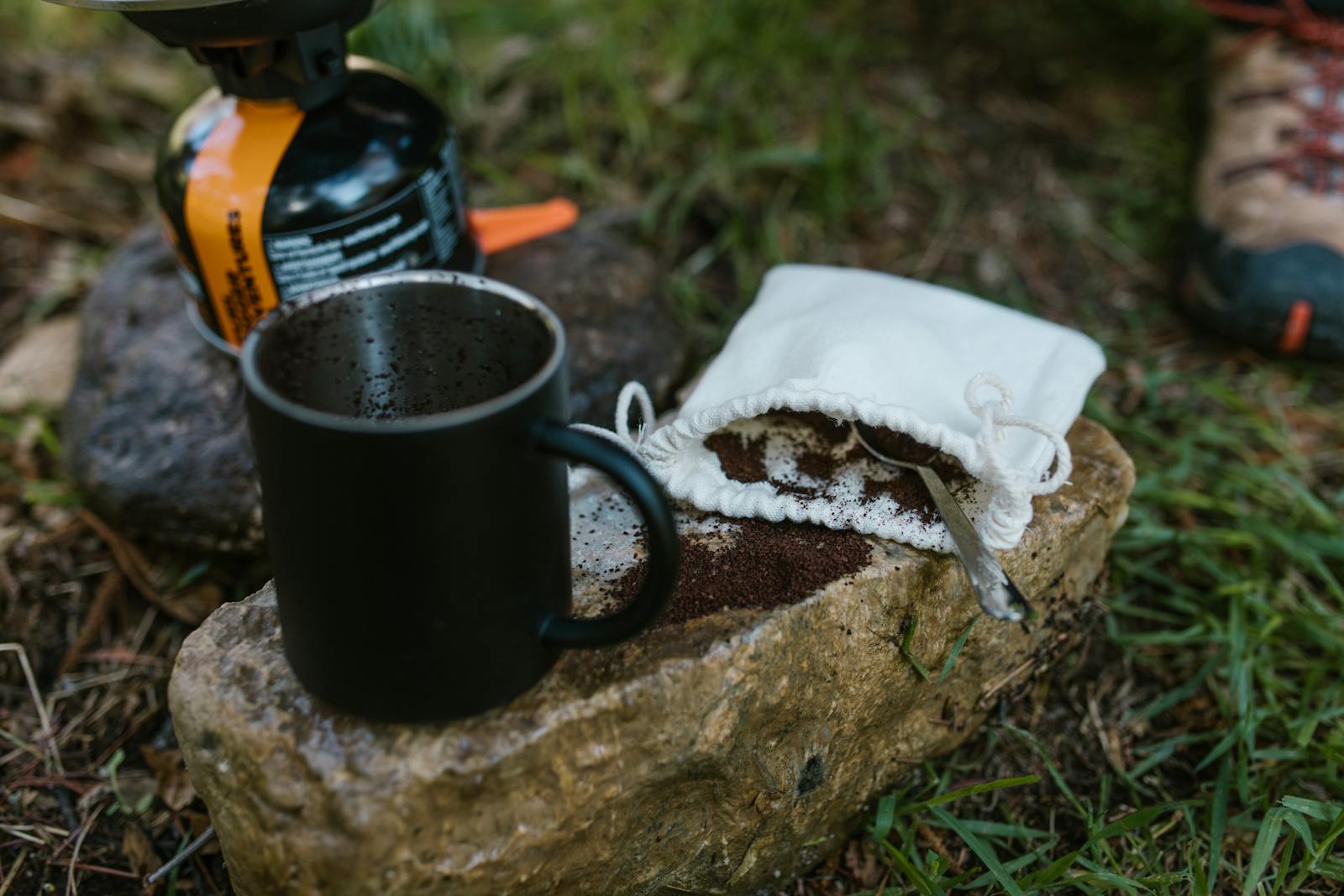
Pick Your Camp Coffee “Style” in 60 Seconds
Start with the part of camp coffee that’s hardest to “fix” later. If you choose a brewer that fits your carry distance and morning rhythm, everything else—beans, grind, technique—gets easier. Pick the wrong style, and you’ll either hate the cleanup, hate the weight, or hate how long it takes to get caffeine into your hands.
- Distance: On your back? Favor a small camping coffee maker that’s single-serve with few parts.
- People: One mug or four? Batch matters more than “best taste.”
- Mess: If you hate sludge, pick a method that contains grounds neatly.
Backpacking / Bikepacking
- Best fit: a backpacking coffee maker that nests inside your pot.
- Reality check: you’ll clean with a splash of water and a finger.
- When it wins: early starts, cold hands, one mug, short cleanup.
Car Camping / Base Camp
- Best fit: comfort-first brewers that make more at once.
- Reality check: cleanup can be a “full minute,” not a “quick rinse.”
- When it wins: leisurely mornings, real mugs, extra water.
RV / Boat / Car Power
- Best fit: low-wattage electric or pod convenience (if power allows).
- Reality check: watts and outlets decide what’s possible.
- When it wins: plug-in mornings, minimal mess, consistent servings.
If you decide your trip style first, you’ll cut most “best coffee for camping” lists down to two realistic choices.
What Actually Makes a Coffee Maker “Best” Outdoors
In the kitchen, “best” often means taste. Outside, “best” is usually the brewer you’ll still enjoy using on day three—when you’re tired, water is limited, and you’d rather be hiking than scrubbing. Tested reviewers keep circling the same factors: portability, ease, brew speed, and cleanup—because those are what make you stick with a setup instead of abandoning it for instant packets.
Think of your brewer like a tiny system: a heat source, a way to hold grounds, and a way to separate coffee from grounds. If any part is annoying at camp, it drags everything down. That’s why a “great” brewer for a cabin weekend can be a terrible pick for a windy ridge—or a cramped counter in an RV.
- Weight: ounces matter fast when it’s on your back.
- Batch size: one mug vs. “everyone wants seconds.”
- Heat source: camp stove, fire, or just hot water from a kettle.
- Durability: plastic vs. metal vs. glass (glass loses outside).
- Cleanup: how messy are the grounds when you’re done?
- Speed: total time to coffee, not just brew time.
- Heat retention: if “keep it hot” matters, consider insulated systems.
- Materials: if you want plastic-free, favor stainless steel or enamel.
If you’re shopping for an electric camping coffee maker, add one more filter: power. A low wattage coffee maker for camping can be perfect in an RV, on a boat, or at a campsite with hookups—but it’s the wrong tool for wilderness. If “200 watt coffee maker” is in your search history, you’re already thinking the right way: match the brewer to your battery/inverter limits, not the other way around. Battery powered coffee maker camping setups also split into two types: devices that need hot water (more common), and a portable coffee maker that heats water (rare, usually heavier, and demanding on power).
One more “outdoors-only” metric: grounds containment. If your system keeps used grounds tidy, you’ll waste less water, you’ll keep the campsite cleaner, and you’ll be less tempted to do the wrong thing and scatter grounds around. (tested camping coffee makers)
The best outdoor coffee maker is the one you’ll happily clean and pack up—every single morning.
Brew-Method Matchups (Taste vs. Weight vs. Cleanup)
If you’re staring at a dozen product names, zoom out and compare methods first. Most camping brewers fall into a few categories, and each category has a predictable tradeoff pattern. Once you decide which pattern fits your trip, brand choice becomes a detail instead of a crisis.
| Method | Best for | What you’ll carry | Cleanup reality | Skill level |
|---|---|---|---|---|
| Instant | Fastest caffeine | Packets + mug | Just a rinse | None |
| Pour-over / drip | Light + clean cup | Coffee drip kit (dripper + filters) | Filter bundles grounds | Low–Medium |
| AeroPress-style | Strong + smooth | Portable coffee maker + filters | Pop out a puck | Low |
| French press | Richer batches | Press (bulky) | Loose grounds = messy | Low |
| Percolator | Groups + fire | Coffee pot for fire + basket | Basket contains grounds | Medium |
| Moka / espresso-style | Concentrate drinks | Moka pot for camping | More parts | Medium |
| Pods / pouches | Hookups + convenience | Pods + device + power | Easy, more trash | None |
| Electric drip (12V/low watt) | RV / car counter life | Machine + filter + power | Easy, needs rinsing | None |
Quick read: if you hate mess, choose a system that turns used grounds into one contained piece (filter “bundle” or press “puck”). If you love the ritual, percolators and moka pots feel the most “camp.”
“Pour-over” and “drip” overlap in camping talk: a camping coffee dripper is basically a portable pour over coffee maker. If you’d rather skip paper, look for a metal filter (a filterless pour over approach) and plan a slightly more oily cup. For espresso cravings, many people search for a camping espresso maker or portable espresso maker for camping—just remember most “portable espresso maker” systems still need hot water from a kettle, while true heat-and-brew units are heavier and more power-hungry.
If you’re a “coffee pot person,” you’ll see lots of searches around a camping coffee pot, campfire coffee pot, and stainless steel coffee pot for camping. Stainless holds up best to real fire use; enamel coffee pot camping setups look classic but can chip; and a vintage campfire coffee pot can be charming if it’s in good shape. For a large camping coffee pot or coffee pot for large groups, think “percolator-sized” and plan multiple rounds if your crew drinks big mugs.
Pick a method that matches your tolerance for time, power, and mess—then optimize taste inside that method.
Top Picks by Trip Type (Not Just “Best Overall”)
Instead of chasing one “winner,” build a tiny shortlist for the way you travel. Below are the most common scenarios and what tends to work best in each—plus the small add-ons that make the setup feel effortless (the stuff people forget, then regret at 6:30 a.m.).

One underrated upgrade: treat your kettle like the “hub.” If you can boil water easily, you can make pour-over, AeroPress-style coffee, instant, oatmeal, or tea—without changing the rest of your kit.
Camp reality tip: your first cup sets the mood. Choose the system that gets you a reliable cup even when the wind is up and you’re half awake.
Backpacking / Bikepacking
Best fit: a backpacking coffee maker that packs small and keeps grounds tidy. AeroPress-style systems are popular because they make a strong, smooth cup, and the used grounds come out as one compact “puck” you can pack out. Ultralight drippers are also excellent if you like a cleaner cup and don’t mind filters. If your priority is pure simplicity, instant coffee for camping can also be the best instant coffee for backpacking because it’s the lightest “system” you can carry.
Don’t forget: if you’re skipping a grinder, bring pre-ground coffee in a sealed bag and accept that it’ll taste best early in the trip. If you do bring one, a backpacking coffee grinder only earns its spot if you’ll actually use it daily. Pre-dose grounds in small bags to make mornings faster and cleaner.
Car Camping & Base Camp
Best fit: comfort-first setups that make more coffee per round. A camping French press makes a rich cup and a simple routine; a travel French press (or a travel mug with coffee press) can be a nice hybrid when you want one vessel that brews and drinks. Percolators also shine here—especially if you love the campfire ritual and want a campfire coffee maker that serves several people.
Stove notes: a camp stove coffee maker setup can be as simple as a kettle + dripper, or a camp stove coffee pot (stainless is the most forgiving). If your camp runs on propane, treat it like a kitchen burner: a coffee pot for gas stove use should have a stable base and a handle you can grip with gloves. “Propane coffee maker for camping” searches often point to either a propane stove + kettle workflow or dedicated propane-brewers—both can work if you plan for cleanup and pack-out.
Groups & Family Mornings
Best fit: repeatability. For groups, the goal isn’t a perfect single cup—it’s getting everyone a good cup with minimal drama. A large camping coffee pot (often percolator-style) works when you can dedicate stove or fire time. Another smart strategy is making a stronger brew (a “concentrate”) and then diluting with hot water—this stretches one brew round into more mugs without overcomplicating your morning.
Concrete example: say four people want 10 oz each (40 oz total). Brew a stronger 20 oz base first, then top each mug with hot water to reach 10 oz. The win: fewer brew rounds, faster serving, and less gear babysitting.
Car, RV, and Boat (12V + low wattage)
Best fit: if you’re camping with an outlet, an inverter, or a 12V system, your “best travel coffee maker” might be an electric brewer—because convenience matters and cleanup stays contained. For the car, look for a coffee maker for the car that’s designed as a 12V coffee maker (sometimes marketed as a portable coffee maker for car use or a “cigarette lighter coffee pot”). For an RV coffee maker, space and power are the main constraints: a best coffee maker for RV use is often a compact, easy-to-clean unit; some people prefer an under cabinet coffee maker for RV counters to save space; and if your rig is 12V-heavy, a 12 volt RV coffee maker or low wattage coffee maker for RV use can fit better than a standard household machine.
Pods/pouches option: if your priority is “no mess,” a camping K cup coffee maker (or travel Keurig coffee maker style device) can be the easiest path—just be honest about trash volume and power draw. If you’re on a boat, prioritize stability and spill control: a coffee maker for boat life should sit securely, keep hot coffee contained, and be easy to rinse without flinging grounds around in motion.
The “best” pick is the one that fits your camp schedule—fast solo coffee, relaxed base-camp brewing, repeatable group batches, or low-watt plug-in convenience.
How to Make Great Camp Coffee (Even Without Fancy Gear)
Here’s the comforting truth: most “bad camp coffee” isn’t caused by the brewer. It’s caused by one of four fixable things—too little coffee, water that’s not hot enough, grind that’s wildly off, or a brew that runs too long. Nail those basics and even a simple camping coffee setup tastes surprisingly legit.
Rule of thumb: hot enough water + enough coffee beats “premium gear” nine times out of ten.
The “no-scale” ratio + timing cheats
A simple starting ratio is 1:15 (one part coffee to fifteen parts water). In camp terms, that’s roughly 1 tablespoon of ground coffee per 5–6 oz of water, depending on grind and how heaping your spoon is. If you like it stronger, move toward 1:13. If you like it milder, move toward 1:17. The goal is not perfection—it’s getting close enough that your brewer can do its job.
Camp Coffee Ratio Calculator (quick math for mugs, no scale required)
Note: Tablespoons are approximate (about 5 g per level tbsp of ground coffee).
Timing cheats help when you’re not measuring precisely. For a pour-over, aim for a steady pour and finish in about 2:30–4:00 minutes depending on dose. For an AeroPress-style brew, a simple steep of 60–90 seconds plus a steady press is plenty. For a French press, 4 minutes is a dependable baseline—just don’t let it sit forever after pressing or it can drift bitter as fines keep extracting.
- Weak: add more coffee (or reduce water) before changing gear.
- Sour: grind a bit finer, brew a bit longer, or use hotter water.
- Bitter: grind coarser, shorten contact time, or avoid overboiling.
- Watery: check mug size—many “10 oz” mugs are closer to 12–14 oz.
Water temp + grind-size quick rules
Temperature matters more than people think—especially at camp where water can come off a stove a little cooler than you expect. If you can, brew around 195–205°F. A near-boil is usually fine; just let a rolling boil calm for a moment if you want a smoother cup. Grind is the other big lever: pour-over likes medium, French press likes coarse, and moka-style likes fine-ish. If your coffee is sour, go a bit finer or a bit longer; if it’s bitter, go coarser or shorter.
For deeper troubleshooting, Treeline’s camp guidance matches what most people learn fast: control your ratio, don’t underheat your water, and don’t let grounds slosh around forever. (Treeline camp coffee FAQ)
If you fix ratio and water heat first, you’ll upgrade your camp coffee more than any gear swap.
Cleanup, Grounds, and Leave No Trace
Cleanup is where “best” becomes real. The easiest systems in the field are the ones that keep used grounds contained—either as a filter bundle or a compact puck. No matter what you use, plan to pack out used grounds and filters in a sealed bag. It’s cleaner for the campsite, keeps critters less interested, and means you’re not leaving dark little “coffee confetti” behind.
Leave No Trace reminder: Treat coffee grounds like food scraps. Bag them, secure them, and dispose of them properly when you’re back at a bin—especially in high-use campgrounds.
A simple “coffee cleanup kit” makes everything smoother: one small trash bag, a few paper towels, and a tiny scrubber that lives with your coffee gear. If you’re using a press or percolator, add a small silicone scraper or spoon so you can lift grounds cleanly without dumping half the pot into the dirt. If you’re short on water, wipe first, then rinse—don’t rinse first and create a gritty slurry that’s harder to manage.
Advanced notes: percolator basics + pot materials
How to use a coffee percolator camping: fill water to the mark, use a coarse grind, heat until it starts perking, then reduce heat and keep a gentle perk for a short window (stronger coffee = slightly longer, but don’t let it rage). Remove from heat before it turns bitter.
Clean a percolator coffee pot: dump the basket into your trash bag, wipe oils with a paper towel, then rinse. If it’s sooty from fire, wipe the outside before packing to avoid smearing soot on everything.
Stainless vs enamel vs vintage: stainless steel coffee percolator camping setups are the most durable. Enamel pots look great, but chips happen—pack carefully. A vintage campfire coffee pot can be fun if it’s solid (lid fits, handle is stable), but it’s not the place to gamble on weak parts.
The best setup is the one that leaves your campsite as clean as you found it—and doesn’t make you dread the cleanup.
FAQ (Quick Answers Before You Buy)
How do I clean a camping coffee maker quickly?
Do a wipe-first cleanup. Knock or scrape used grounds into a sealed bag, wipe oily residue with a paper towel, then use a small splash of water to rinse. For filters, fold them into a tight bundle and bag them. For presses, avoid blasting grounds with water right away—it turns into a gritty slurry that’s harder to control.
Percolator vs. French press for camping—what’s better?
A camping French press is simpler and makes a rich cup, but it’s usually bulkier and can be messier to clean. A camping coffee percolator is great for groups and feels “camp classic,” and the basket can make grounds easier to manage—especially if you use a filter. If you love slow mornings and don’t mind cleanup, press. If you’re brewing for several people or using a fire, percolator often fits better.
What’s the easiest way to make coffee while camping (and what about grounds)?
The easiest is instant (boil water, stir, done). If you want “real brewed” coffee with almost the same ease, choose a system that keeps grounds contained—an AeroPress-style puck or a pour-over filter bundle—so you can bag used grounds without drama. That lines up with what many consumer roundups emphasize: ease comes from fewer parts, less mess, and predictable cleanup. (Travel + Leisure FAQs)
If you want the easiest “real coffee,” prioritize a brewer that contains grounds neatly and cleans with one rinse.