Old coffee beans don’t have to be a sad, dusty mystery in the back of your pantry. With a quick safety check and a smarter “best use” match, you can turn them into cold brew, baking flavor, deodorizer power, or even a compost helper—some of the most practical uses for coffee that cost you nothing.
You find a half-bag of beans shoved behind the flour… and yeah, they smell like “coffee-ish,” not coffee. Before you dump them, know this: most old beans aren’t dangerous—they’re just flat. That means they’re perfect for cold brew, chocolatey desserts, deodorizing a funky fridge, or even giving compost a little boost. A few quick checks will tell you what’s worth brewing, and what’s better as a clean-up tool.
Pick your path: Brew them (best for iced), cook with them (chocolate loves coffee), use them for odor/cleaning, or compost them—after one quick safety check.
- Brew: cold brew, milk drinks, or blends
- Cook: baking boosters, rubs, coffee sugar
- Home: coffee bean deodorizer tricks + scrubs
- Garden: compost add-in (moderation matters)
First, decide if they’re “stale” or “trash”
Think of old coffee beans like crackers. They don’t become “expired” on a timer—they become less enjoyable. Your job is to separate beans that are simply stale from beans that are contaminated (usually from moisture).
Bottom line: dry + clean-smelling beans are usually fine to repurpose; damp or musty beans are a hard no.
Toss immediately if: you see fuzz/spotting, smell musty or sour, or the beans feel damp or sticky. Don’t “test brew” questionable beans—whether they’re “expired coffee beans” or just old beans stored badly.
Quick safety check (30 seconds)
Use this “yes/no” scan before you do anything else:
- Look: Any white fuzz, odd spots, or clumping from humidity? Toss.
- Smell: Musty, basement-like, or sour? Toss.
- Touch: Beans feel sticky or damp? Toss.
- Confidence check: If storage was hot/open/humid, repurpose only for non-food uses—or skip entirely.
If you’re wondering how long do coffee beans last, the National Coffee Association’s storage guidance is a helpful benchmark for freshness expectations—especially if you’re comparing pantry vs. freezer storage (coffee freshness timeline). Practical takeaway: pantry beans fade fast, while airtight + cold storage slows staling.
Is it safe to drink expired coffee? If “expired” means stale but dry, it’s typically safe—it just won’t taste great. If there’s moisture, mold, or a funky smell, skip drinking and toss it.
Flavor check: what “stale” tastes like and why
Stale coffee beans usually taste papery, hollow, or oddly bitter because aromatic compounds fade and oxidation takes over. The coffee may still be “safe,” but the cup loses the sweetness and clarity you expect—especially in black drip coffee.
Curious side note: are coffee beans actually beans? Not really—they’re seeds from a coffee cherry. And can you eat coffee beans? Yes, but they’re very caffeinated and tough on teeth, so treat them like a small snack—not a handful.
| Bean condition | Best use | Avoid |
|---|---|---|
| Dry, smells mild (just “meh”) | Cold brew, baking, coffee sugar, blends | Finicky pour-overs where aroma matters most |
| Dry, smells flat + looks fine | Milk drinks, dessert flavor, deodorizer jar | Serving black to coffee snobs (they’ll notice) |
| Oily/rancid smell (old nuts vibe) | Non-food: deodorizing, “stain test” scrubs | Cooking/baking (off-flavors show up fast) |
| Damp, musty, or moldy | Toss immediately | Everything |
If you still want to brew them, make them taste better
If your old coffee beans pass the safety check, you can still get a pretty satisfying drink—especially if you aim for smooth, diluted, or milk-forward results. (Translation: iced coffee is your best friend.)
The rescue strategy is simple: choose brewing methods that hide flat aromas and smooth out harsh edges.
Cold brew it
Low bitterness, forgiving flavor, great with milk or syrup.
Blend old + new
Fresh beans “lift” aroma; old beans stretch the bag.
Tweak the brew
Small changes beat “over-extracting” for flavor.
If you want a fast refresher on how to use coffee beans for a decent cup, keep it simple: grind right before brewing, start with about 1–2 tablespoons of ground coffee per 6 ounces of water, then adjust from there. With older beans, the “fix” is usually method choice (cold/iced) more than fancy gear.
Printable “Use-It-Up” Checklist (edit & print)
Click into the table to type notes. For a quick printout, use your browser’s Print command.
Accessibility note: If you use a screen reader, treat this as a simple worksheet table.
| Step | What I’m doing | Done |
|---|---|---|
| Safety check | Smell + dryness look good | ☐ |
| Best brew path | Cold brew / blend / milk drinks | ☐ |
| Kitchen use | Baking / rub / coffee sugar | ☐ |
| Home use | Deodorize / scrub (test first) | ☐ |
| Storage fix | Airtight container + cool, dark place | ☐ |
Cold brew + milk-forward drinks (best rescue path)
Cold brew naturally downplays harsh notes. Start with 1 cup beans (coarsely ground) to 4 cups water, steep 12–18 hours in the fridge, then strain. If it tastes thin, steep longer—not hotter. If it tastes a bit dull, add milk, oat milk, vanilla, or a pinch of cinnamon and suddenly it’s “intentional.”
Blend the old with the new (ratio guide)
This is the easiest way to stretch a new bag while keeping flavor decent. Try one of these:
- 25% old / 75% fresh for black coffee (best balance)
- 50% old / 50% fresh for iced coffee or milk drinks
- 75% old / 25% fresh only if you’re adding flavors (mocha, caramel, spices)
If you’re wondering why fresh beans help so much, it’s because coffee flavor fades as aromatics escape and oxygen does its thing—many brands recommend using beans closer to their peak window for best taste (roast window rule).
Brew tweaks that reduce bitterness
Old beans can swing bitter if you over-extract trying to “force” flavor. Change one thing first, taste, then adjust again:
- Grind: Go slightly coarser than usual to reduce harshness.
- Time: Shorten contact time (especially in French press) and taste early.
- Temperature: Brew a touch cooler if you can—hot, not raging.
- Serve: Chill it. Iced coffee hides flat notes better than piping hot.
Coffee maker tip: If you’re trying to figure out how to use an old coffee maker, a quick cleanup helps more than fancy techniques. Run a descale cycle (or vinegar/water rinse), brew one plain water cycle after, and use a fresh filter. Old machines can hold on to stale flavors that make older beans taste worse.
Can you reuse coffee grounds? You can, but it’s usually disappointing: a second brew tends to be weak and more bitter. If you do it, treat it like “flavored water” for iced drinks—not your best cup. Most of the time, it’s better to repurpose the grounds for scrubbing or compost.
Turn old beans into kitchen flavor (no barista skills required)
Stale beans still contain plenty of roasted flavor—just not the bright aromas you want in a straight cup. In the kitchen, that’s a win. You can use them for deep cocoa-like notes, gentle bitterness, and warm “toasty” complexity—easy recipes with coffee beans that don’t depend on perfect freshness.
Small-dose rule: start tiny, taste, then scale—coffee flavor builds fast in desserts.
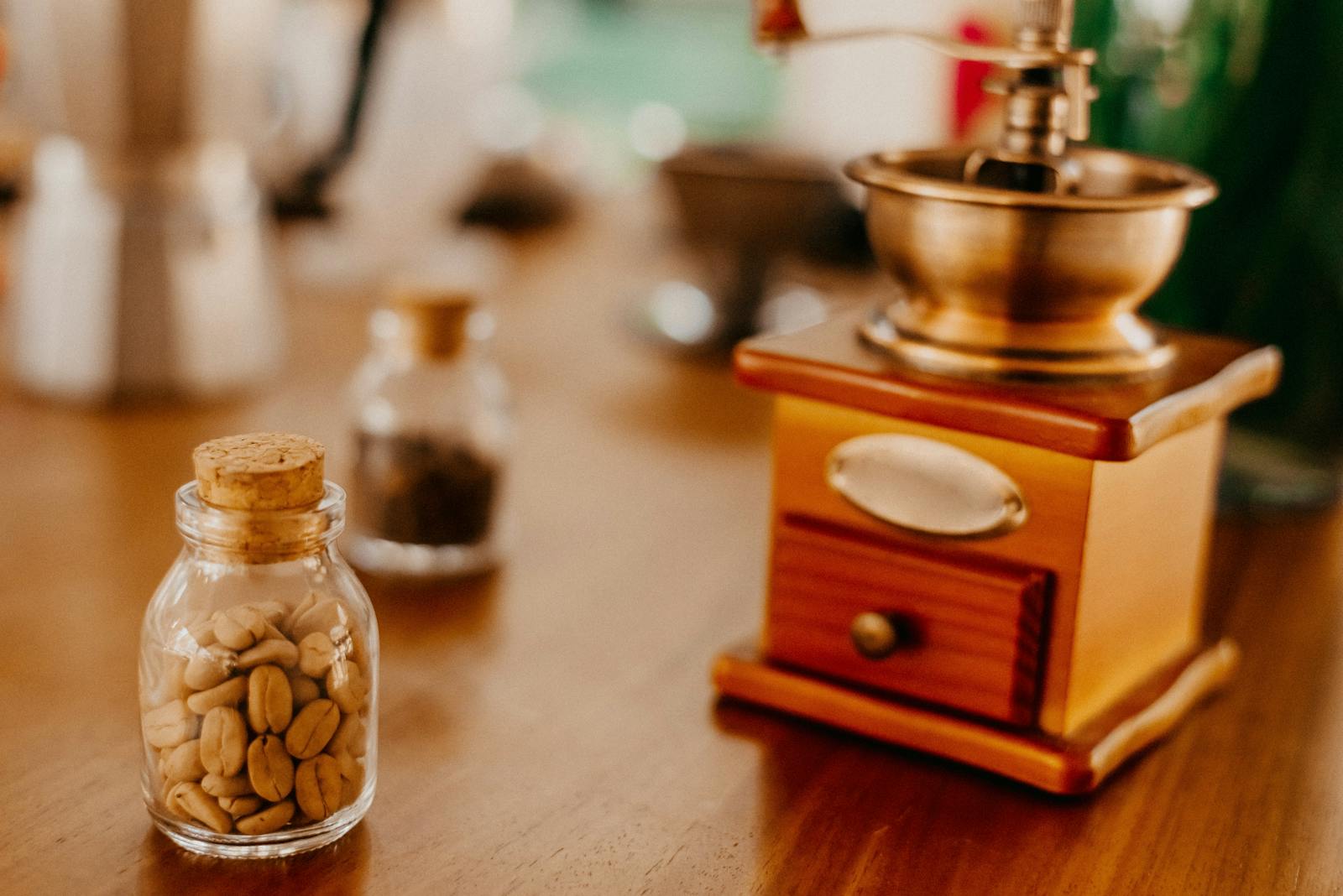
Shortcut: If you don’t want to grind a full batch, grind just a tablespoon at a time. That way you can test recipes without committing (and without turning your whole bag into “coffee dust”).
Bonus move: Toasty coffee flavors pair especially well with chocolate, caramel, brown sugar, and anything with a little salt.
Baking boosters and “espresso powder” stand-ins
For brownies, cookies, or chocolate cake, you’re usually not chasing “coffee flavor.” You’re chasing more chocolate flavor. Add 1–2 teaspoons of finely ground coffee to your dry ingredients, or steep a tablespoon of coarsely ground beans in warm milk/cream for 10 minutes and strain.
- Chocolate desserts: Coffee makes cocoa taste deeper, not “like a latte.”
- Whipped cream: Steep beans in cream, chill, then whip (gentle mocha vibe).
- Pancakes/waffles: A pinch of coffee in batter works like “grown-up” vanilla.
Savory rubs, sauces, and smoky depth
Coffee’s bitterness plays really well with smoked paprika, chili powder, garlic, and brown sugar. Grind beans medium-fine and mix a quick rub:
- 1 tbsp ground coffee
- 1 tbsp brown sugar
- 1 tsp salt + 1 tsp smoked paprika
- ½ tsp chili powder (optional)
Use it on ribs, brisket, mushrooms, or even roasted carrots. The coffee won’t scream “espresso”—it reads more like deep roast and smoke.
Coffee sugar, coffee ice cubes, and leftover brewed coffee
Two low-effort favorites (plus a bonus for leftovers):
- Coffee sugar: Combine ½ cup sugar + 1–2 tbsp finely ground beans. Let sit 2–3 days, then sift. Great on oatmeal or sprinkled on cookies.
- Coffee ice cubes: Brew a strong batch from the old beans, freeze into cubes, and use them in iced coffee so your drink doesn’t get watery.
- Leftover brewed coffee: Freeze for smoothies, stir into brownie batter, or reduce on the stove into a quick “coffee syrup” for pancakes or iced lattes.
Use them for home freshness and cleaning
Old coffee can pull double duty at home: it smells comforting and it has a little natural grit. The key is using it where a mild brown stain won’t ruin your day.
Use coffee like a “soft scrub”: great for tough jobs, bad for light fabrics and porous stone.
Stain reminder: If the surface is light-colored or porous, test first—or choose a different cleaner.
Deodorize
- Fridge jar: Open dish in the back corner
- Shoes: Coffee in a paper sachet overnight
- Trash can: Sprinkle under the liner
- Hands: Rub after chopping garlic
Clean & scrub
- Grill grates: Gentle abrasive on stuck-on bits
- Cast iron: Light scrub, then rinse + dry fast
- Garden tools: Knock off grime, rinse well
- Sink stains: Test in a corner first
For a cozy coffee bean decor moment, fill a small glass jar or bowl with beans and set it near an entryway or bathroom. It looks intentional and doubles as a low-key coffee bean deodorizer—just keep it away from pets and curious toddlers.

Old coffee isn’t garbage—it’s grit + scent. Use it where that’s an advantage.
Deodorizer tricks (fridge, shoes, trash can)
For deodorizing, you don’t even need to grind the beans. Put a few tablespoons in an open container and place it where odors hang out. If you’re using grounds (from brewing), dry them out first so they don’t turn funky.
If you want a broader list of odor-control and reuse ideas that also apply once beans become grounds, Better Homes & Gardens has a solid roundup you can borrow from (repurpose used grounds).
Scrub jobs (cast iron, grills, hands)
Old coffee makes a handy scrub paste: mix a spoonful of grounds with a tiny splash of dish soap and water. Use it on sturdy surfaces like grill grates, stainless steel sink spots, or your hands after onion/garlic prep. Rinse thoroughly and wipe dry.
Avoid: unsealed wood, light grout, marble/porous stone, and anything that could stain. Test a small corner first if you’re unsure.
Compost, garden, and “don’t-do-this” warnings
Coffee can be a useful “extra” in the garden, but it’s not a magic fertilizer. Think of it as a compost ingredient or a small add-in, not something you dump in huge piles.
The safest garden rule: compost coffee in moderation, and keep it away from pets.
Compost role and how much to add
If your beans are too stale to enjoy, grinding them and adding them to compost is an easy win—one of the simplest answers for what to do with expired coffee beans. Mix coffee into a balanced compost pile rather than leaving it in thick layers. If you brew the beans first, the used grounds are even easier to incorporate because they break down quickly.
For practical, do-and-don’t compost and reuse notes (including where coffee can be helpful and where it’s not), Healthline’s overview is a handy reference (uses for coffee grounds).
Used coffee grounds uses: If you’re staring at a container of wet grounds and wondering what to do with used coffee grounds, the best options are drying them for deodorizing/scrubs, or mixing them into compost. And if you’re thinking what to do with expired coffee grounds, treat them like beans: if they smell off or show mold, toss; if they’re just old, reuse for non-food or compost.
Coffee chaff uses: If you roast at home and have chaff (the papery skin), mix small amounts into compost like a dry “brown” ingredient. It’s lightweight, so store it away from sparks/heat and avoid dumping it in thick piles.
Pet and pest myths: what’s helpful vs risky
Pets: Coffee contains caffeine, and that can be dangerous for dogs and cats. Don’t leave beans or grounds where pets can snack, and don’t use coffee as a “repellent” in areas they roam.
Pests: Coffee’s smell might discourage some critters, but it’s inconsistent. If you’re using coffee outdoors, treat it as compost input—not a guaranteed pest-control plan.
Bonus DIY: If you have leftover brewed coffee, you can use coffee as dye for paper crafts or to tint wood/fabric a warm tan. It’s not perfectly colorfast, so test on a scrap and expect a “vintage wash” look rather than a permanent stain.
One last low-waste move: If you’re not sure how you’ll use the beans this week, portion them into a small airtight container (for the kitchen) and a separate jar (for deodorizing/scrubs). That way you’re not opening and oxidizing the whole bag every time.