Instant coffee caffeine content isn’t one fixed number—it’s a range that depends on the brand, serving size, and how “strong” you mix it. If you’re watching your daily intake (or trying to time a clean boost), this guide will help you estimate fast—without overthinking it.
Instant coffee usually lands lower than brewed coffee per 8-ounce cup, but the real story is serving size: teaspoons, heaping scoops, and “single-serve” packets don’t equal one another. Using USDA baseline data, plus real-world packet examples, you can estimate your caffeine within a practical range—and keep your daily total under the common 400 mg guideline without turning coffee into a math problem.
If you want one quick anchor point: many “standard” instant cups land around ~60–70 mg per 8 fl oz, while some packet-style options can feel more like a strong café coffee. The trick is simple: decide your serving size, then repeat it.
TL;DR
- Cup (typical): Often ~60–70 mg per 8 fl oz, but it varies by brand and scoop size.
- Packet (strong): Some single-serve instants are closer to “full coffee” strength.
- Fastest win: Use the label when possible, then track servings with the calculator.
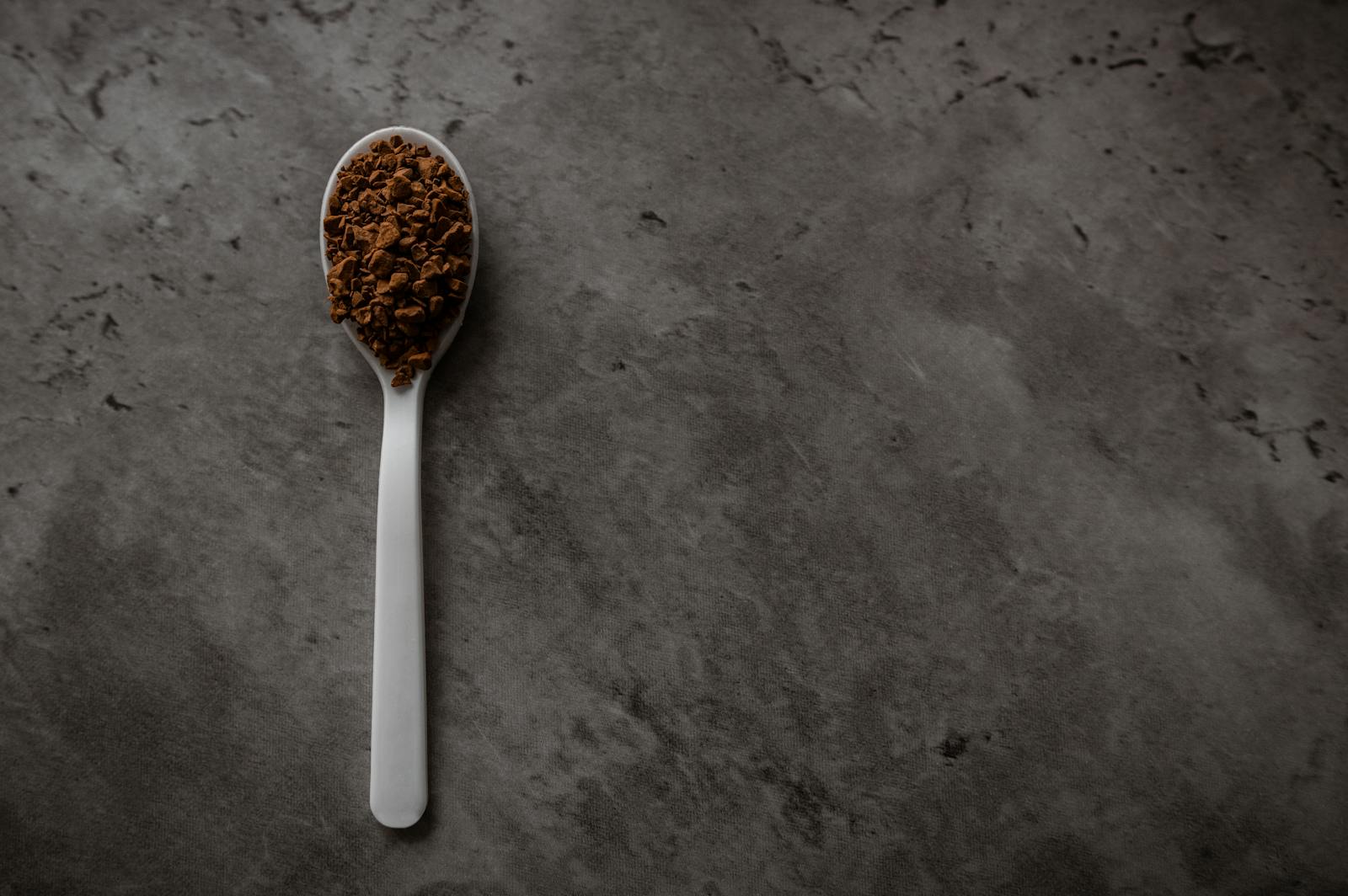
Quick mindset shift: don’t ask “How much caffeine is in instant coffee?” as if it’s universal. Ask: How much is in my instant coffee, prepared my way? Once you think in servings and strength, the numbers become easy.
How much caffeine is in instant coffee?
Yes—instant coffee does have caffeine. For most people, a regular mug ends up in the “moderate caffeine” range. A commonly cited estimate is about 62 mg of caffeine in an 8-ounce cup of instant coffee (with brewed coffee often around 95 mg for the same size). If you’re searching “how much caffeine in a cup of instant coffee,” that’s the ballpark—then your scoop and product strength move it up or down. instant coffee caffeine numbers
Quick ranges (ballpark)
- Light: Half-strength mix in a full mug
- Typical: “As directed” for an 8–10 oz cup
- Strong: Small mug or packet-style instant
What changes your number most
- Scoop: level vs heaping
- Volume: 8 fl oz vs 12–16 oz mug
- Product: classic jar vs “strong” packets
| Instant coffee type (made as directed) | What to expect | Why it lands there |
|---|---|---|
| Classic jar instant | Usually “everyday” strength | Portion size is flexible, so it’s easy to under- or over-scoop |
| Single-serve instant packet | More consistent per cup | Fixed dose, often designed to taste “fuller” |
| Micro-ground instant blends | Sometimes higher-caffeine feel | Can include finely ground coffee plus soluble coffee |
Best takeaway: instant coffee is predictable enough to estimate, but flexible enough to surprise you—especially if you’re using a heaping spoon or making a smaller, more concentrated cup.
Why instant coffee caffeine varies so much
The “instant coffee” label covers a lot of products, and caffeine content changes with a few key variables. If you understand these, you can predict your cup before you even take a sip.
Bean choice and blend
Arabica vs. robusta: robusta beans generally contain more caffeine than arabica. Many budget instants lean on robusta (or blends) because it hits harder and costs less—while premium instants often taste smoother but may land lower.
Serving size (your scoop is the steering wheel)
Flat teaspoon vs. heaping spoon: the same product can shift a lot based on how densely you scoop. “Looks right” is rarely the same as “is measured,” especially with freeze-dried granules.
Easy calibration tip: measure your “normal” scoop once (level, then heaping) and write it down. After that, you’ll know whether you’re doing ½ serving, 1 serving, or 2 servings without guessing.
Label math and data tracking
If you want the most grounded estimate, use the product’s nutrition label (or the manufacturer’s FAQ) first. For broader reference points, caffeine is tracked as a nutrient component in USDA’s database, which is handy when you’re comparing categories—not just brands. USDA caffeine data
Think of instant coffee like a dimmer switch. Your “dose” is the combination of product strength × how much you use × how big your cup is.
Instant vs brewed: does instant have less caffeine?
Most of the time, yes—instant coffee tends to come out lower-caffeine per cup than brewed drip coffee when both are made “normally.” But “normally” is doing a lot of work there. If your instant cup is small and strong (or packet-based), it can feel just as intense as brewed.
If you’re comparing instant coffee vs ground coffee caffeine, the fairest approach is cup-to-cup at the same size (like 8 fl oz). The format matters less than the serving size and strength you actually drink.
And if you like numbers in different units: caffeine comparisons often use caffeine in 8 oz coffee as the baseline. For a rough metric conversion, coffee caffeine per 100ml is about “8 oz caffeine ÷ 2.4.” It’s a quick way to compare coffees without getting stuck on how many mg of caffeine in coffee across wildly different mug sizes.
Instant coffee is usually lower when…
- Mix: 8–12 oz water with a conservative scoop
- Goal: Smooth, easy daily cup
- Result: Moderate caffeine, fewer jitters
Instant coffee can match brewed when…
- Mix: Small mug + heaping spoon
- Product: “Extra strong” or micro-ground packets
- Result: Strong coffee feel (and faster dose)
Real-world example: if you normally drink a 16-ounce travel mug, a packet mixed into half that volume can taste punchy—and the caffeine can feel higher than you’d assume.
Practical measuring guide: teaspoons, packets, and cup size
This is the part that makes instant coffee so useful: you can adjust caffeine by adjusting concentration. Start with the label’s “per serving” number, then scale up or down based on how many servings you actually use.

One easy mistake: many comparisons use 8 fl oz as “one cup,” but plenty of mugs are 12–16 fl oz. If your drink suddenly feels stronger (or weaker), cup size is often the reason.
Serving math you can do in 10 seconds
Use this formula: label caffeine per serving × servings you used. If you don’t have a label number handy, you can start with 62 mg as a typical instant cup estimate, then refine later. This also answers common prep questions like instant coffee serving size and how much instant coffee per cup—the “right” amount is simply the serving that matches your label and taste.
| If you use… | Multiply your label by… | What it tends to feel like |
|---|---|---|
| ½ serving (lighter) | 0.5× | Smoother, less “wired,” easy afternoon option |
| 1 serving (as directed) | 1× | Standard daily cup for most people |
| 1½ servings (strong) | 1.5× | Noticeable boost, more likely to jitter if sensitive |
| 2 servings (very strong) | 2× | “Big coffee” intensity in a smaller mug |
If you’re searching specifics like instant coffee caffeine per teaspoon, treat a level teaspoon as a practical “one serving” starting point for many jar instants—but always confirm what your brand calls a serving. For instant coffee caffeine per tablespoon, remember it’s 3 teaspoons, so it can act like ~3 servings depending on your label. Want caffeine in 1 gram of coffee powder? Weigh your usual scoop once, then use: (mg per serving ÷ grams per serving) = mg per gram.
Watch out for strong single-serve packets
Some instant packets are formulated to hit like a full coffee-shop cup. For example, Starbucks VIA is often listed around 130–140 mg per packet for an 8-ounce cup—roughly double a typical instant cup estimate. Starbucks VIA caffeine
Fast caffeine estimator (Tiny-JS)
Staying under daily caffeine limits (without guessing)
If you’re just trying to stay in a reasonable range, you don’t need perfection—you need guardrails. For most adults, the FDA cites 400 mg per day as an amount that’s generally not associated with negative effects (but tolerance varies a lot person to person). FDA daily caffeine
Quick perspective: 400 mg is roughly about 6 “typical” instant cups at ~62 mg each, but closer to about 3 strong packets at ~130–140 mg. You don’t need to hit a perfect number—just avoid accidentally stacking high-caffeine servings.
Easy conversions people search for
- 100 mg caffeine: often ~1–2 instant servings
- 200 mg caffeine: often ~3–4 instant servings
- 400 mg caffeine: often ~6+ typical servings (fewer if packets)
How to use it (no math stress)
If you’ve ever wondered “how much coffee is 100 mg of caffeine,” the best answer is: it depends on your serving. Use your label’s mg-per-serving number, then scale it to your day.
Safety callout: If you’re pregnant, nursing, have heart rhythm concerns, or get anxiety/insomnia easily, your “right” number may be lower. When in doubt, ask a clinician and keep caffeine earlier in the day.
Bonus reality check: when people ask what coffee has the most caffeine, it’s usually a combination of robusta-heavy blends, large serving sizes, and concentrates. Even a “normal” coffee can become a high-caffeine drink when the cup is huge and the mix is strong.
How to dial caffeine up or down (without ruining the cup)
Instant coffee is one of the easiest ways to “tune” your caffeine. Try these practical swaps to get the effect you want while keeping taste solid—and use one variable at a time so you don’t accidentally overshoot.
Lower caffeine (and keep it drinkable)
- Dose: Use a level scoop, not a heaping spoon.
- Volume: Keep the same coffee amount but add more hot water.
- Blend: Mix half instant + half decaf instant for “half-caff.”
- Timing: Push your first cup later (even 30–60 minutes helps some people).
Higher caffeine (without making it bitter)
- Product: Choose a stronger packet-style instant.
- Concentration: Use less water instead of more powder.
- Texture: Dissolve fully first, then add milk/ice (reduces harshness).
- Food: Pair with a small snack to soften the “wired” feeling.
How to spot the strongest instant coffee (most caffeine): check for higher mg per serving on the label, “extra strong/bold” positioning, robusta-heavy blends, and packet-style formats that are designed to taste fuller in an 8 fl oz cup. That’s a more reliable signal than guessing based on price or roast name.
Micro-case: If your normal instant is “fine but weak,” try keeping the same scoop and reducing water from 12 oz to 9–10 oz first. It often tastes richer without pushing caffeine as hard as a bigger scoop would.
Printable caffeine log (Zero-JS)
This is a quick way to spot patterns (sleep, jitters, headaches) without turning your morning into a spreadsheet. Keep it simple: write what you drank, rough caffeine estimate, and how you felt later.
| Date | What you drank | Estimated caffeine (mg) | Notes (energy / sleep / mood) |
|---|---|---|---|
| October 5, 2025 | Instant coffee, 1 serving | 62 | Felt steady, no jitters |
FAQ: Instant coffee caffeine questions
If you’re scanning for a quick answer, here’s the clean version: instant coffee caffeine depends on the serving. Start with the label, then adjust by how much you actually used and how big your mug is.
Does instant coffee have caffeine, and is it stronger than brewed coffee?
Yes, instant coffee has caffeine. It’s usually lower per cup than drip coffee when made normally, but it can match brewed when you use a heaping scoop, a small concentrated mug, or a strong packet-style product.
Does instant coffee have calories, and is instant coffee healthy?
Plain instant coffee mixed with water has virtually no calories. Where calories sneak in is flavored mixes and “3-in-1” packets (coffee + sugar + creamer). If you’re asking “is instant coffee bad for you” or “is instant coffee healthy,” the biggest factors are your caffeine tolerance, timing (late-day cups), and what’s added to it—not the instant format itself.
What about instant espresso, espresso powder, and brand caffeine content?
Instant espresso caffeine content depends on the product and serving size—some are just soluble coffee made to taste espresso-like, while others are more concentrated. Caffeine in espresso powder can be easy to overestimate because it’s often used in small amounts for baking; the best move is to follow the label and treat it like a concentrated flavor booster.
Brand-wise, caffeine varies by product line and serving. That’s why searches like Nescafe instant coffee caffeine content (Classic/Gold/Azera/Blend 43/3-in-1/sticks/decaf) can all show different numbers—and the same goes for brands like Moccona, Folgers, Taster’s Choice, Mount Hagen, Bru, Kenco, Vinacafe, Elite, Sunrise, or even regional coffees like Kapeng Barako. Use the package’s serving info, then plug it into the calculator for a repeatable estimate.
And for the truly curious: how much caffeine in a coffee bean varies a lot by bean type and roast, so it’s not the most useful unit for daily tracking. Measuring by serving (cup, packet, or scoop) will give you a more practical answer day to day.
If caffeine is messing with your sleep, anxiety, or heart rate, your personal limit may be lower than the general guideline. Mayo Clinic explains how sensitivity and timing can change what “too much” feels like. caffeine limits explained