Quick safety note: Unplug your drip coffee maker and let it cool completely before cleaning. Skip harsh chemicals (bleach, oven cleaner, abrasive powders). If you use a commercial descaler, don’t mix it with vinegar—run one method at a time.
You make coffee on autopilot—fill, brew, pour, repeat. Then one morning, the pot takes forever, the first sip tastes… flat, almost papery, and the kitchen smells faintly stale. That’s usually not your beans. It’s yesterday’s coffee oils plus hard-water mineral scale quietly building up where you can’t see it. The good news: a drip coffee maker is one of the easiest appliances to bring back to “tastes brand new” with a simple clean-and-descale routine.
- After each brew: Rinse basket + carafe, then air-dry with the lid open.
- Weekly: Wash removable parts with soap + warm water.
- Monthly: Descale the machine’s internal water path.
What “clean” vs. “descale” actually means (and why both matter)
There are two different messes happening in a drip machine: coffee oils (taste issues) and mineral scale (performance issues). Descaling a coffee maker means removing that mineral buildup from the inside water path—so if you’ve ever wondered what does descale mean on a coffee maker, that’s it. KitchenAid breaks down clean vs descale in a way that matches what most people experience at home.
Rule of thumb: clean weekly, descale monthly. If your coffee tastes “stale,” clean first. If it brews slowly, descale. And if you’re not sure? Do both—wash the removable parts, then descale the machine.
Taste/Smell symptoms
- Bitter, “burnt,” or flat flavor
- Musty smell from the basket area
- Oily film in the carafe
Best fix: Wash removable parts + wipe the showerhead.
Speed/Flow symptoms
- Brew takes longer than usual
- Gurgling or sputtering sounds
- White flakes (scale) in the carafe
Best fix: Descale the internal water path.
The 5-minute after-brew routine (prevents most gross buildup)
You don’t need a deep clean every day—just a quick reset that keeps oils from going rancid and keeps moisture from turning into “mystery smell.” The goal is simple: no wet grounds, no sealed-up steam, and no sticky residue.
Rinse, wipe, and let it dry with the lid open. That one habit prevents most of the funk people blame on “old coffee.”
Carafe + lid (stain control)
As soon as you’re done pouring, rinse the carafe with hot water. If you see brown rings starting to form, add a drop of dish soap and swirl with a soft sponge. For stubborn stains, soak warm water + a little dish soap for 10 minutes, then rinse until there are zero suds.
For a deeper reset, you can clean a coffee pot with vinegar by filling it with warm water plus a small splash of white vinegar, soaking 15 minutes, then washing normally. Or clean a coffee pot with baking soda by sprinkling a little baking soda into warm water and gently swirling before rinsing.
Using a thermal carafe? Treat it like a travel mug: clean a stainless steel coffee pot with warm soapy water and a bottle brush, and rinse extra well so your next pot doesn’t taste like soap. A quick scrub is also the easiest way to get coffee stains out of a coffee pot before they turn permanent.
Brew basket + filter (paper vs. reusable)
Dump grounds immediately. Then rinse the brew basket and the underside of the lid (where steam condenses). If you use a reusable mesh or gold-tone filter, wash it with warm water and soap every day—those tiny holes trap oils that can make fresh coffee taste oddly heavy.
Do
- Rinse removable parts after each brew
- Wipe condensation under the lid
- Air-dry with the lid flipped open
- Wash reusable filters daily
Don’t
- Leave wet grounds sitting overnight
- Close the lid on a steamy reservoir
- “Rinse only” a reusable filter forever
- Use abrasive scrubbers on plastic
Monthly deep clean with vinegar (step-by-step)
If your coffee maker has a “Clean” light, treat it like your check-engine light: it’s not judging you—it’s telling you scale is building up. For most households, this is the best way to descale a coffee maker because it’s inexpensive, repeatable, and fixes slow brewing fast. Mr. Coffee’s guide calls this a once-a-month clean cycle, and the basics apply to almost every standard drip machine.
The win condition: faster brewing, no sour smell, and no vinegar taste. If you’re cleaning because the machine is slow, you’ll usually notice a difference on the very next pot.
Mix + run (with or without a “Clean” button)
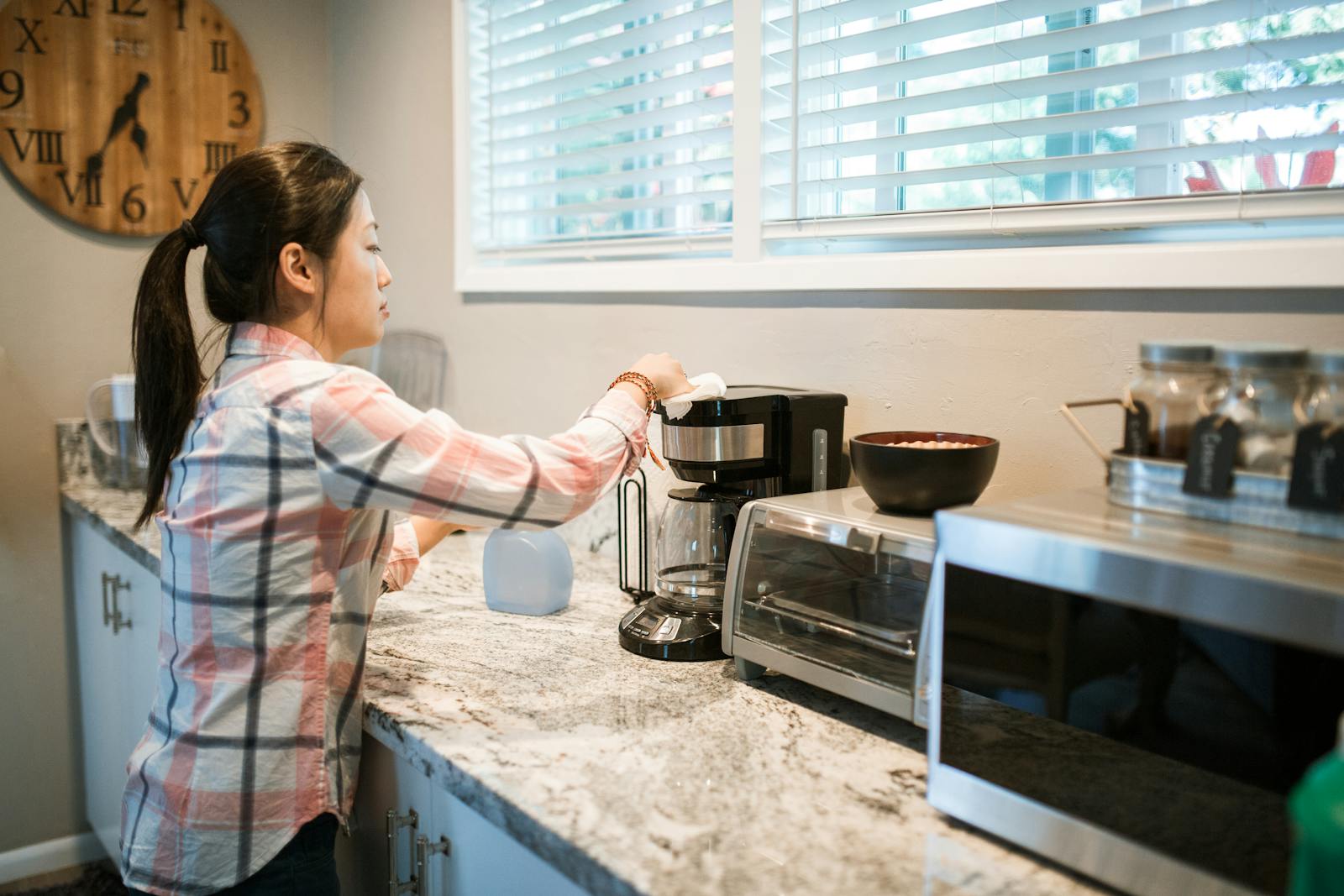
Step 1: Empty the carafe, remove any paper or reusable filter, and make sure the brew basket is seated properly. If the reservoir looks cloudy, wipe it with a soft cloth first—this is the easiest way to clean inside of a coffee maker and keep the water reservoir from developing a film.
Step 2: Fill the reservoir with a vinegar mixture. For routine maintenance, a 1:1 mix (white vinegar + water) is common—that’s the classic vinegar to water ratio for cleaning a coffee maker. If you’re very sensitive to smell, start lighter (about 1 part vinegar to 2 parts water) and repeat later only if brew speed still isn’t back to normal.
Good to know: Stick with regular white vinegar for coffee maker cleaning. “Cleaning vinegar” is more concentrated, so it can leave a stronger smell and usually isn’t necessary for routine maintenance.
Step 3: Start a brew cycle. If you have a “Clean” mode, use it—those cycles are often designed to run slower so they can dissolve scale more effectively.
Pause/soak time and why it helps
For heavier mineral buildup, the most helpful trick is to let the solution sit in the hot water path. Stone Street Coffee recommends a method to run vinegar, then rinse by stopping the cycle halfway so the warm solution can soak the internal passages.
How to do it: Let roughly half the reservoir brew through, turn the machine off, and wait 20–30 minutes (leave the carafe in place). Then turn it back on and finish the cycle. If you’ve been Googling “how to descale a coffee machine” because your brews are crawling, this soak is often the missing piece.
Rinse cycles + the “smell test” finish line
When the vinegar cycle finishes, dump the carafe and rinse it well. Then run two full reservoir cycles of clean water. Do the “smell test” on the warm, empty carafe and basket area—don’t brew coffee until the vinegar smell is gone. If you still catch a scent after two rinses, run one more water cycle.
And yes—you can descale with vinegar. Using vinegar to descale a coffee machine works because the mild acid helps dissolve mineral deposits as the solution moves through the internal water path.
| Reservoir size (typical) | Routine mix | Heavy scale mix |
|---|---|---|
| 5 cups (~25 oz) | 8 oz vinegar + 17 oz water | 12 oz vinegar + 13 oz water |
| 10 cups (~50 oz) | 17 oz vinegar + 33 oz water | 25 oz vinegar + 25 oz water |
| 12 cups (~60 oz) | 20 oz vinegar + 40 oz water | 30 oz vinegar + 30 oz water |
Alternatives to vinegar (and when they’re worth it)
Vinegar works, but it’s not the only option. If you hate the smell, if your machine is seriously scaled up, or if your manufacturer recommends a specific product, descaling without vinegar can be easier (and sometimes faster to rinse out).
Molly Maid lays out when to choose vinegar or descaling solution, and the practical takeaway is this: vinegar is great for routine homes, while commercial descalers can feel “cleaner” for people who can’t stand lingering odors.
Pick the method you’ll actually repeat. Consistency beats perfection here.
What is descaling solution? It’s a cleaner designed to dissolve mineral buildup (scale), often using mild acids similar to citric-based formulas—without leaving a strong after-smell when you rinse properly.
Low-odor option: If you want citric acid for cleaning a coffee maker, dissolve about 1–2 tablespoons of citric acid powder in a full reservoir of warm water. Run a brew cycle, let it sit 15 minutes, then finish the cycle and rinse with two full tanks of plain water. That’s the simplest way to handle descaling a coffee machine with citric acid.
Commercial products: Coffee maker cleaning tablets or liquid descalers can be great for heavy scale. The best move is boring but effective: follow the label, run the cycle, then rinse until there’s no scent left.
About baking soda: People ask about cleaning a coffee maker with baking soda, but it’s better for deodorizing removable parts than dissolving scale. Use it for the carafe or basket—not as your main descaling method.
Descale for flow, clean for taste.
The overlooked spots that change flavor fast
Even after a perfect descale, coffee can still taste “off” if old oils are hanging out where hot water hits plastic. These are the sneaky areas most people miss because they’re not part of the daily rinse.
If it touches hot water, it can hold flavor. A quick wipe in the right place can make your next pot noticeably cleaner.

Showerhead/drip area (quick scrub method)
Look up under the brew basket holder and find the showerhead (or drip outlet). Dip a soft cloth or paper towel in warm water, then wipe the surface clean. If there’s stubborn grime, a tiny drop of dish soap on the cloth helps—just wipe again with plain water so nothing sudsy ends up in your next pot.
Warming plate + exterior (no weird residue)
Unplug first. Then wipe the warming plate with a barely damp cloth (not dripping wet). If coffee has baked on, let a warm, damp cloth sit on the spot for a minute to soften it, then wipe again. For the outside, stick to mild soap + water—strong cleaners can leave a smell that “ghosts” into brewed coffee.
Cleaning schedule you’ll actually follow (plus quick troubleshooting)
If you want your coffee to taste consistent, your cleaning plan should be boring in the best way: tiny daily habits, a weekly wash, and a monthly descale. The moment it becomes a “project,” it stops happening.
Match the schedule to your water. If scale shows up on faucets or in a kettle, descale more often than once a month until brew speed stabilizes.
Schedule by usage + water hardness
| Frequency | What to do | Why it matters |
|---|---|---|
| After each brew | Rinse carafe + basket, dump grounds, air-dry with lid open | Stops oils and moisture from turning funky |
| Weekly | Wash removable parts with soap + warm water; wipe showerhead | Keeps flavor clean and reduces residue |
| Monthly | Descale (vinegar or descaler) + rinse cycles | Restores brew speed and helps temperature stability |
| Every 2–3 months | Deep-clean carafe stains + inspect reusable filter | Keeps glass clear and filtration consistent |
Troubleshooting: slow brew, gurgling, white flakes, sour smell
- If it’s brewing slow: Descale, then run two full plain-water cycles. If it’s still slow, repeat later with a stronger mix or use a commercial descaler next month.
- If it gurgles or sputters: Mineral buildup can disrupt flow—run a descale cycle and make sure the reservoir isn’t overfilled.
- If you see white flakes: That’s scale breaking loose. Rinse again and consider filtered water going forward.
- If it smells sour or musty: Wash the basket + carafe lid thoroughly, wipe the underside of the top lid, and let everything air-dry fully.
- If your coffee maker turns on but doesn’t brew: Make sure the reservoir is filled and seated correctly, confirm the basket is clicked into place, then run a descale cycle—this often fixes a clogged coffee maker when scale is the culprit.
Printable Coffee Maker Cleaning Tracker
Tap a cell to type. When you’re ready, use the button below or print from your browser menu.
FAQ
How often should I clean vs. descale?
Clean the removable parts weekly (and rinse after each brew). Descale about monthly, or more often if your water is hard or your machine slows down. If the “Clean” light comes back quickly, treat that as a sign your water is leaving mineral deposits faster than average.
Taste problems usually mean oils. Speed problems usually mean scale.
Can I run vinegar through with the filter in?
Skip the filter (paper or reusable) during the vinegar cycle. You want the cleaning solution moving freely through the basket area without the filter trapping debris—or soaking up vinegar and making rinsing harder. Afterward, rinse until there’s no vinegar scent left, then brew coffee like normal.
Are coffee pots dishwasher safe?
Sometimes—especially for glass carafes—but lids, handles, and thermal carafes vary by brand. If you’re unsure, hand-washing is the safest option. It prevents warped plastic, trapped moisture in lids, and that “why does my coffee taste like soap?” surprise.