Safety note: If you’re pregnant, have an irregular heartbeat, panic symptoms, uncontrolled high blood pressure, GERD, or you take stimulant/psychiatric meds, treat this as a starting point—not a rule. Caffeine can hit harder and last longer in these situations, and your safest cutoff might be earlier than the “average” advice. If you have severe symptoms (chest pain, fainting, severe agitation, or repeated vomiting), seek urgent medical care.
Caffeine doesn’t vanish when the buzz wears off. For many adults, it drops by about half every ~5 hours—and for some people it can take up to around 10 hours to fully clear from the bloodstream. Research-backed pharmacology also shows that the elimination half-life can vary widely (roughly 1.5 to 9.5 hours), depending on factors like pregnancy, smoking, and certain medications. Here’s how to translate that into a real-life coffee timeline.
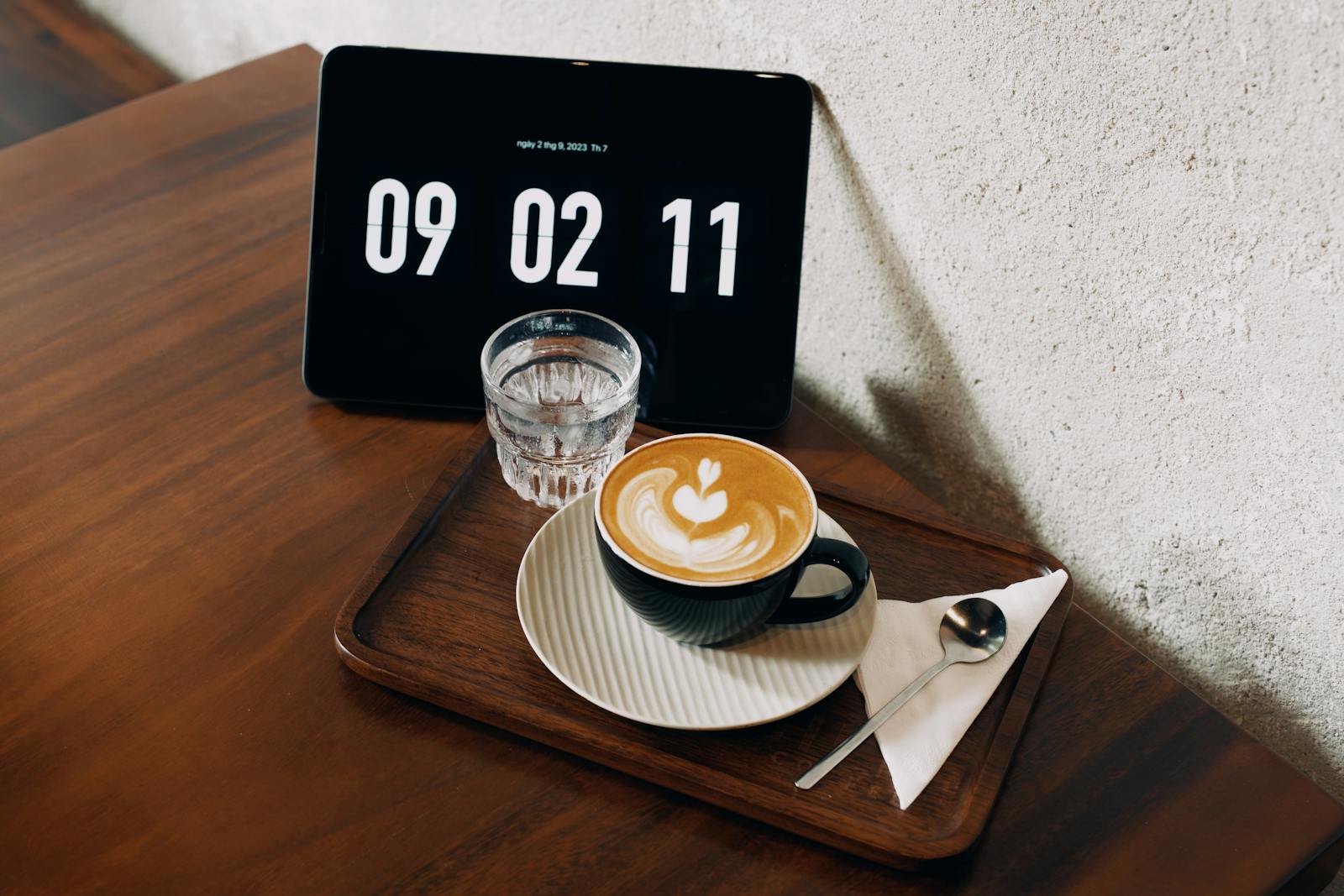
Here’s the simplest way to think about it: caffeine clearance is a slow dimmer switch, not an on/off button. So if you’re trying to protect sleep, the question isn’t “Do I feel wired?”—it’s “How long has it been since my last caffeine?” A quick rule of thumb: if you’re aiming for an 11 p.m. bedtime, an 8-hour cutoff puts your last caffeine around 3 p.m. If that feels too strict, reduce the dose rather than pushing the time later.
- Half-life beats “how it felt” at dinner
- Cutoff time beats “detox” hacks
- Stacking sources (tea/soda/chocolate) matters
- Your factors (hormones/meds/smoking) matter more
What “staying in your system” actually means
When people ask how long caffeine stays in your system (or how long coffee stays in your system), they’re usually asking two things: How long will I feel it? and How long until it won’t mess with my sleep? The key concept is caffeine’s half-life—how long it takes your body to remove about half of it from your bloodstream. Pharmacology references note that this half-life can swing widely in adults (roughly 1.5 to 9.5 hours), which is why “caffeine metabolism time” and “how long it takes to metabolize caffeine” can look very different from person to person. caffeine half-life range
Quick answers: Caffeine typically doesn’t “stay for days” in the sense of strong, obvious stimulation—but if you clear it slowly (or keep adding smaller doses through the day), it can still affect sleep into the next day. And if you’re wondering “when does caffeine wear off,” the buzz may fade in a few hours while meaningful amounts can still be circulating.
One more distinction that helps: digestion isn’t the same as stimulation. Coffee may leave your stomach on its own schedule, but caffeine can still be in your bloodstream and affecting your nervous system long after your stomach feels empty.
Peak vs. half-life
Caffeine often kicks in within about 30–60 minutes for many people, and that initial “caffeine buzz” may feel strongest in the first couple hours. Half-life is the “it’s still there” reality. Half-life is the clock you care about for bedtime. Even if your jitters fade, caffeine can keep blocking adenosine (your sleep-pressure signal) and make it harder to fall asleep or stay asleep.
A practical timeline (one dose, simplified)
Example: You drink ~200 mg of caffeine at 2:00 p.m. (think a strong coffee or small cold brew). Here’s a rough “what could be left” view if your half-life is ~5 hours.
| Time | Rough caffeine remaining* | What you might notice |
|---|---|---|
| 3–4 p.m. | Near peak | More alert, faster thoughts, maybe edgy |
| 7 p.m. | ~100 mg | You “feel fine,” but sleep pressure is still blunted |
| 12 a.m. | ~50 mg | Light sleep, harder wind-down for many people |
| 5 a.m. | ~25 mg | Sensitive sleepers may still feel effects |
*This is a simplified model. Your actual half-life could be shorter or longer, and effects don’t map perfectly to milligrams.
If you’re thinking in doses: 85 mg (a common “small coffee” ballpark) isn’t “a lot” for everyone—but for sensitive sleepers, it can still matter late in the day. The bigger point is that more caffeine doesn’t change the half-life; it just means more is left over at bedtime.
| Dose | Estimated remaining after 5 hours* | Estimated remaining after 10 hours* | What this can mean |
|---|---|---|---|
| 50 mg | ~25 mg | ~12 mg | Often subtle—unless you’re very sensitive |
| 85 mg | ~43 mg | ~21 mg | Can still affect sleep if taken late |
| 200 mg | ~100 mg | ~50 mg | Common “why can’t I sleep?” territory |
| 300 mg | ~150 mg | ~75 mg | More likely to cause jitters/anxiety in many |
| 400 mg | ~200 mg | ~100 mg | High—especially if concentrated or late |
Takeaway: If sleep is the goal, don’t judge caffeine by how you feel at dinner—judge it by how late you took it.
A “quiet” evening can still be a caffeinated night.
Why caffeine lasts longer for some people
Your liver does most of the heavy lifting. The main enzyme involved (often referenced as CYP1A2) acts like a personalized filter speed. That speed isn’t fixed for life—it can change with pregnancy, certain medications, and smoking status. For a plain-language overview of how half-life and clearance can vary, see this NIOSH caffeine training page. NIOSH half-life basics

If you’re thinking “why does caffeine not work on me,” tolerance is a common reason: frequent use can dull the noticeable “kick,” even though caffeine may still affect sleep later. And while caffeine can slightly bump energy expenditure for some people, it’s not a reliable “metabolism booster” you can count on—especially if it costs you sleep.
Faster clearance factors
Some people clear caffeine relatively quickly. That doesn’t mean it’s “gone,” just that the drop-off is steeper. Common factors linked with faster clearance include:
- Smoking (can speed metabolism; quitting can make caffeine feel stronger)
- Lower dose (a small coffee is easier to clear than a high-caffeine stack)
- Earlier timing (morning caffeine is less likely to collide with sleep)
- Fewer “add-ons” (less soda, chocolate, pre-workout)
- Consistent sleep (less rebound fatigue to “chase” with caffeine)
- Food + water (can soften symptoms, not speed clearance)
Slower clearance factors
Slower clearance is where people get surprised: one afternoon drink can echo into the night. Slower clearance is commonly associated with pregnancy, some oral contraceptives, liver disease, and certain medications. Genetics plays a role too—some people are simply “slow metabolizers,” and the same latte that feels normal for a friend can be a sleep grenade for them. A practical clue: if a 2 p.m. coffee regularly delays your sleep, you don’t need “more discipline”—you need an earlier cutoff or a smaller dose.
Medication and condition modifiers
If you take prescription meds, check the label or ask your pharmacist whether caffeine is a concern. Some antibiotics, antidepressants, and heart meds can change how caffeine feels or how long it lasts. Also check “hidden caffeine” sources: some headache medicines (including certain aspirin/acetaminophen combinations) and some pre-workouts contain caffeine—so “I didn’t have coffee” isn’t always the full story.
How to estimate your personal caffeine window
The fastest path to an answer is to work backward from bedtime. Many clinicians recommend stopping caffeine hours before sleep—often around 6–8 hours as a starting point—because caffeine can interfere with falling asleep and sleep quality even when you don’t feel wired. Your best cutoff is the one that protects your sleep without making you miserable the next day. cutoff before bedtime
If you’re trying to sleep with caffeine still in your system, go for “low-drama sleep” rather than perfect sleep: a cool, dark room; a consistent wind-down; and a gentle plan for waking (light exposure and movement) if you’re up early. If you’re tempted to “fix” a caffeinated night with alcohol or heavy sedatives, skip it—those can backfire on sleep quality and how you feel the next day.
Want a smoother step-down? Swap your late-day drink to a smaller dose (or half-caf), or switch to tea. Decaf isn’t caffeine-free, though—if you’re very sensitive or drinking it close to bedtime, even small amounts can still matter.
Not sure whether caffeine is still “active” in you? Two quick tells: (1) you feel tired but not sleepy, and (2) you can’t “drop in” to bedtime even when the day was exhausting. Here are other common clues—especially helpful if you don’t get obvious jitters.
- Body signs: faster heart rate, edgy mood, frequent bathroom trips, reflux flare
- Brain signs: racing thoughts, can’t focus, “wired-tired” feeling
- Sleep-onset signs: longer time to fall asleep, tossing
- Night signs: lighter sleep, more waking, early wakeups
Caffeine clearance estimator (rough)
Use this as a quick “sanity check,” not a diagnosis. It estimates how much might remain at bedtime based on a selectable half-life and the time between your last caffeine and sleep.
If you want a no-math method: pick a conservative cutoff (8+ hours before bed for “average” folks), try it for three nights, and track two things—how long it takes to fall asleep, and how you feel in the first hour after waking. If sleep improves but mornings feel brutal, reduce the afternoon dose rather than pushing the cutoff later. That’s usually the better trade.
How to get caffeine out of your system faster (realistic moves)
There’s no safe hack that instantly “flushes” caffeine or “detoxes” you fast—your liver sets the pace. Water can help you feel better if you’re dehydrated, and food can soften a spike, but neither makes you metabolize caffeine faster on command. Think “calm the body while you wait”—not “reverse caffeine instantly.”
How to calm down after coffee (right now)
If you’re jittery, anxious, or riding a caffeine high, use this as your “counteract the feeling” plan.
- Slow breathing (4 seconds in, 6 seconds out for 3 minutes)
- Light movement (10–20 minute easy walk)
- Hydrate (steady sips; don’t chug)
- Eat something (protein + carbs helps many people feel steadier)
- Screen dim (lower stimulation; stop doom-scroll)
- Plan a wind-down (warm shower, cool room, same routine)
If you drank way more than usual, symptoms can include nausea, headache, shakiness/jitters, diarrhea, anxiety, and a pounding heartbeat. Start by stopping all caffeine, switching to calm activities, and keeping hydration steady. If symptoms feel severe or unsafe (chest pain, fainting, confusion, uncontrolled vomiting), don’t “wait it out” alone—get urgent care.
Common myths (quick reality check)
- Does water flush out caffeine? No—water may help symptoms, not clearance speed
- Does drinking water dilute caffeine? It can feel better, but it won’t “cancel” caffeine
- Can you sweat out caffeine? No—exercise may help you feel calmer, not metabolize faster
- Does exercise burn off caffeine? Not directly—your liver still sets the pace
Practical translation: if you’re trying to “get coffee out of your system fast,” aim for symptom relief, an earlier cutoff tomorrow, and a smaller late-day dose. That’s the combination that actually changes outcomes.
How much caffeine is too much (and what counts)
“Too much” depends on your sensitivity, but for healthy adults, federal guidance often cited in consumer health materials puts a daily upper limit around 400 mg for most people. That’s not a target—it’s a ceiling, and many people feel best well below it. FDA caffeine limit
Also: “what counts” is bigger than coffee. Whether it’s espresso, tea, soda, cola (including Coke), caffeine pills, pre-workout, or an energy drink (yes, including brands like Red Bull), your body is clearing caffeine—not the beverage. The difference is the dose, how fast you drink it, and whether it includes other stimulants that make you feel more wired.
Common caffeine amounts (ballpark)
| Source | Typical range | Sleep-friendly tip |
|---|---|---|
| Brewed coffee (8 oz) | ~80–120 mg | If you’re sensitive, keep it to morning |
| Espresso (1 shot) | ~60–90 mg | Two shots can equal a full coffee fast |
| Black tea (8 oz) | ~30–60 mg | A good afternoon step-down option |
| Cola (12 oz) | ~30–45 mg | Still “counts” toward bedtime |
| Energy drinks / pre-workout | Varies widely | Check labels; some are coffee-strength or more |
| Decaf coffee | Small but real | Late decaf can matter for very sensitive sleepers |
| Dark chocolate | Small but real | Late dessert can matter for very sensitive sleepers |
If you’re troubleshooting “energy drink effects,” the move is the same: stop adding caffeine, hydrate for comfort, eat something steady, and treat sleep as a priority. If you’re trying to quit energy drinks, tapering usually beats cold turkey—swap to a lower-caffeine option, then step down the dose and move your last caffeine earlier.
Cutting back, quitting caffeine, and withdrawal (practical guide)
If you want to quit caffeine or wean off caffeine without feeling awful, make it boring and gradual:
- Step down dose: reduce by about 25–50 mg every few days (or swap to half-caf/tea).
- Move timing earlier: keep your first cup, but pull the last one earlier each week.
- Replace the ritual: same mug, same break, just a lower-caffeine drink.
Caffeine withdrawal commonly feels like headache, irritability, low mood, and sleepiness. For many people it eases over several days, but it can feel longer if you’re also sleep-deprived. If you have a history of migraines, anxiety, or you’re quitting very high daily intake, consider looping in a clinician for a safer plan.
When to talk to a clinician
If caffeine regularly causes chest pounding, panic symptoms, or insomnia that spills into daytime functioning, it’s worth bringing up. The FDA guidance above is for healthy adults, not a promise of safety for everyone. Also consider asking if you’re relying on caffeine to counter persistent sleepiness, snoring, or frequent night waking—those can point to treatable sleep issues.
Caffeine without coffee: If you’re trying to cut coffee but still want alertness, consider tea or matcha (often gentler), bright morning light, a short brisk walk, a protein-forward snack, or a 10–20 minute nap earlier in the day. These won’t “replace” a big caffeine hit, but they can raise energy without pushing caffeine into your bedtime window.
Bottom line: For many adults, caffeine can meaningfully affect you for most of the day. Use the half-life idea (and a bedtime cutoff) to plan your last cup—then personalize from there. If you’re consistently struggling, the simplest, highest-impact change is usually an earlier cutoff or a smaller afternoon dose, not a new “detox” trick.