In the French press vs. espresso debate, you’re not choosing “better”—you’re choosing what kind of coffee day you want. If you’re deciding what to buy (or what to brew tomorrow), the fastest path is to define the kind of “strong” you mean.
Espresso is often the “strong” one—because it’s concentrated. But caffeine doesn’t work that simply. A study comparing brew methods found espresso had the highest caffeine concentration per litre, while French press was much lower by volume—yet serving sizes change what you actually consume. If you want the right pick for your routine, you need to compare dose per serving, not just intensity per sip.
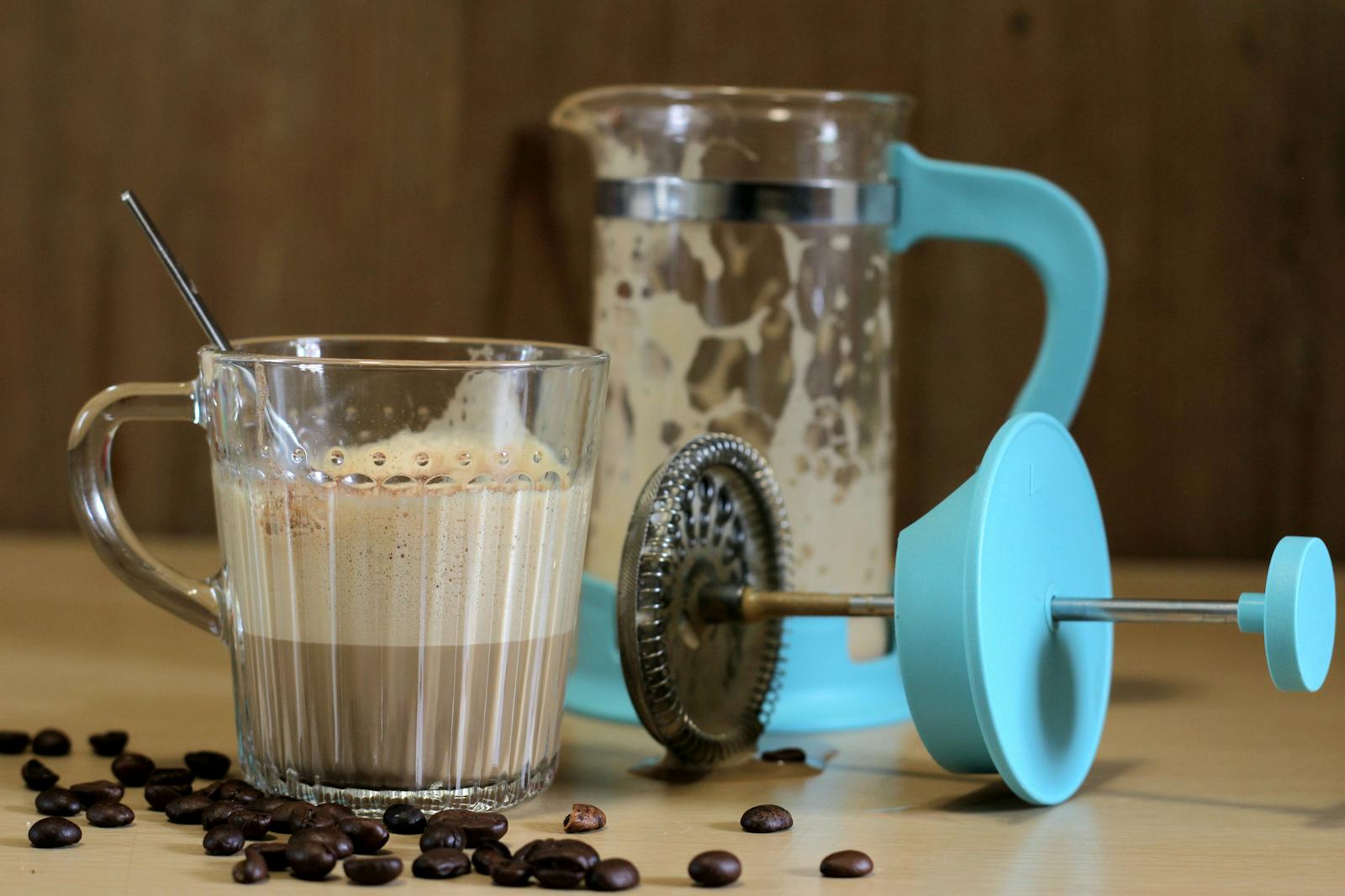
Quick way to choose: pick French press if you want a big mug, fuller body, and low fuss. Pick espresso if you want concentrated flavor, café-style milk drinks, and you’re okay dialing in gear.
French press basics: a French press (also called a cafetiere) is one of the simplest types of coffee press—an immersion brewer with a metal filter. The “plunge” isn’t real French press pressure; it’s just filtration.
The one-sentence difference (and why “stronger” is confusing)
Strength, concentration, and dose
French press is immersion brewing: grounds sit in hot water for several minutes, then you separate them with a metal filter. Espresso is pressure brewing: water is pushed through a compact coffee “puck” quickly, creating a small, concentrated drink—this is the core espresso vs coffee difference most people feel immediately.
Bottom line: espresso is usually stronger per sip, while French press can be “stronger” per morning if you drink a bigger serving.
Why espresso feels intense
Espresso compresses a lot of flavor into 1–2 ounces. That concentration can read as “strong,” even when the total caffeine isn’t automatically higher than a full mug of brewed coffee. It’s also typically consumed fast (a couple minutes), which can make the effect feel more immediate than slow-sipping a larger drink.
Can you make espresso with a French press?
Can you make espresso with a French press? Not true espresso—because you can’t generate espresso-level pressure with a plunger. But you can make an espresso-style concentrate that’s great for iced drinks or “strong coffee + milk” at home.
How to make espresso with a French press (concentrate method): use less water than normal, a finer-than-usual grind, and a shorter steep. As a starting French press espresso ratio, aim for “noticeably more coffee, noticeably less water” than your usual mug recipe, then adjust by taste.
- Grind: medium-fine (not powdery).
- Steep: shorter than your normal French press (think “concentrate,” not “big mug”).
- Pour + plunge: pour gently, stir once, plunge slowly to reduce grit, then use it as a base for milk or ice.
Taste & texture: what you’ll notice in the first sip
Body and clarity
French press tends to taste rounder and heavier because the metal filter lets more oils and very fine particles through. Espresso can feel dense and syrupy, but it’s also more sharply “outlined”—intense flavor notes show up quickly, then fade.

- Body: French press = fuller, sometimes a little gritty; espresso = thick, concentrated, often velvety.
- Clarity: French press = blended flavors; espresso = more punchy peaks (especially with lighter roasts).
- Aftertaste: French press = long, cozy finish; espresso = quick, powerful arc.
- Mouthfeel: French press = oils + sediment; espresso = crema + dissolved solids.
If you’re wondering “is French press coffee good?” it usually comes down to texture preference. One of the big French press benefits is that it keeps oils in the cup, which many people read as richer and more comforting. That’s also a big reason why use a French press when a paper-filter method tastes “too clean.”
Bitterness, sweetness, and “burnt” myths
Bitterness isn’t “an espresso thing” or “a French press thing”—it’s usually an extraction thing. Over-extracted espresso can taste harsh and woody; under-extracted espresso can taste sour and thin. French press has its own pitfalls: too fine a grind or too long a steep can taste chalky and bitter, and too hot a pour can emphasize roastiness.
Espresso still tastes like coffee—it’s just more concentrated—so does espresso taste like coffee? Yes, but the intensity can make espresso flavors feel louder (chocolatey, nutty, fruity, or roasty depending on the bean).
For a helpful sensory way to compare how the methods tend to land in the cup, see Pro Coffee Gear’s overview of taste profile differences.
If you love “clean and punchy,” lean espresso; if you love “rich and cozy,” lean French press.
Caffeine & serving size: the practical reality
Per-ounce vs per-mug
The simplest mental model: espresso usually wins on caffeine concentration, but French press often wins on volume you actually drink. A double shot can be intense, but a 10–12 oz mug adds up fast—especially if you refill without thinking.
| What you’re comparing | French press (typical) | Espresso (typical) |
|---|---|---|
| Serving size | 8–12 oz mug (often more) | 1–2 oz shot (or 2–3 oz doppio) |
| Concentration | Lower per ounce | Higher per ounce |
| How you drink it | Slow sip over 10–30 minutes | Fast finish in 1–5 minutes |
| “Why it feels strong” | Big dose sneaks up | Intense sip + quick pace |
Newcastle University’s caffeine per litre study is a good reminder that “most caffeinated” depends on whether you’re comparing concentration or the amount you actually drink.
How fast you drink it matters
If you take espresso as a quick shot before a commute, it’s easy to feel a “hit” sooner. If you slowly sip French press while working, the effect can feel smoother—until you realize you’ve had the equivalent of multiple servings. If you’re caffeine-sensitive, the most reliable move is boring but effective: choose a smaller serving and stop at one.
Caffeine note: if you’re pregnant, have heart rhythm concerns, or notice anxiety/insomnia from coffee, treat this as a “dose management” problem—smaller servings, earlier in the day, and consider half-caf. When in doubt, ask your clinician what’s appropriate for you.
If your goal is a controlled, consistent boost, espresso is easier to portion; if your goal is a long, cozy mug, French press fits naturally.
Gear, cost, and counter space: what ownership really looks like
What you need for French press
French press has a low barrier to entry: a press, a kettle (any kind), and a way to measure. A grinder helps a lot, but the method is forgiving—especially if you like darker roasts and don’t mind a bit of sediment.
French press buying guide (quick): French press cost stays low for basic models, so an affordable French press is usually the best place to start. If you want a modern French press, look for double-wall stainless for heat retention; if you’re after a white French press, prioritize build quality and an easy-to-replace filter. If convenience is the goal, an automatic French press coffee machine can work—just make sure it’s simple to clean.
What you need for espresso
Espresso is less forgiving. The big unlock is often the grinder: consistent, fine grinding matters because tiny changes show up in taste. You’ll also need a machine (or a lever/manual setup), plus some tolerance for learning: dose, distribution, tamping, shot time, and yield.
If you’re shopping, you’ll see labels like hand press espresso machine (manual/portable) and a range of countertop options; you may also bump into legacy or niche product searches like Bodum espresso maker, All-Clad Presso espresso maker, or even “French espresso machine.” Use those as search terms—but let your grinder and cleaning routine drive the decision.
French press ownership feels like:
- Upfront cost: low.
- Space: one carafe + a kettle.
- Failure points: mainly technique (grind, time, temp).
Espresso ownership feels like:
- Upfront cost: higher (especially if you want consistency).
- Space: machine + grinder + accessories.
- Maintenance: regular cleaning and occasional repairs.
If you want a straightforward rundown of what “owning espresso” usually implies (budget, maintenance, and the learning curve), Zulay Kitchen’s summary of espresso machine tradeoffs covers the practical side well.
If you want great coffee with minimal gear stress, French press wins; if you want café-style drinks at home, espresso is worth the setup.
Time, cleanup, and daily workflow
Weekday workflow
French press is “set it and forget it.” You add coffee and water, wait, plunge, pour. Espresso is “hands on.” You’re weighing, grinding, distributing, pulling the shot, and usually steaming milk if that’s your thing. Neither is objectively faster—they’re fast in different ways.
Mess, maintenance, and the annoying parts
French press mess is mostly wet grounds. The easiest cleanup trick is to add a splash of water, swirl, and pour the slurry through a fine mesh strainer (or scoop the bulk into compost) before washing. Espresso mess is mostly fine coffee dust, puck disposal, and keeping the machine clean so old oils don’t stale your shots.
| If you’re comparing… | What changes vs French press |
|---|---|
| French press vs coffee maker | Drip machines are cleaner and more “set-and-go”; French press is richer but has grounds cleanup. |
| French press vs drip coffee | Drip is typically clearer (paper filter); French press is fuller-bodied with more oils. |
| French press vs filter coffee | Paper filtration emphasizes clarity; French press emphasizes texture and “weight.” |
| Pour over vs French press | Pour over is more hands-on pouring but easier cleanup; French press is simpler but “muddy” to some. |
| AeroPress vs French press | AeroPress is fast, travel-friendly, and clean; French press is better for brewing multiple mugs at once. |
| Percolated coffee vs French press | Percolators can skew hotter/stronger and more bitter if over-run; French press is gentler and easier to control. |
| Cold brew coffee vs French press | Cold brew is low-acid and make-ahead; French press is hot, quick, and best fresh. |
Rule of thumb: French press is forgiving but a bit “muddy.” Espresso is clean but picky. Pick which annoyance you’d rather live with.
If you want a calm routine, French press feels smoother; if you like a hands-on ritual, espresso is more satisfying.
Who should choose which? A quick decision framework
If you love milk drinks and café-style texture
Espresso shines for lattes, cappuccinos, and cortados because it stays bold when mixed with milk. French press “milk drinks” can be tasty, but they’re usually closer to café au lait vibes than true espresso-based drinks—especially if you like that concentrated coffee backbone.
If you want a big mug, batch brewing, or entertaining
French press scales easily: you can brew for one or for a table without extra complexity. Espresso can scale, but it becomes repetitive—pulling shot after shot—and your results can drift as the grinder warms up or the puck prep changes when you’re rushing.
Pick in 60 seconds: score each row 1–5 for your priorities, then total each column by hand. (This is intentionally unweighted—your “weights” show up in how you score.)
| Decision factor | French press | Espresso | Notes (optional) |
|---|---|---|---|
| Budget comfort | |||
| Time on weekdays | |||
| Cleanup tolerance | |||
| Flavor preference (body vs clarity) | |||
| Milk drinks (latte/cappuccino) | |||
| Batch brewing (multiple people) | |||
| Consistency (day-to-day) |
Reset tip: change the numbers back to blank, or refresh the page if you don’t need to keep what you typed.
Your “winner” is the method you’ll actually do consistently—because consistency beats perfection for better coffee.
How to get the best cup from either method (without becoming a hobbyist)
French press quick fixes
For what type of coffee for French press, start with beans you’d happily drink black: medium roasts for balance, darker roasts for chocolatey comfort, lighter roasts if you want brighter fruit notes. Use coffee grounds for French press that are coarse; a fine grind tends to slip through the mesh and can taste silty. If you only have fine ground coffee, steep a bit shorter, pour gently, and plunge slowly to reduce sediment.
Start with a coarse grind, a sensible ratio, and a timer. If your cup tastes flat, go a touch finer or steep a bit longer. If it tastes harsh and drying, go coarser, steep shorter, or use slightly cooler water. Also: pour slowly and stir gently—aggressive agitation can push extraction toward bitterness.
Espresso quick fixes
For espresso, make one change at a time. If it’s sour and thin, you generally need more extraction (finer grind, slightly longer shot, or a bit more yield). If it’s bitter and ashy, you likely need less extraction (coarser grind, shorter shot, or a slightly smaller yield). Keep your puck prep consistent so the grinder change actually means something.
You’ll also see bags labeled French roast vs espresso roast. Those aren’t brew methods—they’re roast styles. Either can work in either brewer, so choose based on the flavor you like (smokier/darker vs brighter/lighter), then dial your grind and time to match.
Methodical Coffee’s overview of brew ratio and timing is a solid baseline if you want a simple starting point before you start tweaking.
Advanced tweaks (only if you’re curious)
French press: try a brief “bloom” (add a little water first, wait ~30 seconds) for fresher aromatics; skim foam if it tastes sharp; decant immediately after plunging so it doesn’t keep extracting.
Espresso: use a scale for dose and yield; keep shot time in a reasonable range; if channeling is obvious (spurts, blonding early), improve distribution before chasing grind changes.
Small, repeatable tweaks—grind, ratio, and time—beat chasing “perfect” gear for both methods.
If you’re torn, a surprisingly good “split the difference” plan is: French press for weekday mugs, espresso at cafés (or weekends) when you want the ritual and milk drinks. People also ask is French coffee different from American coffee; it’s often more about café culture and serving size than different beans. And if you’re traveling, “espresso in French” menus often show up as a small “café” or “espresso” order—basically the same idea: a short, strong coffee.
If you’re searching locally, you might run into shop-name queries like “the french press belmar,” “press coffee temecula,” “the perfect press coffee co tampa,” or “press graham”—use those as starting points, then order based on the drink you actually want (shot, latte, or a full mug).