A good espresso scale doesn’t just “measure”—it keeps your workflow calm. For lever shots, that means fast taring, readable numbers at a glance, and a timer that helps without stealing attention.
Do you actually need a $200+ “pro” espresso scale… or just a small, consistent one that fits and doesn’t get in your way? The Flair Brew Scale aims straight at that gap with auto-timing modes and a compact build. But “automatic” isn’t always “effortless,” especially when your shots include pauses, long holds, or slow-flow finishes. Let’s break down what it does well—and what you should know before you trust it with your daily dial-in.
Quick verdict: who the Flair Brew Scale is for
This is an espresso-first scale for people who want repeatable ratios and a tidy under-cup setup—without paying top-tier prices. It shines when your routine is consistent (same cup, similar shot style) and you can pick a mode that matches how you pull. Put simply, it’s an espresso scale with timer designed to support the moment that matters most: first drip through the end of the shot.
If you’re Googling for a flair scale, what you usually want is straightforward: a scale that fits under your cup, reads quickly, and doesn’t add chaos mid-pull. That’s the lens this review uses.
If your priority is a tidy, under-cup espresso workflow, this scale delivers the basics—and the modes can be genuinely helpful once you learn them.
Pros
- Footprint: Built for tight espresso clearances.
- Modes: Timing help when your shot shape is predictable.
- Everyday use: Simple controls once they’re muscle memory.
Cons
- Learning curve: Auto-timer logic can surprise stop-start shots.
- Button rhythm: Mistaps happen if you rush mid-pull.
- Feel: Less “polished” than premium espresso scales.
Buy it for fit + repeatability. Skip it if you want automation that adapts to every experiment.
Specs that actually matter (and what’s in the box)
For the most accurate baseline—precision, capacity, charging, and the stated purpose of the modes—use the official listing for Flair Brew Scale specs. As a digital coffee scale, it’s built around espresso-friendly fit and fast readouts more than kitchen-scale versatility. The key is translating those bullets into what you’ll notice during a shot.
| Spec / feature | What it changes for you |
|---|---|
| 0.1 g resolution | Enough precision to repeat recipes (e.g., 18 g in → 36 g out) without “guessing the end.” |
| Compact platform | Improves under-cup fit on lever machines where every millimeter counts. |
| Three modes | Reduces mental load only when you choose the mode that matches your shot shape. |
| USB-C charging | Easy top-ups; less battery drama. |
That “small changes matter” reality is why this behaves like a precision coffee scale in practice: a gram or two at the end of a shot can noticeably shift taste, especially with lighter roasts.

Size/clearance and why “fits” can still feel tight
“Fits under your machine” isn’t just footprint. Cup shape, drip-tray lip, and display placement decide whether you can read the numbers without moving mid-shot. A quick test: put your usual cup on a book the thickness of a scale and see if you can read the front edge from your normal pulling stance.
If you’re dialing in a flair 58 scale setup specifically, prioritize visibility under your usual cup—fit isn’t useful if the readout is blocked when you’re actually pulling.
Power and charging habits that prevent bad mornings
USB-C is convenient, but the habit is the real upgrade. If you notice low battery during preheat, plug it in while you grind. That tiny routine keeps the scale from “quitting” right when you’re ready to pull.
If you only optimize one thing: prioritize visibility and cup placement, not features.
The three modes, explained like you’ll use them
The Brew Scale’s modes can genuinely reduce button juggling—but they’re not mind-readers. The win comes from matching the mode to your shot shape: steady flow vs long holds vs experimental stop-start pulls.
Pick the mode before you heat water—mid-shot changes are where mistakes happen.
Best for
- Pre-Infusion Mode: Intentional holds/blooms before flow.
- Auto Mode: Mostly continuous extractions after first drip.
- Manual Mode: Full control, experiments, or non-espresso tasks.
Watch-outs
- Stop-start shots: Auto logic may not match your pauses.
- Delayed first drip: Your “feel” and the timer may desync.
- Rushing buttons: One extra tap can derail the moment.
Gotcha: If your routine changes daily, Manual often feels best.
Quick mode picker: If you pull a smooth, continuous lever shot, start with Auto. If you intentionally hold pressure for 5–15 seconds before you let it flow, start with Pre-Infusion. If you’re changing grind/pressure profiles and your flow is unpredictable, use Manual for that session so you’re not second-guessing the timer. A simple test: pull three shots with the same coffee and switch only the mode—whichever feels least “fussy” is usually the right daily driver.
Advanced note: learn the trigger rules once
Flair documents the start/stop logic for each mode, which helps explain “why it did that” during unusual shots. The brew scale manual is worth a quick read if you pull long pre-infusion holds or do intentional pauses.
Pre-Infusion Mode (best for holds/blooms)
Use this when you deliberately saturate the puck before committing to flow (common on levers). If your hold time is part of your recipe, this mode keeps the shot timing consistent without forcing you to micromanage the timer.
Auto Mode (best for continuous flow ramps)
Auto Mode feels great for classic shots where the stream starts and then stays mostly continuous. If you tend to pause mid-shot to “bloom,” you’ll usually get fewer surprises by switching to Manual for those experiments.
Manual Mode (best for control + non-espresso)
Manual is the calm option: no hidden assumptions. It’s ideal for dialing-in new coffees, teaching a friend, or weighing for pour-over. It’s also what makes this a practical scale for pour over coffee, since you can weigh dose and yield without relying on auto-timer rules. Pick a simple sequence—cup on → tare → pull → stop—and stick to it.
Real-world usability: buttons, display, and repeatability
Most “scale problems” are really workflow problems. If you can’t see the display or you’re tapping buttons while espresso is flowing, frustration skyrockets. Treat the scale like a station: same placement, same cup, same sequence.
Pre-tare, then go hands-off until the shot ends—your consistency jumps immediately.
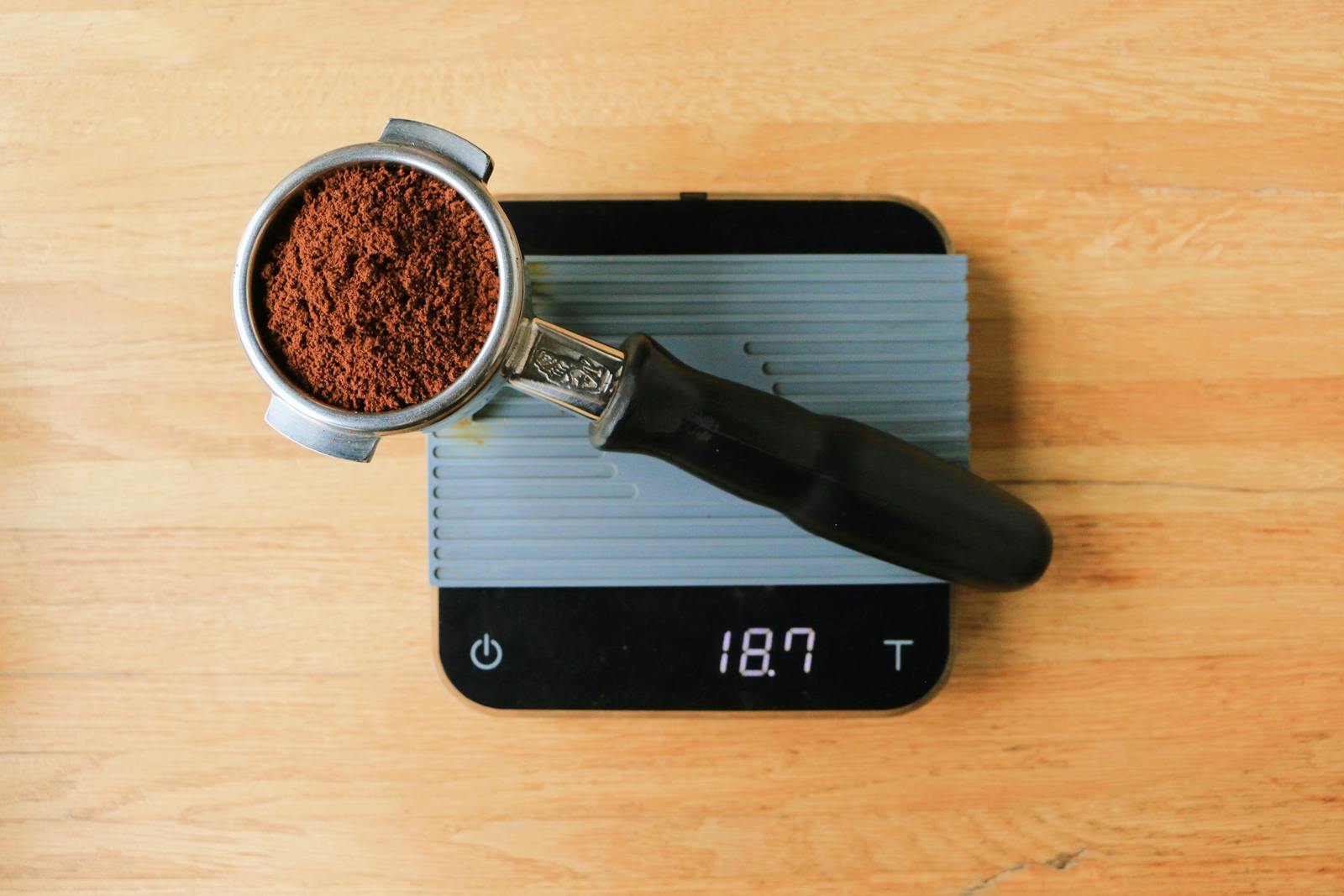
Workflow tips that make it feel smoother
- Placement: Angle the display toward your normal stance.
- Pre-tare: Tare once, then don’t touch buttons until the shot ends.
- Stop point: Choose a consistent end cue (yield, blonding, or taste) and repeat it.
One practical recipe for repeatability: pick a target ratio (say 1:2), then use the scale to stop the shot at the same yield each time. If you taste sharpness, bump yield slightly; if you taste bitterness or dryness, pull a little shorter. The scale turns “feel” into a repeatable adjustment—even if the timer isn’t perfect for every style.
Readability and the hidden LCD tradeoff
On compact scales, cup placement can block the display. If you’re constantly leaning to check weight, switch to a narrower cup for dialing-in sessions or rotate the scale slightly so the digits face you. You’ll make fewer mid-shot adjustments, which usually improves taste.
Tare/timer rhythm: how to avoid mis-click chaos
If you keep wanting to intervene mid-shot, it’s usually the wrong mode—not a “bad scale moment.” Make one change at a time: keep the recipe constant, switch modes, and note whether the scale now matches your routine. That’s the fastest path to a calm workflow.
Value and alternatives: when to upgrade (and when not to)
To evaluate value fairly, lean on the same criteria used in broader scale testing: readability, responsiveness, stability, and real brew workflow fit. Serious Eats frames those priorities well in its approach to tested coffee scales, and they map directly to what you’ll notice on a lever.
Zooming out, upgrade scales typically buy you smoother responsiveness, more refined auto-timing, and better spill tolerance—while budget scales usually trade away fit and consistency. The Coffee Chronicler’s overview of scales tested in 2025 is helpful context for deciding where you want to land.
If you’re mainly shopping for a kitchen scale for coffee, the key difference here is espresso fit and mode timing—not extra kitchen features you’ll never use during a shot.
Zero-JS decision matrix (printable)
Use it: Give each option a 0–5 score. If you’re torn, the winner is the one you’ll enjoy using every morning.
| Priority | Flair Brew Scale | Upgrade-tier scale | Budget-tier scale |
|---|---|---|---|
| Fit under your cup/machine | |||
| Readability at a glance | |||
| Responsiveness (lag-free feel) | |||
| Timer/mode fit for your style | |||
| Notes (what would annoy you?) |
You should buy it if…
- Space: You need a scale that fits without awkward angles.
- Routine: Your shot style is fairly consistent day to day.
- Priority: You value repeatable ratios over “perfect” automation.
You should skip it if…
- Experiments: You do lots of stop-start shots and want the timer to adapt.
- Feel: You want the most refined buttons/display available.
- Station: Your setup is very wet/messy and needs maximum sealing.
If your espresso routine is consistent, this scale can be the “sweet spot” tier.
Final take: the Flair Brew Scale is at its best when you treat it like a workflow tool—pick the mode up front, keep the display visible, and avoid mid-shot button decisions. Do that, and it makes lever espresso easier to repeat.