Quick safety check (before we talk coffee + caffeine health advantages): If coffee makes your heart race, spikes anxiety, worsens reflux, or trashes sleep, the “right” amount for you may be less than what others tolerate. If you’re pregnant or breastfeeding, guidance is typically more cautious—Mayo Clinic summarizes common limits and considerations in its Mayo Clinic coffee guidance.
Rule of thumb: Aim for “benefits without side effects.” If you feel shaky, wired-but-tired, or dependent, treat that as feedback—not failure.
Coffee research is messy—until you look at patterns. Moderate intake is often associated with lower risk across several chronic conditions, and timing may matter, too. In one NIH summary of a large U.S. cohort analysis, people who drank coffee in the morning had lower risk of death from any cause and from cardiovascular disease compared with non-coffee drinkers, while all-day drinking didn’t show the same pattern. (NIH coffee timing study)
TL;DR: Keep coffee earlier, keep total caffeine moderate, and keep add-ins simple. Your sleep and baseline calm are the real “health dashboard.”
Coffee compounds beyond caffeine
If caffeine is the spark, coffee’s other compounds are the slow burn. Coffee contains a mix of bioactive substances (including polyphenols) that may help explain why studies often look at coffee as a whole beverage—not just a stimulant. That also means decaf can still fit if you want the ritual and flavor with less “buzz.”

Coffee bioactives vs. caffeine
Think of caffeine as the fast-acting player: it blocks adenosine (your “sleep pressure” signal), so you feel more alert. Coffee’s other components are where you hear terms like antioxidants and inflammatory balance. Harvard’s Nutrition Source gives a clear, balanced Harvard coffee health evidence overview if you want the big picture without hype.
Nutrition, calories, and what coffee contains
Plain coffee (especially black coffee) is typically very low calorie and has minimal “nutrition facts” in the macro sense—no meaningful protein or fat. What it does contain is water, naturally occurring compounds from the bean, and small amounts of micronutrients that aren’t usually the headline. In practice, the nutritional value of your coffee mostly comes from what you add: sugar, flavored creamers, syrups, and oversized milk-based drinks.
Caffeine’s brain effects (and backfire points)
Caffeine can improve focus and reaction time, but it’s dose-dependent: more isn’t always better. Past a certain point, it can ramp up stress and make your thoughts feel “loud.” That’s why one person feels great on a medium latte, while another feels jittery on half of it.
Health benefits with the strongest support
The most consistent advantages show up with moderate intake and steady habits—not coffee marathons. Most large studies are observational, which means they show associations (not proof of cause and effect). Still, the patterns can be useful—especially when coffee replaces sugary drinks or supports routines you already want (like morning movement).
- Heart signals: Moderate coffee intake often tracks with healthier cardiovascular outcomes in population studies.
- Longevity patterns: Many cohorts show lower all-cause mortality among moderate coffee drinkers versus non-drinkers.
- Metabolic support: Coffee intake is frequently linked with lower type 2 diabetes risk in observational research.
- Liver protection: Evidence often ties coffee with lower risk of several liver diseases.
- Performance boost: Caffeine can improve endurance and perceived effort for many active adults.
- Gut motility: For some people, coffee supports regularity—though sensitivity varies.
Cardiometabolic and longevity signals
Zoomed out, the “advantage curve” often looks U-shaped: moderate drinkers tend to do better than non-drinkers and heavy drinkers. That’s why it’s smarter to aim for a sustainable daily range than to treat coffee like a supplement you should “maximize.”
Metabolic and appetite effects
For some people, coffee nudges appetite down temporarily and can make movement feel easier—which can indirectly support weight goals. The catch: it’s not a reliable fat-burner on its own, and “iced coffee” or café drinks can swing from light to dessert-level depending on size and sweeteners.
Liver health patterns
Liver outcomes are one of the most repeated themes in coffee research. A practical takeaway is simple: if coffee agrees with you, a consistent, moderate habit is more likely to help than occasional high-dose days.
Mental and performance benefits (with caveats)
Coffee works best when it supports your day—rather than running your day. The “feel it fast” perks are real: alertness, motivation, and often better focus. The caveat is that caffeine amplifies your baseline—rested can feel sharper; stressed can feel more anxious.
Try this: Use coffee like a “spotlight,” not a floodlight—one or two well-timed servings can beat all-day sipping.
Energy and focus (what it does)
If you want a smoother lift, pair coffee with water and a little food (even a few bites). That can reduce nausea and “empty-stomach jitters.” Also remember: coffee can mask fatigue while your coordination and mood still lag—so don’t treat “awake” as the same thing as “well-rested.”
Mood lift vs. anxiety sensitivity
Some people get a mood lift; others get racing thoughts. A simple test: if your mind feels clearer and calmer after coffee, you’re likely in a good zone. If you feel impatient, reactive, or slightly panicky, you probably crossed your personal threshold—or you’re stacking caffeine on top of stress.
Exercise performance (when it helps)
Caffeine can make workouts feel more doable, especially endurance sessions. The sweet spot is usually a modest dose taken before activity—not a giant coffee on top of dehydration. If coffee upsets your stomach during training, try smaller amounts or a half-caf swap.
Healthy caffeine range for most adults
For most healthy adults, “healthy” caffeine means: no sleep damage, no jitters, and no dependence. A reference point still helps. The FDA notes that up to 400 mg of caffeine per day is not generally associated with negative effects for most adults in its FDA caffeine limit summary.
| Drink (typical serving) | Common caffeine range (approx.) | Why it varies |
|---|---|---|
| Brewed coffee (8 oz) | 80–120 mg | Bean, roast, brew ratio, and serving size |
| Espresso (1 shot) | 50–80 mg | Shot size and coffee dose |
| Cold brew (12 oz) | 150–250 mg | Concentration and dilution |
| Black tea (8 oz) | 30–60 mg | Tea type and steep time |
| Energy drink (8–16 oz) | 80–200+ mg | Brand formulas and can size |
What 400 mg can look like in real life
Because café sizes and brew strength vary, treat this as a ballpark—not a guarantee. For many people, 400 mg is roughly 3–5 small (8 oz) brewed coffees, or about 2 stronger cold brews, or around 5–8 espresso shots spread across the day. If your servings are large (16–20 oz), you can hit the ceiling in fewer drinks.
Weight goals, metabolism, fasting, and appetite
If you’re using coffee for weight loss, the most reliable “benefit” is substitution: black coffee or lightly sweetened coffee can replace higher-calorie drinks. Some people notice a mild appetite dip or a small metabolism nudge, but coffee isn’t a fat-burning shortcut. During fasting, plain black coffee is often used because it’s typically very low calorie, while honey, sugar, cream, and flavored syrups can change the equation fast.
Instant, canned, and ready-to-drink coffee
Instant coffee (including brands like Nescafé) can be perfectly fine—most of the “good or bad” question comes down to caffeine strength and add-ins. Ready-to-drink and canned coffees (including many Japanese canned styles) range from unsweetened to “milkshake in a can.” For anything bottled, check three things: caffeine (mg) per serving, added sugar, and whether the bottle is more than one serving.
Two self-checks beat any chart: (1) sleep—are you falling asleep and staying asleep? (2) baseline calm—do you feel steady, or revved up and edgy? If either slips, reduce total caffeine or move it earlier before you chase “stronger” coffee.
Daily Caffeine Calculator
Enter what you’ve had today. This is an estimate—labels and café menus are more accurate when available.
Assumptions: brewed 95 mg/cup, espresso 63 mg/shot, cold brew 200 mg/serving. Adjust “Other caffeine” to match labels.
Timing habits that protect sleep (and benefits)
If you want coffee to feel “healthy,” protect your sleep first—everything else depends on it. Sleep is where your brain consolidates memory, your metabolism resets, and your stress response cools down. If caffeine pushes bedtime later (or makes sleep lighter), the next day often needs more caffeine—and the cycle repeats.
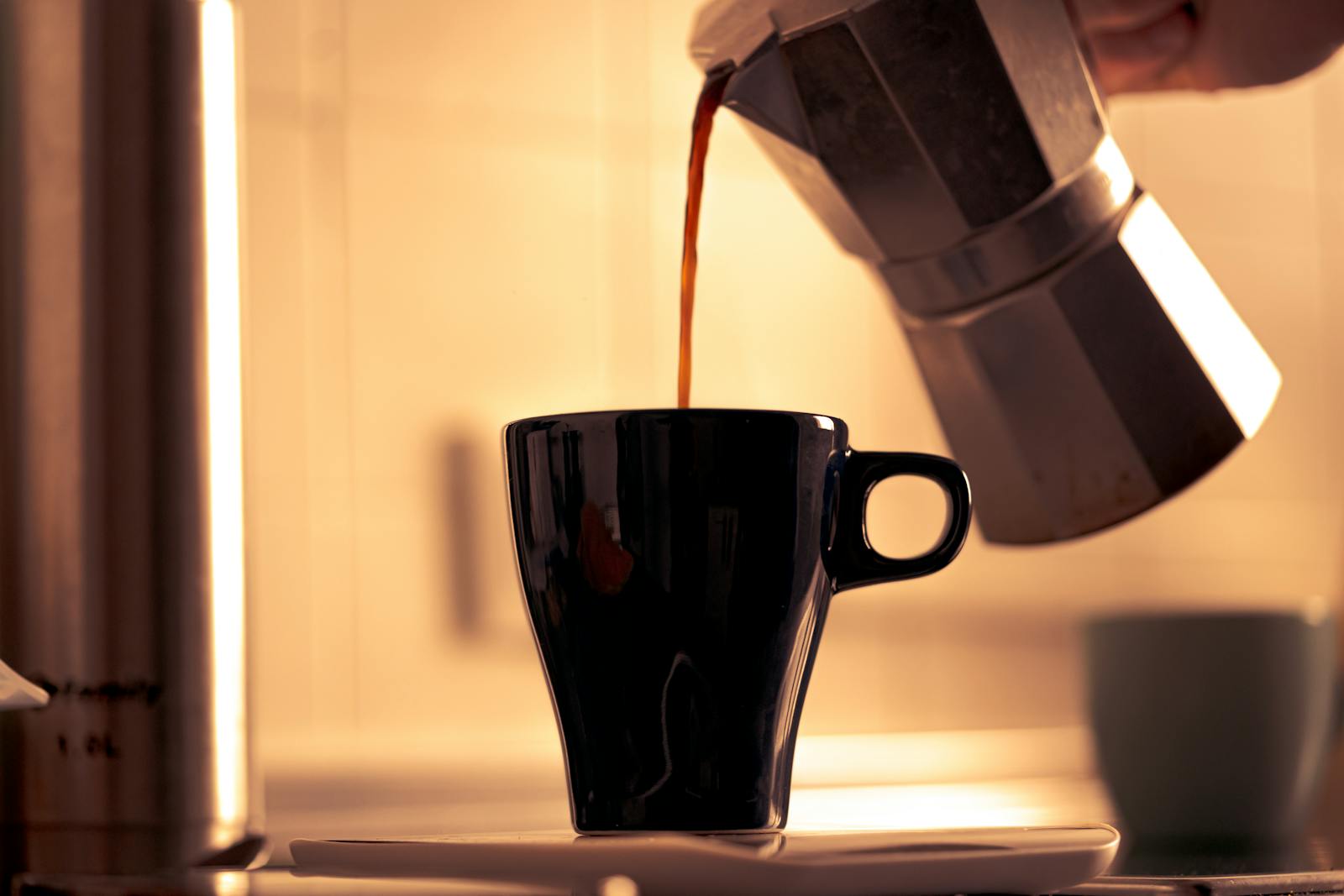
A simple “morning-first” routine: Have your main coffee earlier, then taper. Many people find they don’t miss later cups once energy stabilizes from food, water, and movement.
Bonus: The NIH (NHLBI) timing summary you read in the hook aligns with this habit—morning coffee looked different from all-day sipping in that cohort.
Morning vs. all-day sipping
All-day coffee can turn into “micro-dosing” caffeine right when your body wants to downshift. If you love the ritual later in the day, consider a half-caf or decaf swap after lunch so the habit stays, but the stimulant load drops.
Coffee on an empty stomach
If coffee on an empty stomach makes you shaky, nauseated, or more anxious, treat it as a timing/fueling problem—not a character flaw. Try a few bites first (or alongside), downshift to a smaller serving, or choose a lower-acid option if reflux is a factor.
Coffee choices that shift the tradeoffs
Your healthiest coffee is usually the one you can drink consistently without sugar-creep or sleep damage. Small choices change the risk/benefit balance fast: serving size, brew method, and what you add. A 20-oz sweetened drink behaves more like dessert than a health habit—mostly because of what’s mixed in, not the coffee itself.
Filtered vs. unfiltered (and why it matters)
Paper-filtered coffee (like drip) removes more of certain oily compounds that can raise cholesterol in some people. Unfiltered styles (like French press or boiled coffee) keep more of those oils. If cholesterol is a concern, “filtered most days” is a low-effort tweak—Mayo Clinic notes this tradeoff when discussing coffee and health.
Add-ins and drink style (where most downsides sneak in)
Pick one lever and keep it simple: cut sweetness by 25% for two weeks, then reassess. Honey and lemon aren’t “magic” for weight loss, but swapping sugary syrups for a smaller amount of something you enjoy can reduce calories. If your go-to is a latte or cappuccino, the milk can be fine—just watch the portion size and added flavors.
Drink types and roast myths: espresso, iced coffee, instant, beans
Espresso: A shot is small and often not more caffeine than a big brewed coffee; it’s concentrated, so it feels “strong.” Iced coffee vs. cold brew: cold brew is frequently higher caffeine because it’s concentrated and served large. Light vs. dark roast: the difference is usually smaller than people think; brew ratio and cup size matter more. Instant and ground coffee: both can be healthy options—what changes the tradeoffs is sugar, creamers, and serving size. Eating coffee beans: it counts as caffeine, and it’s easy to overdo.
When to limit caffeine (or talk to a clinician)
If coffee causes symptoms, it’s not “weakness”—it’s a signal to adjust dose, timing, or form. Most people can enjoy coffee safely, but certain bodies and situations need a tighter plan. Treat changes like experiments: small shifts, one at a time.
Anxiety, reflux, heart symptoms, and withdrawal
Red flags: chest pain, fainting, or severe palpitations deserve medical attention. For milder issues—jitters, reflux, or a “wired” feeling—try reducing serving size, switching to half-caf, or moving coffee earlier. If you’re cutting back after heavy use, taper over several days to reduce headaches and irritability.
Pregnancy/breastfeeding, medications, and personal sensitivity
Pregnancy and breastfeeding often come with lower caffeine recommendations, and some medications and supplements can amplify stimulant effects. People also vary in caffeine metabolism—so “coffee good or bad for you” is sometimes about your sensitivity more than the coffee itself.
When quitting (or reducing) feels better: what you might notice
For some people, the benefits of not drinking coffee (or simply drinking less) show up quickly: steadier anxiety levels, fewer reflux symptoms, fewer afternoon energy crashes, and easier sleep. If you want to test it, try a 7–10 day taper (not a hard stop) and track sleep quality and mood. This is especially useful if you’re stuck in a cycle of “late coffee → worse sleep → more coffee.”
About men/women/skin claims: You’ll see big promises online (including sexual or skin “benefits”). In reality, the biggest indirect effects are through sleep, stress, and hydration. If coffee improves your routine and sleep stays strong, that can look like a “skin benefit.” If it worsens sleep, the opposite can happen.
Bottom line: If coffee improves focus, mood, or routine without costing sleep or calm, it can be a health-friendly habit. Start with earlier timing, keep servings reasonable, and adjust down—not up—when symptoms show up.