The Breville Precision Brewer sits in that sweet spot between “push a button” drip coffee and full-on manual pour-over. In this Breville Precision Brewer review, I’m focusing on what matters long-term: daily usability, mode value, and whether custom brew settings actually improve the cup.
Do you really need a coffee maker with “settings”? If you just want decent drip coffee, probably not. But if you’ve ever wished your brewer could handle a light roast without tasting sour—or calm down a dark roast without getting bitter—the Breville Precision Brewer is built for that exact itch. It’s less “set it and forget it” and more “set it once, then enjoy better coffee every day.”
One quick naming note: you’ll also see this sold as the Sage Precision Brewer (same machine), and it’s commonly listed under the model number Breville BDC450BSS. Depending on the version, it may be labeled Breville Precision Brewer Thermal or Breville Precision Brewer Glass—the core brewing brain is the same, but the serving workflow changes.
Quick verdict: A genuinely “tinker-friendly” Breville drip coffee maker that can also run hands-off once you’ve got your settings right.
Best for
- Flavor chasers who want control without pour-over effort
- Busy households making 2–8 cups at a time
- Iced coffee fans who want more than “hot coffee + ice”
Not ideal if
- You want tiny—it’s a countertop commitment
- You never tweak—basic brewers are cheaper
- You hate menus—it’s simple, but not minimal
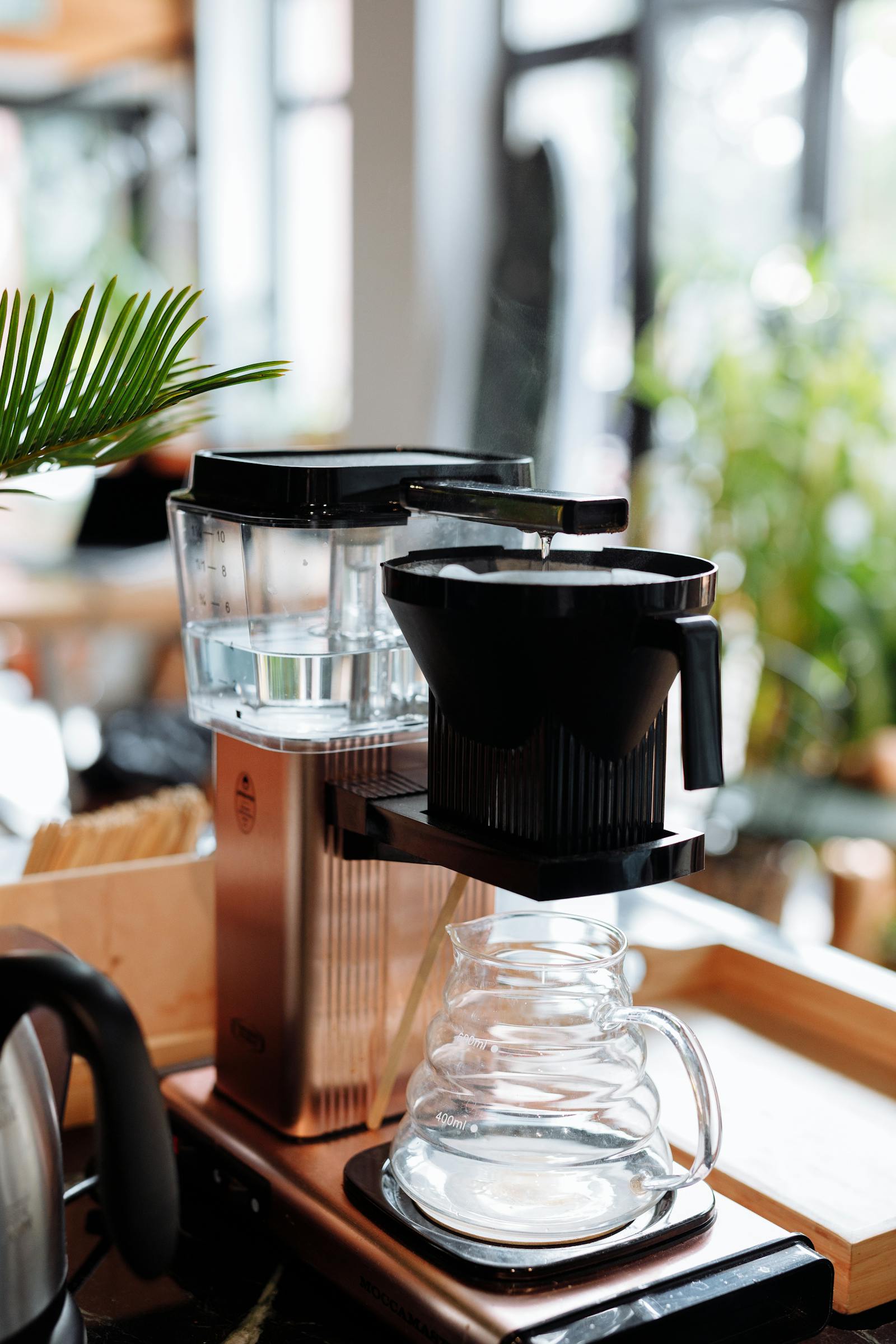
Key Specs and What’s in the Box
Think of the Precision Brewer as a filter coffee maker built with pour-over logic. You get multiple brew styles, adjustable bloom time, temperature control, and the ability to match your brew to the beans (instead of forcing every coffee to taste the same).
This isn’t just “a Breville coffee maker”—it’s basically Breville’s take on a specialty coffee maker: the machine handles the boring parts (stable brewing), and you keep the fun parts (dialing flavor). If you want the official capacity and feature list, it’s laid out clearly on the product page. official brewer specs
Thermal vs glass is mostly about lifestyle. The Breville Precision Brewer Thermal leans toward “brew and hold” without cooking your coffee on a hot plate, while the Breville Precision Brewer Glass keeps the classic carafe experience. Either way, the “Gold” profile (Breville’s balanced default—think gold coffee machine mode) is where most people start.
Brew Modes Explained (and What They Taste Like)
Most drip machines treat all coffee as “one speed fits all.” The Precision Brewer’s real advantage is that it offers different flow/temperature behaviors so you can chase clarity, body, or convenience depending on what you’re brewing.
Here’s the practical way to think about the modes: you’re choosing how the machine soaks the coffee bed, how long it blooms, and how aggressively it extracts. Coffee people call this “control over extraction,” but in normal-human terms it means fewer hollow cups, fewer bitter surprises, and more repeatable results when you change beans. brew mode guidance
| Mode | Best for | What it changes | Flavor vibe |
|---|---|---|---|
| Fast | Busy mornings | Shorter contact time | Clean, lighter body |
| Gold / “standard” | Balanced daily cups | Dialed temp + flow | Even, sweet, reliable |
| Strong | Milk drinks | More extraction emphasis | Heavier, punchier |
| Over Ice | Quick iced coffee | Concentrates brew for dilution | Bright, less watery |
| Cold Brew | Batch iced coffee | Longer steep behavior | Smooth, low bite |
| My Brew | Recipe nerds | Your temperature + bloom + flow | Whatever you dial in |
Real talk: the Breville Precision Brewer cold brew mode is best thought of as an “easy in-machine” version of Breville cold brew—smooth, lower bite, and convenient. It won’t replace a 12–18 hour steep in a dedicated jar if you’re chasing maximum concentrate, but it’s a legitimate option for people who want iced coffee without extra gear.
Why “My Brew” is the reason to buy
If you never touch settings, you won’t unlock the machine’s biggest upside. But if you like nudging your coffee brighter, sweeter, or more chocolatey, My Brew is the feature that makes this feel like a “pour over coffee maker” mindset—without the manual labor.
Build Quality and Daily Usability
This brewer is designed for repeat use, not occasional “weekend coffee projects.” The workflow is straightforward: fill the tank, add coffee, pick a mode, and go. Where it differs from bargain machines is that it feels like it expects you to care about inputs—grind size, dose, and freshness.
The interface is more “kitchen gadget” than “café machine,” which is a compliment here. You can make a regular pot without thinking too hard, but you can also change one variable at a time and actually notice the difference. In a lot of stainless steel coffee maker reviews, that “I can feel the results” factor is what separates tools from appliances—and this one earns it.

Daily reality check: if you’re used to glass-carafe drip coffee, a thermal-style workflow can feel different. You’ll likely pour and serve more like a café—small cups, more often—instead of letting coffee sit on a hot plate for hours.
That small behavior change is one of the easiest ways to keep the last cup tasting like the first—especially if you’re using a true Breville thermal carafe setup.
Reviewers often point out that the Precision Brewer stands out for performance over gimmicks—especially compared to machines that add “smart” features without improving brew fundamentals. WIRED review perspective
Coffee Quality (Flavor, Consistency, and Temperature)
When this brewer shines, it’s because it keeps extraction steady. Consistent water temperature, a real bloom phase, and predictable water flow are the boring behind-the-scenes things that make coffee taste sweeter and less “muddy.”
If you’ve ever had a coffee that tasted great one day and thin the next, the culprit is often inconsistent contact time or water that runs too hot/cool mid-brew. Precision-focused machines aim to solve that, and the Specialty Coffee Association’s home brewer program is built around these fundamentals. SCA brewer standards
Better drip coffee usually isn’t “stronger.” It’s cleaner extraction: enough contact time to pull sweetness, not so much that you drag out bitterness.
If you read a lot of drip coffee maker reviews or broader coffee brewer reviews, this is one of the few that genuinely changes the cup when you tweak settings. That’s why it’s regularly discussed alongside best rated thermal coffee makers—even though “best” here depends on whether you want simplicity or flexibility.
How I’d Dial It In (My Favorite Starting Settings)
You don’t need a lab coat—just one repeatable starting recipe. Once you have a baseline, you can adjust one thing at a time and actually learn what it changes (instead of spinning dials randomly).
A simple “sweet spot” recipe for most coffees
- Dose: 60g coffee per liter of water (scale up/down from there)
- Grind: medium (think “sand,” not powder)
- Bloom: ~30–45 seconds if your mode allows it
- Goal: balanced cup that works black or with milk
Quick fixes when the cup is “off”
Too bitter / dry?
- Grind coarser by one step
- Lower temp slightly
- Shorten contact time (faster mode)
Too sour / thin?
- Grind finer by one step
- Increase temp slightly
- Extend bloom a bit longer
Printable Brew Profile Card (edit + keep by the brewer)
Click into the table to edit your recipe. When you print, it prints exactly what you’ve typed.
| Brew name | Coffee | Water | Notes |
|---|---|---|---|
| House Cup | 60g • Medium grind | 1.0L • 200°F | Balanced, sweet, no bitterness |
| Light Roast | 60g • Slightly finer | 1.0L • 203°F | Add bloom time if it tastes sharp |
| Comfort Roast | 62g • Medium | 1.0L • 198°F | Rounder body; great with milk |
Who Should Buy It (and Who Should Skip)
This is a “care a little, win a lot” brewer. If you enjoy noticing differences between beans—or you want drip coffee that doesn’t taste like an afterthought—it makes a strong case. If you just want hot caffeine, it’s overkill.
Buy it if…
- You want control without manual pour-over time
- You brew different volumes (small batch + full pot)
- You chase clarity in lighter roasts
- You like dialing recipes and saving a “house” profile
Skip it if…
- You never measure coffee-to-water ratios
- You want “set it and forget it” with no learning curve
- Your counter is tight and you prioritize compact gear
- You mostly drink pods and won’t switch habits
If you’re choosing between Breville Precision Brewer vs Moccamaster, pick Breville for customization and pick Moccamaster for simpler, classic brewing. Other names you’ll see in “what else should I buy?” threads include the Wilfa precision coffee maker, the Ninja coffee maker with metal carafe, and the Aiden precision coffee maker review crowd—plus niche picks like a rebel coffee maker or an all glass coffee percolator for old-school vibes.
And if you’re scanning Breville coffee maker reviews more broadly, keep your categories straight: this isn’t a Breville single serve coffee maker or a Breville K cup coffee maker. It’s a batch-first Breville filter coffee maker. If you want an all-in-one station, you’re looking at a different lane—like a Breville espresso and drip coffee machine style combo, or something grinder-forward (people often compare it to results you’d expect from a Breville grind control coffee maker review).
One more cross-shopper to know: Breville’s newer premium drip line sometimes gets labeled the Breville Luxe Brewer (including Breville Luxe Brewer Thermal models). If that’s on your list too, a current Breville Luxe Brewer review will help you decide whether you want “newer design” or “proven precision.”
Cleaning, Maintenance, and Long-Term Ownership
A precision brewer is only “set-and-repeat” if you keep it clean. The good news: drip machines are generally low-drama. The ongoing tasks are mostly about preventing old oils and mineral scale from quietly wrecking the taste you bought the machine for.
- Daily: toss the filter, rinse the basket, wash the carafe.
- Weekly-ish: warm, soapy wash for removable parts + quick wipe around the brew area.
- When flavor drops: clean first, then adjust brew settings second.
For Breville Precision Brewer descaling, follow the intervals in the Breville Precision Brewer manual, especially if you have hard water. A lot of “mystery” Breville coffee maker problems (slow flow, weird bitterness, inconsistent strength) come down to scale buildup or old coffee oils—not a defective machine.
Parts reality check: if you’re the type who keeps appliances for years, it’s worth checking Breville carafe replacement availability ahead of time—especially if you go with a thermal setup and treat it like one of your “best rated coffee carafes.”
Why is Breville so expensive? On this model, you’re paying for control and consistency: temperature, bloom, and flow—plus brew modes that can actually change the cup in a repeatable way.
Final take: The Precision Brewer makes a compelling case for “better drip” because it focuses on the fundamentals—then gives you control when you want it. If that’s your kind of coffee, it’s one of the most satisfying upgrades you can make without going fully manual.
One last practical note: this brewer really rewards a consistent grinder. If you want a smoother “appliance first” experience, you might end up happier in the simpler end of the spectrum—but if you like dialing flavor, this is where premium breville drip coffee maker design actually earns its price.