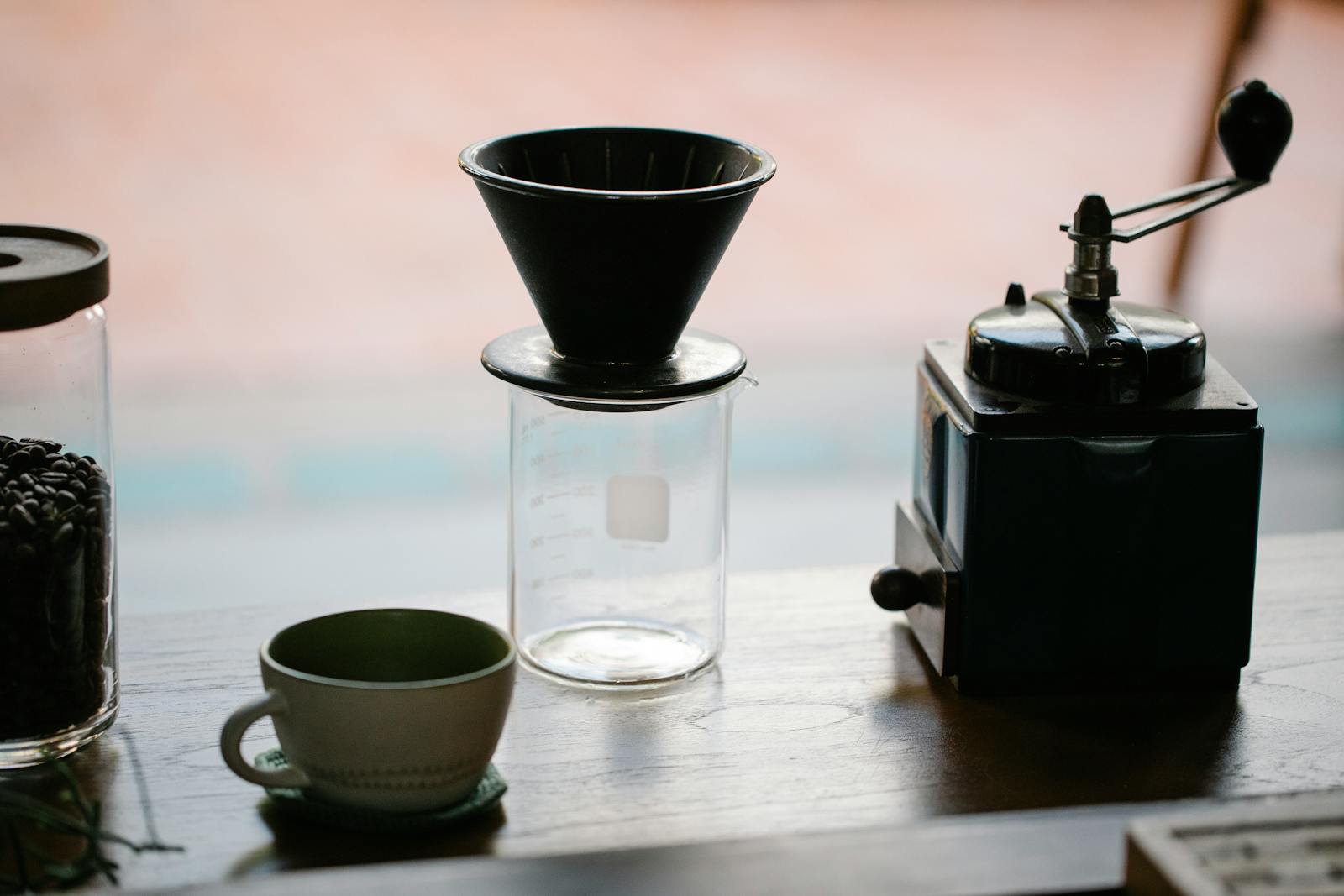
A manual coffee grinder can be the most satisfying upgrade in your whole setup—quiet, compact, and surprisingly capable. The trick is picking one that matches your brew, your hands, and your patience level.
What if the “best manual coffee grinder” isn’t the most famous one—or the most expensive—but the one that fits your hands and your brew? If you brew pour-over, you may want a different grind profile than someone pulling espresso. If you travel, the best grinder is the one you’ll actually pack. This guide is built to help you choose the right kind of “best,” not just chase a single winner.
Use this page like a shortcut: skim the TL;DR, jump to your brew method, then use the comparison table + worksheet to decide between finalists.
TL;DR — Quick picks logic
- Everyday fit — prioritize burr quality + stable bearings + an adjustment system you’ll actually use.
- Espresso control — you need finer adjustment and a body that stays rigid under load.
- Travel sanity — prioritize packability, durability, and parts that won’t rattle loose in a bag.
- Value wins — buy “consistent enough” for your brew method, then spend the rest on better coffee.
The “best” manual grinder depends on your brew
When someone says “best manual coffee grinder,” they’re usually mixing three different questions into one: What tastes best? What’s easiest to live with? and What’s the best value for my brew? The right answer changes fast when you switch from pour-over to espresso—or from a kitchen counter to a suitcase. So instead of starting with coffee grinder brands or a “winner,” start with your use case.
A quick definition that helps: a manual burr grinder should hold its burrs in stable alignment, let you adjust the burr gap repeatably, and stay comfortable under hand pressure. If any of those are weak, you’ll feel it in the cup and in your wrists.
Pick your grinder like you pick shoes: the “best” is the one that fits your daily walk. If you want a beginner-friendly overview of what to look for in a hand burr grinder, this hand grinder buying guide is a helpful baseline.
Choose your main brew
- Espresso: narrow target, tiny adjustments.
- Pour-over / Chemex: even grind, clarity, fewer fines.
- AeroPress: range + speed + comfort.
- French press / cold brew: coarse range with minimal dust.
- Travel / camping: compact body, easy cleanup, durable parts.
Then prioritize this
- Adjustment: external dials tend to be easier day-to-day.
- Stability: tight bearings, minimal wobble, rigid frame.
- Burr geometry: shapes flavor (clarity vs body) and speed.
- Ergonomics: grip diameter + handle leverage matter daily.
- Mess control: retention, static, catch cup fit.
Electric vs manual grinding (quick fork)
- Electric vs manual coffee grinder: electric wins for volume and convenience; manual wins for portability and price-per-performance.
- Hand grinder vs electric: if you make multiple big batches or several espresso shots daily, electric will feel easier fast.
- Grind coffee without a grinder: doable in a pinch, but results are uneven and harder to repeat.
- Can I use a blender to grind coffee beans? Yes—use short pulses and shake between pulses—but expect more fines and boulders than a burr grinder.
- Grind-and-brew note: a coffee maker with built in grinder (a grind and brew coffee maker or single serve grind and brew coffee maker) is a different category—great for convenience, less flexible than separate gear.
What to prioritize (the short list that actually changes results)

Here’s the good news: you don’t need to memorize grinder jargon to buy well. A great manual burr coffee grinder is basically a hand-powered precision tool: it holds the burr set in alignment, lets you set the burr gap (adjustment), and stays stable while you apply force (bearings + body). If any of those pieces are weak, you’ll get unpredictable brews and an annoying workflow.
If you only compare two things, compare grind consistency and adjustment usability. Everything else is supporting cast.
Burrs and consistency (why fines and boulders matter)
If you’re new here and asking “what does burr mean?”—a burr is the cutting surface that crushes and shears beans into particles. So, how does a burr grinder work? You set the distance between two burr surfaces; smaller gap = finer grind. When people talk about types of burrs, they usually mean geometry and cutting pattern, which influences speed, consistency, and flavor.
Most manual grinders use conical burrs for compactness. In the conical vs flat burr debate, flat burrs are more common in larger electric grinders (and can be great), while conical burrs dominate handheld designs because they pack down smaller and tend to grind efficiently by hand.
Your grinder’s job is to produce a tight “cloud” of particles, not a messy mix of dust and rocks. Too many fines can make filter coffee taste bitter or dry; too many boulders can make it taste hollow and thin. Testing-driven reviews tend to reward grinders that produce more even particles and also call out real-life issues like grind speed and cleanup—see this overview of tested handheld grinders for the kind of criteria that repeats across strong coffee grinder reviews.
Adjustment and repeatability (clicks, steps, external dials)
Adjustment is the difference between “close enough” and “nailed it.” For most people, an external adjustment ring/dial is simply easier: you can change settings without disassembling anything, and you can return to a known number with less fuss. Internal systems can work fine, but they’re slower to learn and easier to bump off target when you clean or switch brew methods.
Also, don’t get trapped by marketing numbers. More “clicks” isn’t automatically better; what you want is repeatable control in the range you use. For a workflow-focused lens on adjustment usability and day-to-day handling, this manual grinder roundup 2025 shows how experienced reviewers think about “living with” a grinder.
Speed, effort, and ergonomics (bearings, handle, body size)
A grinder can have great burrs and still be annoying if it’s slow, slippery, or uncomfortable. Three things matter here: bearing quality (smooth rotation under load), grip diameter (can your hand actually hold it securely?), and handle leverage (more leverage feels easier, but can be awkward for travel). If you make coffee daily, comfort isn’t a luxury—it’s the difference between using your grinder for years and letting it collect dust.
Quick “how to use a coffee grinder” (manual)
- Set: start at a reasonable baseline for your brewer (see the grind chart below).
- Grind: keep pressure steady; brace the grinder on a counter for control.
- Brew: keep recipe consistent so grind changes mean something.
- Adjust: if it tastes sharp/under-extracted, go finer; if it tastes dry/bitter, go coarser.
- Log: save one “home setting” per brewer so you can repeat it tomorrow.
If your grinder is hard to set, you’ll stop experimenting—and your coffee will plateau.
A practical rule of thumb
Best manual coffee grinders by use case
This is the part you came for—but it helps to set expectations. The manual grinder market has a lot of strong options now, and reputable roundups usually sort picks into buckets like “overall,” “value,” “espresso,” and “travel.” A wide survey of categories looks like the kind of list found in 2025 manual grinder picks. Below is a decision-ready way to choose a top rated manual coffee grinder for you, not just a trophy winner.
The best grinder is the one that fits your brew range and your tolerance for fuss. Use the “who it’s for / why it wins / who should skip” pattern to narrow fast.
Budget reality check (USD)
If you’re hunting the best budget coffee grinder, price bands matter. Under $50, you’ll find the “cheap coffee grinder” tier—fine for occasional use, but consistency is usually the compromise. The best coffee grinder under $100 is often the sweet spot for filter brewing: comfortable, durable, and consistent enough to taste the difference. If you want the best affordable coffee grinder for daily espresso, expect to pay more for finer control.
- Question 1 — Method: Is your #1 brew espresso, filter, or travel?
- Question 2 — Workflow: Will you switch settings often, or leave it mostly fixed?
- Question 3 — Ergonomics: Do you grind big doses (shared brews), or small cups?
Best overall (balanced performance for most homes)
What to look for: a modern burr set, stable bearings, and an adjustment system you’ll actually use. For many people, the sweet spot is a mid-to-high tier best handheld coffee grinder that can do pour-over, AeroPress, and even occasional espresso without feeling like a workout.
- Who it’s for: you brew multiple methods and want one do-it-all grinder.
- Why it wins: predictable dial-in, faster grinding, fewer frustrating off days.
- Who should skip: ultralight travelers and strict budget shoppers.
- Common examples: upper-mid hand grinders from brands like 1Zpresso or Comandante (choose based on adjustment style and ergonomics).
Best value (big improvement without premium pricing)
What to look for: consistent-enough performance for filter coffee, a comfortable grip, and a design that doesn’t trap grounds everywhere. This is where you’ll usually find the best value coffee grinder—and, for many homes, the best manual burr grinder per dollar.
If you’re cross-checking candidates with “best manual coffee grinder reddit” threads, focus on posts that mention brew method, grind adjustment feel, and long-term durability. Crowd favorites can be great—just make sure the grinder also fits your hands and daily routine.
Best for espresso, travel, and small spaces (when priorities are sharp)
This is where the “one best” idea breaks. Espresso wants fine control and stiffness; travel wants packability and simplicity; small spaces want low mess and easy storage. Some grinders do two of these well, but usually with tradeoffs in weight, cost, or speed. If you’re shopping the high end manual coffee grinder tier, “best grinder on the market” often means “best for my use case,” not “most expensive coffee grinder.”
- Espresso-leaning: smaller steps or ultra-fine control, plus a stable frame that doesn’t twist under load.
- Travel-leaning: compact footprint, durable materials, secure catch cup, quick brush-out cleaning.
- Backpacking note: for a backpacking coffee grinder or camping coffee grinder, secure the handle and keep parts simple—field maintenance matters.
Espresso with a hand grinder: what “espresso-capable” really means
A manual espresso grinder has one job: hit a narrow target and return to it tomorrow. That means the grinder must stay aligned under higher resistance, and the adjustment must be fine enough that you can fix a shot that runs 5–10 seconds too fast or too slow without overcorrecting. This is what separates “can grind fine” from the best manual coffee grinder for espresso.
If your adjustment jumps from “sour” to “bitter,” you don’t have espresso control—you have espresso luck.
Heads-up: If you’re grinding espresso daily, comfort matters. If your wrist or shoulder isn’t thrilled, don’t “push through”—change technique, dose smaller, or consider a powered option for espresso duty.
A practical habit: brace the grinder on a counter, keep your elbow tucked, and let your shoulder do the work—not just your wrist.
The three espresso deal-breakers (range, steps, stability)
Range: Can the grinder comfortably go fine enough without binding? Steps/control: Can you adjust in small increments that change flow rate predictably? Stability: Does the body feel rigid under load, or does it flex and chatter? If you only “sort of” have these, you’ll waste time chasing your tail with dose and tamp changes that can’t compensate for a grinder that’s wandering. That’s why the best hand grinder for espresso usually looks “overbuilt” compared with a casual filter grinder.
Think of this as your mini espresso grind size chart: if a shot runs fast and tastes sharp, go finer; if it runs slow and tastes dry/bitter, go coarser. Once timing is reasonable, make smaller adjustments and let taste guide the last clicks. These are your practical grinder settings for espresso—simple, repeatable, and not dependent on a specific brand.
Dial-in workflow in 5 minutes (repeatable approach)
Pick a dose that matches your basket and stick to it. Grind, pull a shot, and time it from first drip. Then change only one thing: grind size. If it runs fast, go finer; if it runs slow, go coarser. Once timing is in range, fine-tune taste with tiny grind moves, then adjust dose slightly if needed.
| Coffee dose & measurements (starting points) | Typical range |
|---|---|
| How many grams of coffee for espresso? | Often 16–20g for a “double” basket (18g is a common baseline). |
| How many grams in a double shot of espresso? | Common output is ~30–45g, depending on ratio and style. |
| How much coffee to use for pour over | Start around 1:15 to 1:17 (e.g., 20g coffee to 300–340g water). |
| How many scoops of coffee for 10 cups? | If “cup” = 6 oz, start ~60–75g total; adjust to taste (scoops vary by size). |
Micro-case: say you’re aiming for a balanced shot and your first attempt runs noticeably fast and tastes sharp. Your next move is a small grind adjustment finer—not a new tamp technique, not a different distribution tool. Espresso gets simpler when you let the grinder be the steering wheel. If you’re comparing manual vs electric for espresso, remember that a professional espresso grinder is built for speed and repeatability—manual can be excellent, but it’s still work.
Filter coffee and AeroPress: how to choose for clarity vs body
For pour-over and AeroPress, the grind doesn’t need to hit a needle-thin target the way espresso does. That’s why value grinders can feel incredible for filter brewing. The main decision becomes flavor style: do you want a cup that tastes crisp and separated (clarity), or rounder and heavier (body)? Burr geometry and consistency both influence this, but your brewer and recipe matter too.
For filter coffee, consistency buys you clarity; adjustment ease buys you experimentation.
| Grind size & settings (quick chart) | What to start with | Adjust first |
|---|---|---|
| Pour-over / Chemex (best hand grinder for pour over) | Medium to medium-fine (a “medium grind coffee grinder” baseline) | Grind size (before changing pour technique) |
| AeroPress (best grinder for aeropress) | Medium to fine (aeropress grind size depends on steep time) | Steep time (then grind) |
| Moka pot | Fine (moka pot grind size is usually between espresso and drip) | Grind coarser if bitter or sputtering |
| French press | Coarse (french press grind size: big, even particles) | Coarser if muddy; reduce fines first |
| Cold brew | Very coarse (coarse coffee grinder for cold brew) | Steep time (then grind) |
| Percolator | Coarse (coarse grind coffee for percolator helps reduce bitterness) | Coarser + lower heat if harsh |
When “clean cups” matter most
If you chase fruit notes, florals, or sparkling acidity, look for grinders that minimize fines and keep particles even. In real life, you’ll notice this as less clogging, more stable drawdowns, and flavors that stay distinct as the cup cools. Pair that with an easy-to-read adjustment system and you’ll actually learn your coffee: “two clicks coarser” becomes a meaningful dial instead of a guess.
When you want more body and sweetness
If you like chocolatey, syrupy cups—or you brew darker roasts—more body can be a feature, not a flaw. AeroPress is especially forgiving because you control steep time and pressure. In that world, the “best” manual coffee grinder for pour over and immersion might simply be the one that’s fast, comfortable, and consistent enough that you can grind, brew, and move on with your day.
Maintenance, longevity, and day-to-day quality of life
A great manual burr coffee grinder can last a long time, but only if it stays clean and stays aligned. The goal isn’t obsessive maintenance—it’s consistency. Oils and micro-fines build up over time, and they can make grinding feel slower and taste slightly stale, especially with darker roasts.
Clean often enough that your grinder feels the same week to week. That’s the standard—not “spotless.”
- Weekly: brush out the catch cup and burr chamber (quick, dry).
- Monthly: deeper clean if you grind oily beans or notice slower grinding.
- Anytime: clean if flavors suddenly taste “flat” across multiple coffees.
Cleaning without losing calibration
If your grinder uses click settings, note your current setting before you take anything apart. A soft brush and a quick wipe is usually enough for routine care. For deeper cleaning, disassemble carefully, brush burrs and threads, and reassemble without over-tightening.
Storage, static, and retention hacks
Static and retention are the sneaky annoyances: grounds cling to the catch cup, stick to the chute, and end up on your counter. Tap the grinder gently after grinding and give the catch cup a quick swirl before opening. If static is stubborn, a tiny “droplet” mist on the beans (a single drop of water, not a rinse) can reduce cling—just don’t make beans wet.
Troubleshooting (fast fixes)
- Grinder not working: check for a jam (oily beans can pack), then brush out the burr chamber and try again.
- How to adjust grinder: return to a known baseline setting, then move in small, repeatable steps—not huge jumps.
- Not grinding fine enough: confirm burrs are seated correctly and the adjustment mechanism is fully engaged.
- Electric-specific note: “Baratza Encore not grinding fine” complaints often come down to calibration or worn burrs—different issue than most manual grinders.
Quick comparison table + pick-it-yourself worksheet
If you’re deciding between a few finalists, comparison beats hype. Use the table to sanity-check fit, then use the worksheet to pick based on what you care about. Tip: if two grinders are close, choose the one you’ll enjoy using every morning—because enjoyment is what turns “good gear” into daily coffee.
When in doubt, choose the grinder with the clearest adjustment and the best grip for your hands.
Quick comparison table
| Use case | Key strengths to seek | Watch-outs | Typical price tier (USD) |
|---|---|---|---|
| Espresso-first | Fine control, stiffness, repeatability, comfortable leverage | Hand fatigue, slower workflow if you pull multiple shots | $$–$$$ |
| Pour-over daily | Even mid-range grind, low fines, easy adjustments | Internal adjustment can slow experimentation | $–$$$ |
| AeroPress versatile | Comfort, speed, usable consistency across ranges | Don’t overpay for espresso precision you won’t use | $–$$ |
| French press / cold brew | Coarse range, low dust, easy cleanup | Some grinders create extra fines at coarse settings | $–$$ |
| Travel / portable espresso grinder | Packability, durability, secure catch cup, simple brush-out | Long handles and tall bodies can be awkward in bags | $–$$ |
Where to buy (without overthinking it)
- Coffee grinder near me: local specialty shops often help match brew method to grinder range.
- Manual coffee grinder near me: great if you want to feel grip size and handle ergonomics before buying.
- Coffee grinders on Amazon: convenient, but confirm warranty and return policy.
- Coffee grinder on sale: discounts are best when the grinder already fits your use case—don’t “deal-buy” the wrong range.
- Used coffee grinder for sale: worth it only if adjustment is consistent and replacement parts exist; clean thoroughly before use.
- Best Buy coffee grinder: handy for easy returns on mainstream electric options and some entry-level grinders.
You’ll also see a lot of comparison searches that are really about fit, not a universal winner—things like “1Zpresso K-Ultra vs Timemore,” “Timemore C2 vs C3,” “ZP6 vs K Ultra,” or “Baratza Encore vs Kingrinder K6.” Treat those like a checklist: adjustment style, brew range, comfort, and whether you’re optimizing for espresso or filter. (If you’re deep-diving phrases like “Kingrinder K6 review” or “Comandante C40 MK4 Nitro Blade reviews,” focus on workflow and repeatability more than hype.)
Weighted decision matrix (auto-total)
Enter up to three grinder candidates, set what matters most, and score each one from 1 (weak) to 5 (excellent). Totals update as you type—then hit Print if you want a paper copy.
Candidate A total
0
Candidate B total
0
Candidate C total
0
Winner will appear here as you score.
Moka pot quick notes (if you’re also shopping gear)
If you’re in “best moka pot” mode, you’ll see arguments about moka pot sizes and moka pot stainless steel vs aluminum. The practical win is picking the right size for your daily dose, keeping heat moderate, and using a grind that’s fine but not powdery.
- Moka pot review lens: gasket quality, valve reliability, and how evenly it extracts.
- Moka pot not working: check gasket seal, grind too fine, or excessive heat.
- How to clean moka pot: rinse and dry; avoid soap if you dislike lingering aromas (manufacturer guidance varies).
Turkish coffee corner (special grind)
Turkish coffee is its own world. A turkish coffee grinder needs to go extremely fine, and a turkish coffee pot (cezve/ibrik) is the traditional brewer. If you’re comparing turkish coffee vs espresso, the grind and brewing method are fundamentally different.
- Best turkish coffee tip: buy fresh, grind ultra-fine, and control heat gently.
- Gear note: many standard hand grinders won’t go fine enough for true Turkish-style powder.
Plastic-free coffee gear note: if you’re hunting a plastic free coffee grinder, many manual grinders are mostly metal. For the rest of your setup, “coffee maker without plastic,” “drip coffee maker without plastic,” and even “espresso machine without plastic” searches usually come down to minimizing plastic contact points (like water tanks and hot-water paths) rather than eliminating plastic entirely.
One last practical note: if you’re comparing a couple of “top pick” models, don’t ignore boring details like grip, catch cup, and setting visibility. Those are the things you touch every day—and they’re why many shoppers end up happier with a slightly less “legendary” grinder that simply fits their routine better.