Drip coffee ratio is simply coffee grams : water grams. If you’ve ever searched “drip coffee ratio grams”, this is the translation that makes everything click.
Still measuring drip coffee with a scoop? That’s like baking with “a handful of flour.” The fastest upgrade isn’t a fancy brewer—it’s switching to a simple coffee-to-water ratio so your cup stops drifting between weak and overdone. Start with one dependable baseline, learn the tiny adjustments that change flavor on purpose, and you’ll get better coffee from the exact machine you already own.
In plain English: how much water per cup of coffee? A typical “cup” (8 fl oz) is about 237 g of water. At a balanced 1:16.5, that’s roughly 14 g of coffee per 8 fl oz cup. If you want it bolder, go 1:15. If you want it lighter, go 1:18.
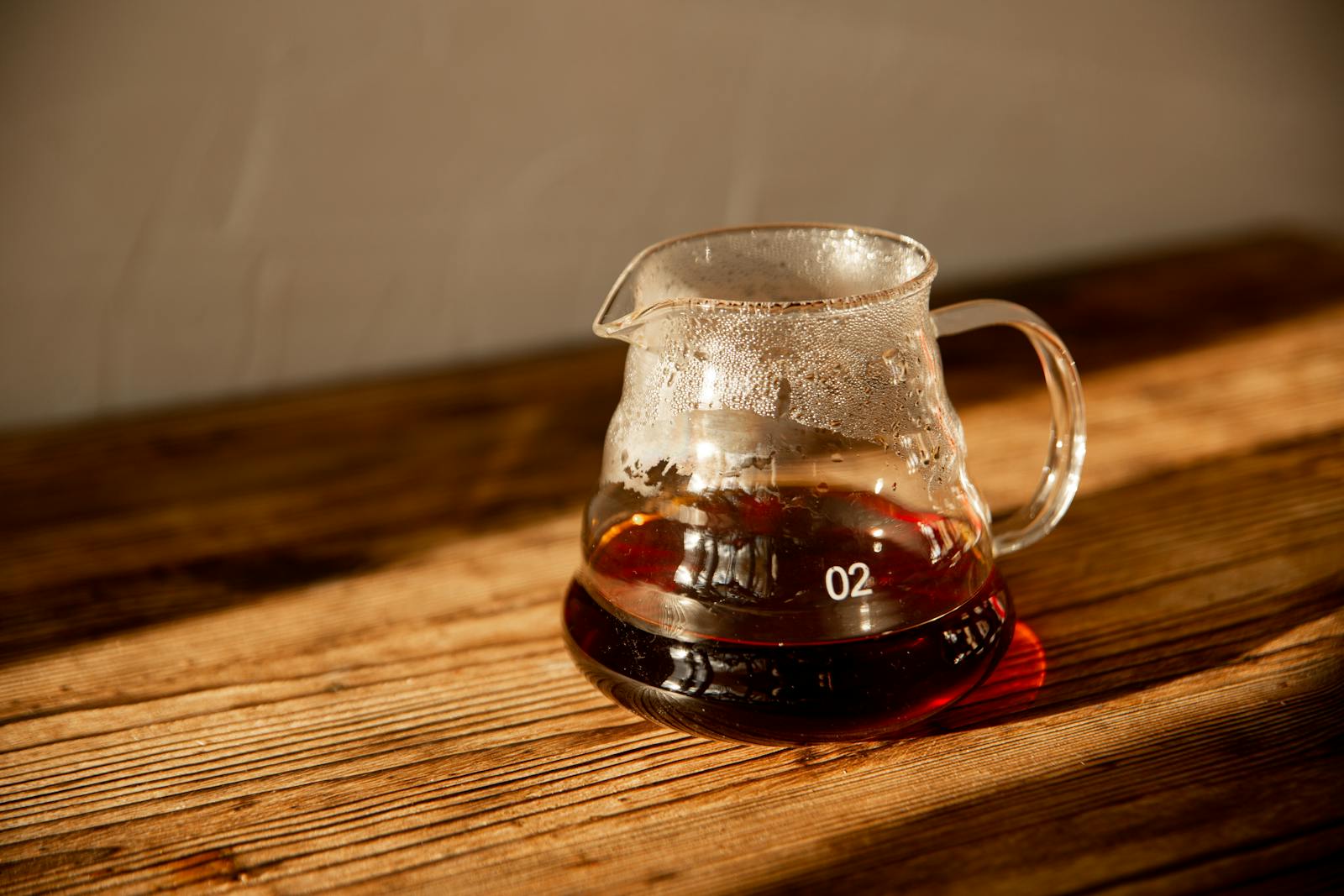
The “right” drip coffee ratio (and why it varies)
For most drip coffee, a dependable starting point is 1:16 to 1:17—meaning 1 gram of coffee for every 16–17 grams of water. That’s the middle ground where coffee tastes full but not heavy. Ratios give you control, not rules.
A lot of brew guides converge on a “standard drip” zone around 1:15 to 1:18. Lower ratios taste richer; higher ratios taste lighter (assuming grind and brew time stay similar) (standard drip range).
Bonus: the same ballpark works for the pour over coffee ratio, too. If you brew pour over some days and drip on others, starting around 1:16–1:17 keeps your taste comparisons “apples to apples.”
Quick “what to change” rule: If it’s watery, adjust ratio. If it’s sour or bitter, adjust grind first—then fine-tune the ratio.
Strong
1:15
Fuller body, more intensity
Great for darker roasts, milk drinks, or when coffee tastes “thin.”
Balanced
1:16 to 1:17
Clean, everyday sweet spot
Most home drip machines land here naturally.
Light
1:18
Brighter, tea-like clarity
Nice for light roasts or when your cup tastes heavy or harsh.
A quick drip coffee ratio calculator
Drip ratio math is simple: coffee (g) = water (g) ÷ ratio. Since water grams roughly match milliliters, you can weigh water quickly and stay consistent. If you can measure water, you can measure coffee.
Want a second set of numbers to compare with? Coffee Bros keeps an easy brew calculator that outputs ratios and grams across common methods (ratio calculator tool). Use it as a sanity check—then stick with one baseline so you’re not changing multiple variables at once.
Coffee to water ratio chart (common drip batch sizes)
This coffee to water ratio chart gives you “grab-and-go” numbers for a balanced 1:16.5 drip brew. If you normally add milk or sweetener, start one notch stronger. If you prefer black coffee that feels lighter, start one notch higher. Save this chart so mornings stay easy.
Important: Many drip machines use a “cup” that’s about 5 fl oz, not 8. If your “10-cup” carafe is really 50 fl oz, use the 50 fl oz row—not 80 fl oz.
| Brew size | Water (approx.) | Coffee at 1:16.5 |
|---|---|---|
| Single mug | 12 fl oz (355 g) | 21.5 g |
| Two mugs | 20 fl oz (591 g) | 35.8 g |
| Small pot | 32 fl oz (946 g) | 57.3 g |
| “10-cup” carafe (5 fl oz cups) | 50 fl oz (1,478 g) | 89.6 g |
| 10 cups of water (8 fl oz cups) | 80 fl oz (2,366 g) | 143.4 g |
| 12 cups of water (8 fl oz cups) | 96 fl oz (2,839 g) | 172.1 g |
Quick answers people ask all the time: how much coffee for 10 cups of water? If you mean 10×8 fl oz, it’s about 143 g at 1:16.5. How much coffee for 12 cups of water? About 172 g. If your “cups” are 5 fl oz machine cups, use the carafe row instead.
No scale today? A decent backup is 1–2 tablespoons of coffee per cup drip coffee (using an 8 fl oz cup). It’s less precise, but it’s better than guessing wildly.
And if you’re wondering how much water for 4 tablespoons of coffee: 4 tbsp is roughly ~20 g for many coffees. For a balanced cup, aim for about 330–340 g water (roughly 11–11.5 fl oz), then adjust by taste.
If you’re curious why some people like a punchier baseline, CoffeeGeek points to 1:14 as a strong reference ratio. If it tastes too intense in a drip maker, back off to 1:15–1:17 before changing everything else (1:14 baseline ratio).
How to tune strength without guessing
The fastest way to dial in is to move in small steps. Big swings can feel like a totally different coffee. Try changing your ratio by 0.5–1.0 and re-brew once. Tiny changes are easier to taste—and repeat.
Make it stronger (without “muddy”)
- Ratio move: 1:17 → 1:16 (or 1:16 → 1:15)
- Grind move: one notch finer if it tastes weak and sour
- Workflow move: pre-wet the filter and warm the carafe
Make it lighter (without “watery”)
- Ratio move: 1:16 → 1:17 (or 1:17 → 1:18)
- Grind move: one notch coarser if it tastes harsh or bitter
- Workflow move: remove the carafe promptly so it doesn’t “cook”
Rule of thumb: Weak + sour = under-extracted. Dry + bitter = over-extracted. Use ratio for strength, and grind/time for extraction.
The hidden variables that change your ratio
A drip coffee ratio can be “perfect” on paper and still taste off because home brewers aren’t identical day to day. Temperature, water quality, and how evenly the coffee bed saturates can shift flavor. When taste surprises you, fix the process before changing the recipe.
If you’re not sure where to start, the best grind size for drip coffee is usually medium—think sand, not powder. Then tweak one notch at a time based on taste.

Three quick checks that improve consistency
- Even saturation: make sure all grounds get wet early (no dry “islands”).
- Speed: if it finishes fast and tastes sour, grind slightly finer.
- Heat: preheat the carafe and keep the lid on to reduce heat loss.
If you want a clean mental model, the Specialty Coffee Association frames “ideal” coffee as a balance between strength and extraction—which is why changing ratio alone can’t solve every cup (SCA brewing chart).
Printable drip coffee cheat sheet (edit + print)
Tap into “autopilot mode.” Edit the cells below to match your brewer, then print it. Keep your dose and grind steady for a week, and your tweaks will start feeling obvious. Consistency turns coffee into muscle memory.
Mobile tip: Tap a cell to edit. Keep numbers short (like “36 g”) so the table stays readable.
My default recipe
Ratio: 1:16.5 • Batch size: 20 fl oz • Coffee: 36 g
| I’m brewing… | Water | Coffee | Notes |
|---|---|---|---|
| One mug | 12 fl oz | 22 g | My weekday cup |
| Two mugs | 20 fl oz | 36 g | Best all-around |
| Small pot | 32 fl oz | 57 g | Guests / weekend |
Troubleshooting: what to change next
If your coffee tastes wrong, don’t overhaul everything. Change one thing per brew so you learn what fixed it. One adjustment beats five guesses every time.
| Taste problem | Most likely cause | Best next move |
|---|---|---|
| Sour, sharp, “thin” | Under-extracted | Grind a bit finer or lower ratio (1:17 → 1:16) |
| Bitter, dry, harsh | Over-extracted | Grind a bit coarser or raise ratio (1:16 → 1:17) |
| Watery but not sour | Too dilute | Lower ratio (1:18 → 1:17 → 1:16.5) |
| Strong but “muddy” | Too fine / too long | Keep ratio, go slightly coarser, and avoid re-heating on the hot plate |
| Inconsistent day-to-day | Workflow variance | Measure water by weight; keep grind and dose locked for a week |
Once you find a ratio you love, write it down and stick with it. “My coffee” becomes a preset you repeat—not a puzzle you re-solve.