Best Coffee Scale (for real-life brewing, not spec-sheet flex)
A coffee scale is the cheapest way to make your coffee taste more expensive. If you’re searching for the best coffee scale for espresso and pour-over, you’re really looking for a digital coffee scale that’s fast, readable, stable, and easy to use every day—because the scale you actually use is the one that improves your cups.
What if the “best coffee scale” is the one that does less? Most people don’t need ten espresso modes or a phone app—they need a precision coffee scale that responds instantly, doesn’t wobble, and doesn’t make brewing feel like homework. This guide distills what tends to show up across real-world coffee scale reviews into a simple checklist, so you can buy once and brew consistently.
TL;DR—what most people should buy:
- Pour-over priority: Clear display + stable platform + built-in timer.
- Espresso priority: Fast updates + low profile + water resistance.
- Kitchen-all-purpose: Larger platform + higher max weight (useful beyond coffee).
- Non-negotiable: Tare button that responds instantly.
- Nice-to-have: Auto-timer or auto-tare (only if it doesn’t get in your way).
- Skip: Bluetooth/app unless you love logging every brew.
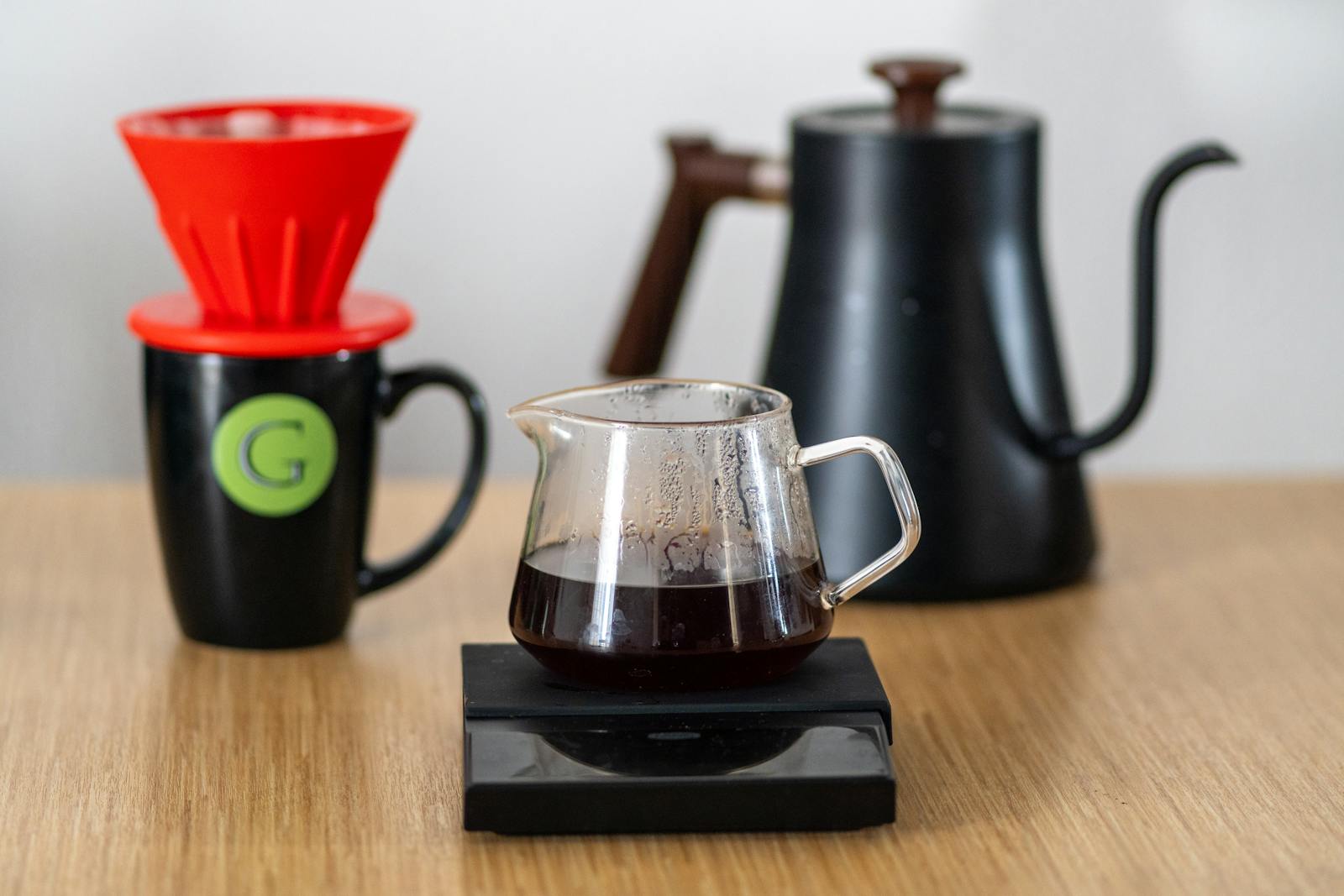
If you make coffee most days, you’ll get better results by dialing in one repeatable recipe than by chasing new gear. A good scale turns your “that was amazing” cup into a routine you can recreate on a sleepy Monday.
Caption: A scale makes ratios repeatable—cup after cup.
Below, you’ll learn how to choose a scale for espresso, pour-over, AeroPress, and everything in between—plus a printable ratio sheet you can keep next to your kettle.
What makes a coffee scale “the best”
The best coffee scale is the one that protects your process from tiny mistakes. In coffee, small errors stack up fast—a slow refresh rate makes you overshoot pours, a dim display makes you misread grams, and a wobbly platform makes your numbers drift.
Start by picking your “main job.” If you mostly do espresso, you’re measuring fast flow and final yield, often in a tight space under a portafilter. If you mostly do pour-over, you’re managing a longer, calmer pour and want the scale to be effortlessly readable while you watch the bloom and drawdown.
The common trap is buying a scale that’s technically “accurate” but annoying to live with. If the tare lags, the digits are tiny, or the auto-off is aggressive, you’ll stop using it—and any scale you don’t use is a bad scale.
Must-have basics (everyone):
- Responsiveness: Tare and weight updates happen immediately.
- Readability: Big digits, good contrast, no confusing icons.
- Stability: Numbers settle quickly and don’t “wander.”
Workflow add-ons (only if they fit):
- Built-in timer: Helpful for pour-over and AeroPress routines.
- Water resistance: Useful near espresso machines and sinks.
- Auto modes: Great when they’re predictable; annoying when they’re not.
One more reality check: the best scale is often the one reviewers reach for repeatedly during testing because it’s frictionless to use. That “always-grabbed” factor shows up in real comparisons of tested coffee scales.
Quick picks by brewing style and budget
If you want the fastest decision, match your setup to one of these buckets. The right pick is the one you’ll keep on the counter—not the one you’ll stash in a drawer after the novelty wears off.
A 2-minute chooser:
- If your scale must fit on a drip tray: choose an espresso machine scale profile—low height + fast refresh + spill tolerance.
- If you mostly brew pour-over: prioritize big digits + stable platform + timer (that’s the whole “best pour over scale” secret).
- If you’ll also cook with it: prioritize capacity + platform size (coffee-friendly precision is still a bonus).
Pour-over / drip (most home brewers)
- Best fit: 0.1g resolution, timer, bright display.
- Why: You’ll actually use it every pour.
- Bonus: Great as a coffee bean scale for dosing, too.
Espresso (tight space, fast flow)
- Best fit: Low profile, fast updates, water resistant.
- Why: Keeps yield tracking painless during a shot.
- Bonus: Works as a portafilter scale for quick checks.
One scale for coffee + kitchen
- Best fit: Bigger platform, higher capacity, easy cleaning.
- Why: Doesn’t tip with large bowls or carafes.
- Bonus: Handy if you bought a coffee grinder and scale bundle.
If you’re comparing “espresso scale” vs “pour over scale,” don’t overthink it: espresso tolerates slightly less precision but demands speed; pour-over tolerates slightly slower updates but demands legibility. Many review roundups describe their evaluation criteria clearly—use that as a sanity check on your priorities, like the sections on how scales were tested.
The 7 specs that actually matter (and the 3 that usually don’t)
Specs are useful when they map to a real brewing problem. A good spec is one you can feel in use—like “fast refresh” (you overshoot less) or “stable platform” (numbers stop dancing).
Here’s a practical “good enough” rule: if your scale is stable, reads 0.1g, and doesn’t lag, it can make excellent coffee. After that, upgrades are mostly about comfort: readability, fit, water resistance, and whether the scale’s timer/modes match how you brew. If you brew daily, a coffee scale with timer is often the most useful upgrade.
| Spec | Why it matters | What to look for |
|---|---|---|
| Refresh rate | Controls overshoot on pours and shot yield tracking. | Stable, near-real-time updates (especially for espresso). |
| Resolution | Helps with small doses and micro-adjustments. | 0.1g is ideal for coffee; 0.5–1g can be fine for kitchen-only. |
| Repeatability | Consistency matters more than the last decimal. | Same weight reads the same across repeated measures. |
| Capacity | Prevents overload with big carafes or bowls. | 2,000g+ if you’ll brew large batches or cook with it. |
| Platform size | Affects stability with servers and bowls. | Big enough that your vessel doesn’t hang off the edge. |
| Readability | Prevents misreads mid-pour. | Large digits, high contrast, no tiny icons. |
| Tare behavior | You’ll tare constantly while brewing. | Instant response; doesn’t “miss” presses. |
| Power + sleep | Determines if it’s always ready when you are. | Reasonable auto-off or easy wake; USB-C is a plus. |
Three “nice” specs that often get oversold:
- Smart features: A smart coffee scale or bluetooth coffee scale can be fun if you’ll actually log; otherwise it adds friction.
- 1/100th gram marketing: That extra decimal rarely improves your cup if the scale isn’t stable.
- Dozens of modes: Helpful only if they match your exact workflow and don’t auto-trigger incorrectly.
Want a deeper checklist for modern features like USB-C charging, water resistance, and footprint? Coffee Chronicler’s breakdown of coffee scale features 2025 is a solid reference point—then filter it through what you’ll actually do at your counter.
Espresso workflow checks (fit, heat, splash, speed)
Espresso is a space-and-speed problem. Your scale must fit where the shot happens—under cups, under bottomless portafilters, and near hot, wet equipment.

Think of an espresso scale as a “shot control surface.” If it’s too tall, too slow, or hard to read, you’ll stop using it. Most people do best with a mini espresso scale footprint (low profile) that can live on the drip tray without drama.
Here’s the simplest espresso “fit test”: place your favorite cup on the scale, then slide it under your machine as if you’re pulling a shot. If you can’t read the display easily, or the cup wobbles, you’ll hate using it. Also check whether your drip tray has ridges or seams—some scales rock slightly unless you add a thin mat.
A beginner-friendly yield target is the classic 1:2 shot: 18g in, stop around 36g out, then taste and adjust. If the scale updates slowly, you’ll blow past your target and spend your learning reps correcting preventable errors.
Spill resistance matters here. People often search “waterproof espresso scale,” but truly waterproof options are uncommon—aim for water-resistant design and wipe splashes quickly. If you like timing shots, an espresso scale with timer is convenient, but don’t let timer features distract you from speed and fit.
For dosing, you can also “stack” your tools: weigh beans, dose into a cup, then verify your basket dose if you want. That’s where phrases like dosing cup scale and portafilter scale come from—it’s less about special gear and more about a smooth workflow to weigh coffee reliably.
For fast-flow shots, usability details matter more than fancy extras—especially if you’re tempted by guided modes. WIRED’s explanation of brew assist ratio mode is a helpful way to decide whether guided support would genuinely reduce friction for you (or just add steps).
Espresso must-checks:
- Low profile: Cup + scale fits without cramping the shot.
- Fast refresh: You can stop the shot on target yield.
- Water resistance: Splashes and steam don’t end its life early.
Espresso nice-to-haves:
- Heat-safe mat: Protects from warmth and improves stability.
- Large tare button: One-hand workflow friendly.
- Timer visibility: If you time shots, it should be readable too.
A quick espresso routine that makes any decent scale feel “better”
1) Tare with your cup in place. 2) Pull your shot and watch yield (grams) more than time. 3) Stop the shot when you hit your target yield, then taste. 4) If it’s sour: grind finer or increase yield slightly. If it’s bitter: grind coarser or reduce yield slightly. The scale’s job is to make those changes repeatable.
If you’re shopping right now, you’ll see searches like “best espresso scale 2025.” Use the fit test above and the spec table earlier to narrow it down quickly, regardless of brand.
Pour-over workflow checks (ratio, timer, consistency)
Pour-over is where scales shine because you’re controlling a slow variable (water) over time. Your scale becomes your “metronome” for pouring—keeping your ratio steady while you focus on technique.
For most drippers, the fastest way to improve is to lock a ratio (like 1:15 to 1:17) and keep your pours consistent. If you like your coffee stronger, try 1:15; if you like it lighter, try 1:17. The point isn’t the “perfect” number—it’s repeating the same number while you learn what grind size and pouring style do to flavor.
A practical pour schedule that’s easy to repeat: bloom to ~2× dose for 30–45 seconds, then pour in two or three steady pulses to your final water weight. If your scale is readable from standing height, you’ll pour smoother—and you’ll overshoot less.
For bigger brews, platform stability and capacity matter more. That’s why people look for a drip coffee scale that can handle larger servers, and why “chemex coffee scale” searches tend to favor sturdy platforms over tiny, ultra-compact bodies.
Printable Brew-Ratio Quick Sheet (tap a cell to edit; then print just this sheet)
| Method | Coffee dose (g) | Ratio | Target water (g) | Timer notes |
|---|---|---|---|---|
| V60 / cone | 20 | 1:16 | 320 | Bloom 45s; finish pour by 2:00 |
| Kalita / flat | 22 | 1:15 | 330 | Gentle pulse pours; total 3:00–3:30 |
| AeroPress | 17 | 1:12 | 204 | Steep 1:30; press 30s |
| Cold brew (concentrate) | 100 | 1:8 | 800 | 12–18 hours; dilute to taste |
Care, water resistance, and calibration
Your scale will live near heat, steam, and sticky coffee oils. A little care keeps readings trustworthy—and prevents the “why is this acting weird?” spiral mid-brew.
First, treat “water resistant” as “for splashes,” not “for washing.” Wipe spills quickly, and don’t let water pool near buttons or seams. If your scale came with a silicone mat, use it—especially for espresso—because it reduces vibration, protects against heat, and makes cleanup easier.
A quick maintenance rhythm that works: wipe the platform after every brew day, deep-clean seams weekly (dry cloth + light pressure), and keep the scale stored flat so the feet don’t warp. If readings look jumpy, check the surface first—many “bad scales” are just sitting on an uneven drip tray or textured countertop.
Calibration reality check: Most people don’t need weekly calibration. But if you notice drift (the same dose reads differently day to day), or the display won’t settle, it’s worth recalibrating. Use the weight recommended by the manufacturer—improvising with coins or random objects is a common source of “calibration” that makes things worse.
Battery habits matter, too. If your scale auto-sleeps aggressively, get into the habit of waking it before you start grinding. If it’s rechargeable, top it up before a weekend hosting streak so you’re not troubleshooting power mid-brunch.
Common mistakes when buying or using a scale
Most “bad scale experiences” are really mismatch problems. Avoid these mistakes and nearly any decent scale feels premium.
- Buying for precision only: A stable, readable 0.1g scale beats an unstable “0.01g” scale for coffee.
- Ignoring fit: Espresso scales that don’t fit under your machine become drawer scales.
- Overvaluing apps: Logging is cool, but most people stop doing it after a week.
- Skipping a mat/tray: Heat and moisture protection isn’t optional near espresso machines.
- Not taring correctly: Tare with the vessel in place, every time—especially with pour-over servers.
- Chasing new ratios daily: Lock one recipe first, then tweak one variable at a time.
Your scale can’t fix stale beans—but it can make your best recipe repeatable.
If you want one simple “starter workflow” that works for nearly everyone: choose a ratio you enjoy (start at 1:16 for pour-over), brew it three times without changing anything, then adjust only grind size. Once that’s consistent, experiment with ratio or temperature. You’ll learn faster—and waste less coffee.
FAQ
Quick answers to common coffee-scale questions. If you only read one section, read this one.
Do I really need 0.1g precision?
For coffee, yes—0.1g is the sweet spot. It’s precise enough for espresso yield tracking and small pour-over adjustments, without the instability that can come with ultra-fine “lab scale” style options. If you’re only using it for general cooking, 1g is fine, but for coffee you’ll appreciate 0.1g quickly.
Should I prioritize a built-in timer?
If you brew pour-over, AeroPress, or immersion methods regularly, a built-in timer is genuinely useful—one less device on the counter, one less thing to forget. For espresso, the timer matters less than fast weight updates, but it’s still nice if the digits remain readable while the shot runs. If you’re shopping by features, this is the “coffee scale with timer” category.
Should I buy a smart or Bluetooth scale?
Only if you’ll truly use the app. A smart coffee scale or bluetooth coffee scale can be great for people who enjoy logging and experimenting, but it’s wasted money if you won’t open the app after week one. If you’re brewing espresso, you’ll see searches like espresso smart scale and bluetooth espresso scale—use your workflow as the filter: fit, speed, and readability first.
How do I choose a scale for espresso vs pour-over?
Espresso: choose low profile, fast refresh, and splash tolerance. Pour-over: choose readability, stable platform, and a timer you trust. If you do both, lean toward espresso requirements first (fit + speed) and then make sure the display is big enough to read while pouring.
Is water resistance worth paying for?
Near an espresso machine: usually yes. Splashes happen, steam happens, and coffee oils build up. Water resistance won’t make a scale waterproof, but it can be the difference between “wipe it off” and “it died” after a minor spill.
What’s a good starting ratio for pour-over?
Try 1:16 (for example, 20g coffee to 320g water). Brew it three times with the same beans and technique, then tweak grind size first. Once it tastes balanced, adjust ratio slightly: stronger → 1:15; lighter → 1:17.
Which brands and models should I compare?
If you’re cross-shopping, these are common searches you’ll see in coffee scale reviews. Use the spec checklist above (fit, refresh, readability, stability, timer, spill tolerance) to filter—not the name alone.
- acaia scale
- timemore coffee scale
- hario polaris scale
- fellow tally pro coffee scale
- brewista x series scale
- varia coffee scale
- weightman scale
- oxo brew scale
- greater goods coffee scale
- eureka precisa scale
- breville coffee scale
- wacaco scale
- lucca precision scale
- ikape scale
- wpm scale
- searchpean scale
- mischief scale
- maestri coffee scale
- ultrakoki scale
- bagail scale
What about Timemore Black Mirror reviews?
If you’re narrowing down that line, these are the common searches to compare side-by-side: timemore black mirror basic 2 review, timemore black mirror mini review, and timemore black mirror basic pro review. Apply the same checks: refresh speed, stability, readability, and how the auto modes behave in your routine.
How do I sanity-check picks with experts and community threads?
If you want second opinions, these search phrases are common: wirecutter coffee scale, best coffee scale reddit, what digital scale is the most accurate reddit, and james hoffmann coffee scale. The best use of those sources is validation—do they highlight the same deal-breakers you care about (fit, speed, stability), or are they optimizing for a different brewing style?
Where should I buy one?
People often search coffee scale amazon for fast shipping or coffee scales near me for easy returns. Wherever you buy, confirm dimensions (especially for espresso fit), return policy, and whether the listing includes a mat, protective cover, or calibration guidance.
Can I use a coffee scale for matcha?
Yes—most coffee scales work as a matcha scale because matcha doses are small. If you’re searching best matcha scale, prioritize stability and 0.1g resolution so small changes don’t disappear in rounding or drift.
What if I don’t have a scale yet?
If you’re searching how to measure grams without a scale, the honest answer is: you can be consistent, but not precise. A best coffee measuring spoon can help you repeat roughly the same dose, but volume varies with bean density, roast level, and grind size. If you want repeatable coffee, grams win—and even an affordable scale makes a noticeable difference.
Is this guide for commercial or other kinds of scales?
No—this guide is for coffee brewing scales. If you’re shopping for a vintage produce scale, 50 pound scale, money weighing machine, commercial scale for sale, best scale for perfumery, how to use a balance weight scale, or scale top, you’ll want a different category entirely. And if you’re searching how long till 10:20, you’re looking for a timer—this page won’t help with that.
Final tip: The “best coffee scale” is the one you stop noticing. When the tare is instant, the display is readable, and the platform is stable, you can focus on coffee—not on the tool.